Zack Snyder has long since put the DC Universe behind him, and as we move further into 2026, it's clear audiences should follow suit and embrace his new creative chapter. Since the landmark release of Man of Steel back in 2013, Snyder's name became intrinsically linked with the DCEU's visual and tonal identity. That era, however, has definitively concluded. With James Gunn and Peter Safran's complete DCU reboot now in full swing, the decade-long legacy of Snyder's specific vision for DC is being reshaped into something entirely new. Snyder himself effectively left the so-called "SnyderVerse" behind in 2017 following a profound personal tragedy, only returning briefly in 2021 to deliver Zack Snyder's Justice League as a final gift to dedicated fans. Despite persistent online campaigns, the filmmaker has firmly closed that book and is charging ahead with ambitious, original projects far removed from superhero universes.
Why Clinging to the SnyderVerse Holds Snyder Back
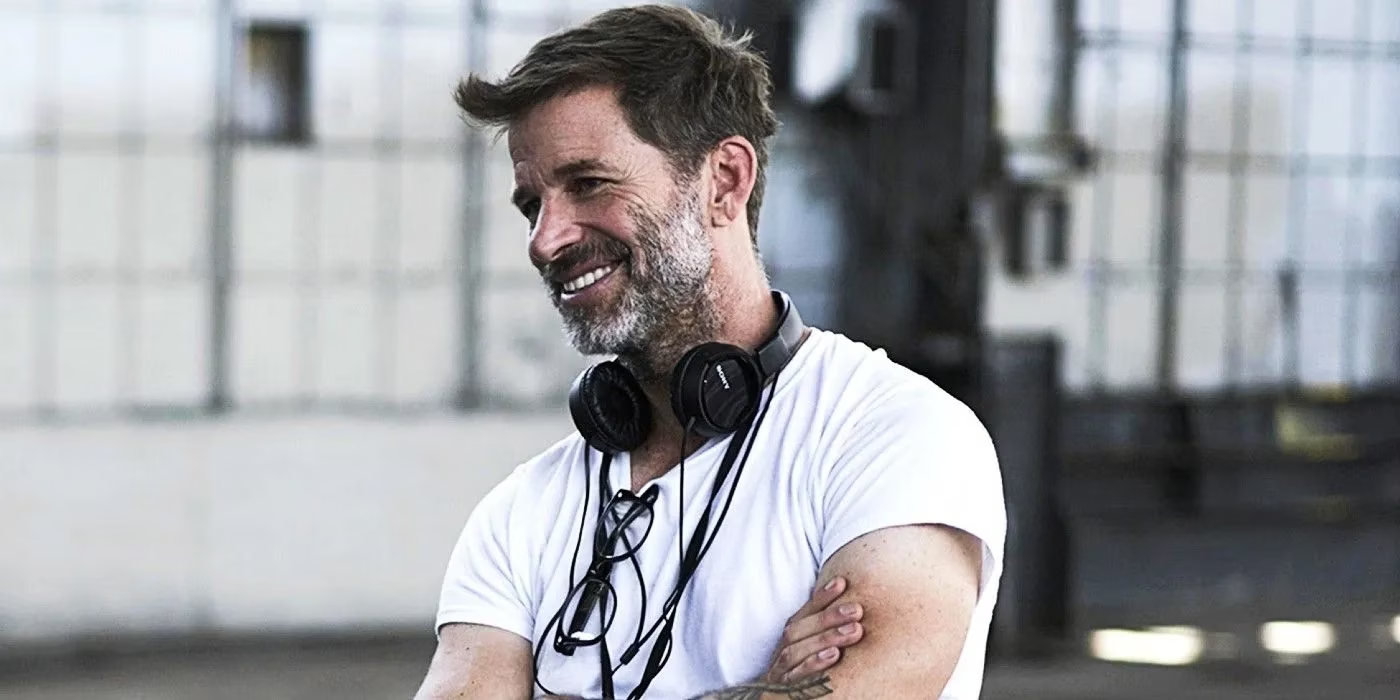
Looking back, attaching himself to a massive blockbuster like Man of Steel was a strategic career move for Zack Snyder at the time. His previous original film, Sucker Punch, had received a mixed critical reception, and the Superman project offered a powerful opportunity for rebranding. It's important to remember that Man of Steel wasn't initially conceived as the foundation for an expansive cinematic universe. That larger ambition truly coalesced during the development of Batman v Superman: Dawn of Justice. Snyder evolved from a filmmaker-for-hire on Man of Steel into the de-facto architect of a DC extended universe designed to rival Marvel's dominance.
This journey, however, came at a cost. The all-consuming development of the DCEU—which included his producing roles on Wonder Woman, Suicide Squad, and Aquaman—effectively overtook Snyder's entire career for years. Before DC, he had directed only five films, with just two being original properties. The sheer scale of the DCEU machine limited his ability to pursue other projects, ultimately causing his public identity to become synonymous with this single cinematic universe. The term "SnyderVerse" itself speaks more to the intense, cult-like fandom that formed around his DC films than to any ongoing creative endeavor by the director. For an artist, being defined by a single, past chapter can be creatively stifling.
Snyder's Legacy in Comic Adaptations Extends Far Beyond DC
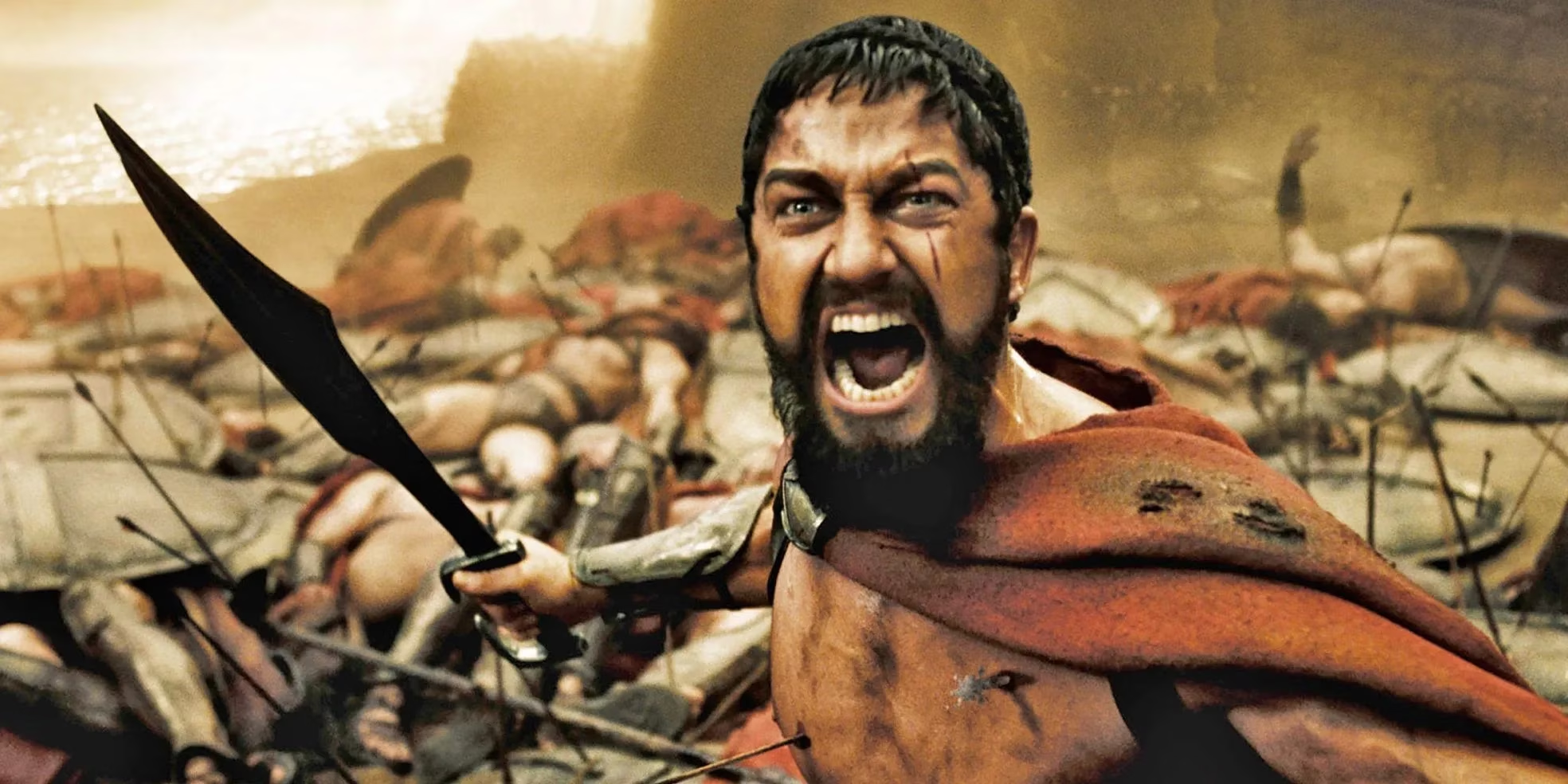
It's easy to forget that Zack Snyder's first major foray into comic book filmmaking had nothing to do with DC Comics! Following his debut feature, the Dawn of the Dead remake, Snyder directed 300 in 2006. This film was a bold adaptation of Frank Miller's graphic novel, published by Dark Horse Comics. Riding the wave of success from Robert Rodriguez's Sin City adaptation the year prior, 300 was a visual and commercial smash. Its success directly led to Snyder securing his next major comic project: 2009's Watchmen.
Now, technically, Watchmen is a DC property, but it stands utterly alone as a self-contained story crafted by the legendary Alan Moore. Moore is famously critical of adaptations of his work, yet Snyder's Watchmen is widely regarded as one of the most successful and faithful attempts. This project, with its deep ties to DC's publishing arm, undoubtedly helped pave the way for Warner Bros. to trust Snyder with Man of Steel. Interestingly, many forget that Man of Steel was initially shepherded by Christopher Nolan, who sought to apply the grounded realism of his Dark Knight Trilogy to the Last Son of Krypton. Snyder's journey with comics is rich and varied, proving his talents were never limited to one publisher or universe.
The Director Has Already Moved On to New Worlds
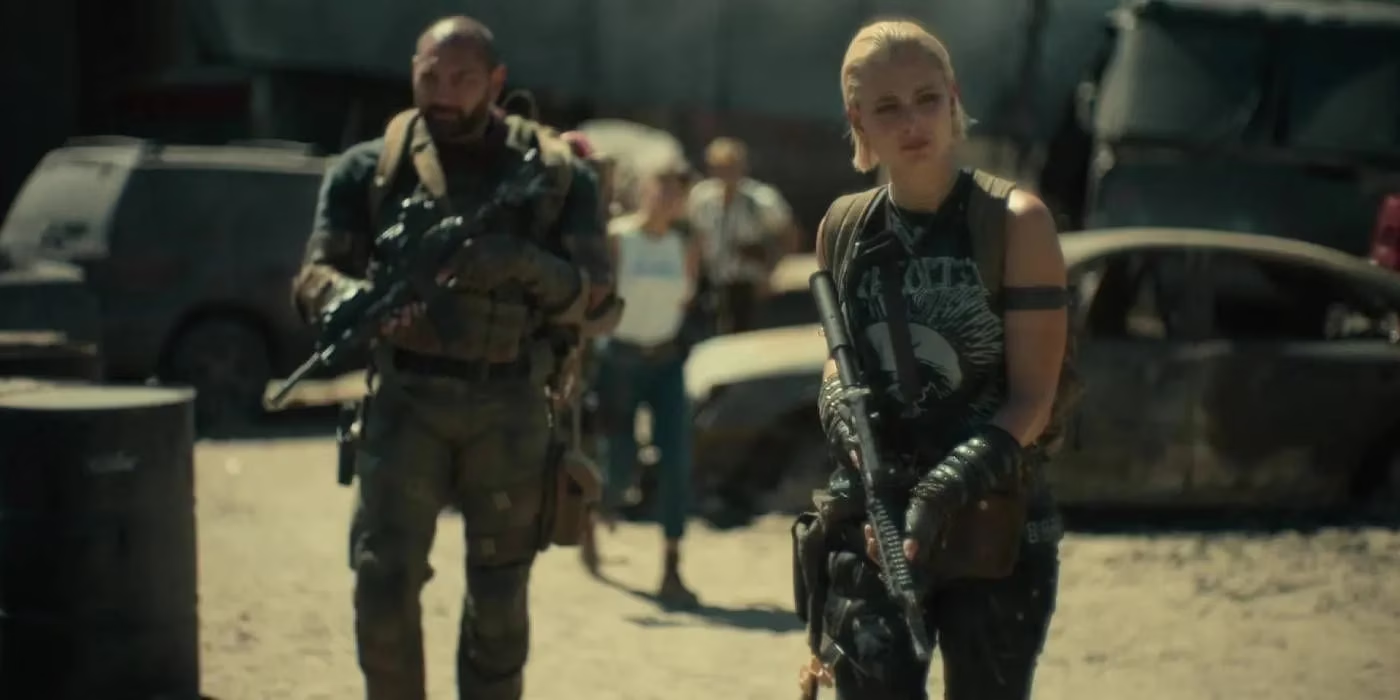
The release of Zack Snyder's Justice League on HBO Max in March 2021 wasn't a new beginning for the SnyderVerse; it was a definitive period at the end of a sentence. Snyder's focus had already decisively shifted. His very next project, Army of the Dead, hit Netflix just two months later in May 2021. This marked Snyder's first original film in a full decade, serving as his proper creative comeback following his personal hiatus. Principal photography for the zombie heist film actually wrapped in 2019, meaning the extensive work on the Justice League Snyder Cut was largely conducted as a side-project during Army of the Dead's post-production phase.
This clearly illustrates where Snyder's priorities and passions now lie. He has fully put his DC work in the rearview mirror. His current and upcoming slate is packed with original, creator-owned epics:
-
Rebel Moon: A sprawling science-fiction saga for Netflix, envisioned as a multi-part film series with a rich, original mythology.
-
Twilight of the Gods: An animated Netflix series steeped in Norse mythology, showcasing Snyder's love for grand, stylized storytelling.
In retrospect, the intense fan campaign to #ReleaseTheSnyderCut, while he was still grieving, placed an immense burden on the filmmaker. When he generously delivered that four-hour vision, the immediate shift to demands to #RestoreTheSnyderVerse failed to acknowledge that Snyder himself had already evolved. He has demonstrably moved on, building new worlds from the ground up. For his legion of fans, the most exciting way to support Zack Snyder in 2026 isn't by looking back at what might have been in the DCU, but by eagerly looking forward to the original universes he is building right now. His future is not in restoring a past vision, but in realizing bold, new ones entirely of his own making. The next chapter of the Snyder saga is already being written, and it's far away from Gotham or Metropolis.
This overview is based on reporting from GamesIndustry.biz, and it helps frame why Snyder’s shift away from legacy franchise debates matters: industry coverage frequently shows how creator-led originals can offer clearer brand ownership, steadier long-tail value, and more sustainable production roadmaps than fan-driven calls to revive discontinued shared universes.