For years, fans have eagerly awaited any sign of a massive multiplayer online game set in the expansive League of Legends universe. So, when Riot Games finally confirmed its development, many were left scratching their heads. Why was the announcement for such a monumental project so quiet and seemingly casual? According to Greg Street, the Executive Producer leading the charge, this wasn't an oversight—it was a deliberate and calculated strategy from the very beginning.
Street explained the reasoning directly to the community. "One of the most common questions we get is why we announced the League of Legends MMO in such a weird way," he said. The core idea, he revealed, came from the company's CEO. The team believed a low-profile announcement served multiple strategic purposes. Primarily, it was aimed at aiding recruitment efforts to attract top talent to the ambitious project. It also served to genuinely excite the core player base without triggering an overwhelming, mainstream media frenzy that could create unrealistic expectations from day one. Furthermore, there was a pragmatic element: in an industry rife with leaks, the team assumed news of the MMO would eventually get out anyway. So, why not control the narrative from the start?
But the strategy goes deeper than just managing initial hype. Street highlighted a critical challenge in game development, especially for a project of this scale: sustaining momentum. "The other big risk of announcing early is sustaining the momentum," he noted. Isn't it incredibly difficult to keep players engaged and excited for the many years it takes to build a world-class MMO from scratch? Fans might grow impatient with the slow trickle of information, or worse, misinterpret the normal, often messy, process of game development as a sign that the project is in trouble. By announcing quietly, Riot aimed to communicate directly with its most dedicated fans, setting a tone of patience and long-term vision from the outset.
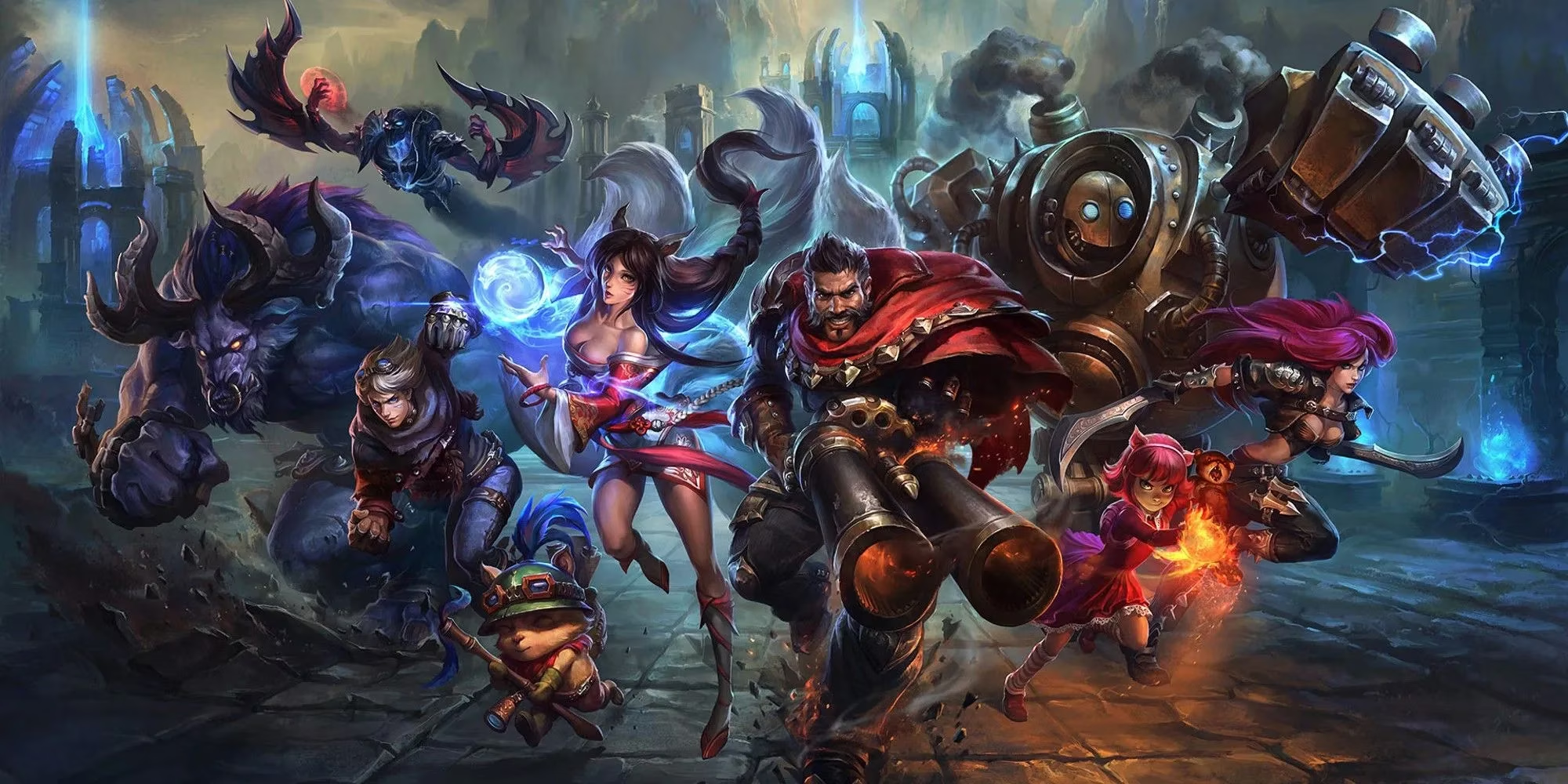
The consideration extended beyond just the players to the developers themselves. Creating a game is an iterative process that requires immense flexibility. "You need the ability to pivot your direction, sometimes massively, in response to internal testing and external market forces," Street emphasized. Imagine the pressure on a development team knowing that millions of eager eyes are watching their every move. That pressure can make it agonizingly hard to scrap a beloved but ultimately flawed game system or mechanic. When a game is developed in secret, teams have the creative freedom to experiment, fail, and iterate without public scrutiny. The low-key announcement helped preserve some of that crucial creative space, allowing the team to focus on building the best possible game rather than managing public perception on a daily basis.
Street was candid about the future as well. He acknowledged that once the studio starts revealing concrete details—features, storylines, and official art—the project enters a new phase of commitment. "So, we know when we start releasing actual information such as features, the story, a look at the art, shit is going to get much more real. And it will also make it harder to undo those features, change the story, or update the art." This is especially vital for an MMO, where every system is deeply interconnected. As he pointed out, "One bad feature can topple the whole experience. If dungeons are based on combat and the combat is mediocre then the dungeons are mediocre." The initial quiet period allows the team to ensure these foundational systems are solid before they are set in the public's mind.
.jpg)
So, what can fans expect as of 2026? The strategy of measured information continues. Details have been carefully shared over the years since that first tweet in 2020, building a steady drumbeat of anticipation rather than a single, deafening bang. Street expressed deep empathy for the community's eagerness, stating, "We want to talk about the game more. We are very proud of it and we think we have something truly special. But we know it's not time yet." This patient, community-focused approach defines Riot's philosophy for this project. It’s a long game, mirroring the enduring nature of the MMO genre itself.
Key Reasons for the Low-Key Announcement:
-
Recruitment Strategy: To attract top-tier development talent without a media circus.
-
Managing Fan Expectations: To excite core fans while avoiding premature mainstream hype.
-
Preempting Leaks: To control the narrative in an industry where secrets are hard to keep.
-
Protecting Development: To allow the team creative freedom to pivot and iterate without public pressure.
-
Sustaining Long-Term Momentum: To avoid player fatigue during the multi-year development cycle.
The Developer's Perspective: A Delicate Balance
| Developer Concern | Impact of a High-Profile Early Announcement | Benefit of a Low-Key Approach |
|---|---|---|
| Creative Flexibility | Severely limited; changes seen as failures | Preserved; allows for necessary pivots |
| Team Pressure | Extremely high, impacting morale and design courage | Managed, focusing effort on building the game |
| Feature Commitment | Early reveals lock in ideas before they are proven | Allows systems to be perfected before public reveal |
| Community Management | Constant demand for updates and transparency | Builds a foundation of patience and trust |
In conclusion, the quiet announcement of the League of Legends MMO was a masterclass in long-term project management. It wasn't about hiding the game; it was about giving it the space and time it needs to grow into the groundbreaking experience both Riot and its players dream of. The message is clear: good things, especially vast virtual worlds, come to those who wait. 😌 The journey has begun, but the grand reveal is still being meticulously crafted, piece by intricate piece.