It began as a whisper beneath the turrets, a flicker of color on the loading screen, a love story tucked into flavor text few ever read. By now, in the summer of 2026, that whisper has become a chorus. I still remember the first time I saw the rainbow emote bloom above my champion’s head — a tiny, defiant spark. I took it as a promise, one the company has spent years trying to keep.
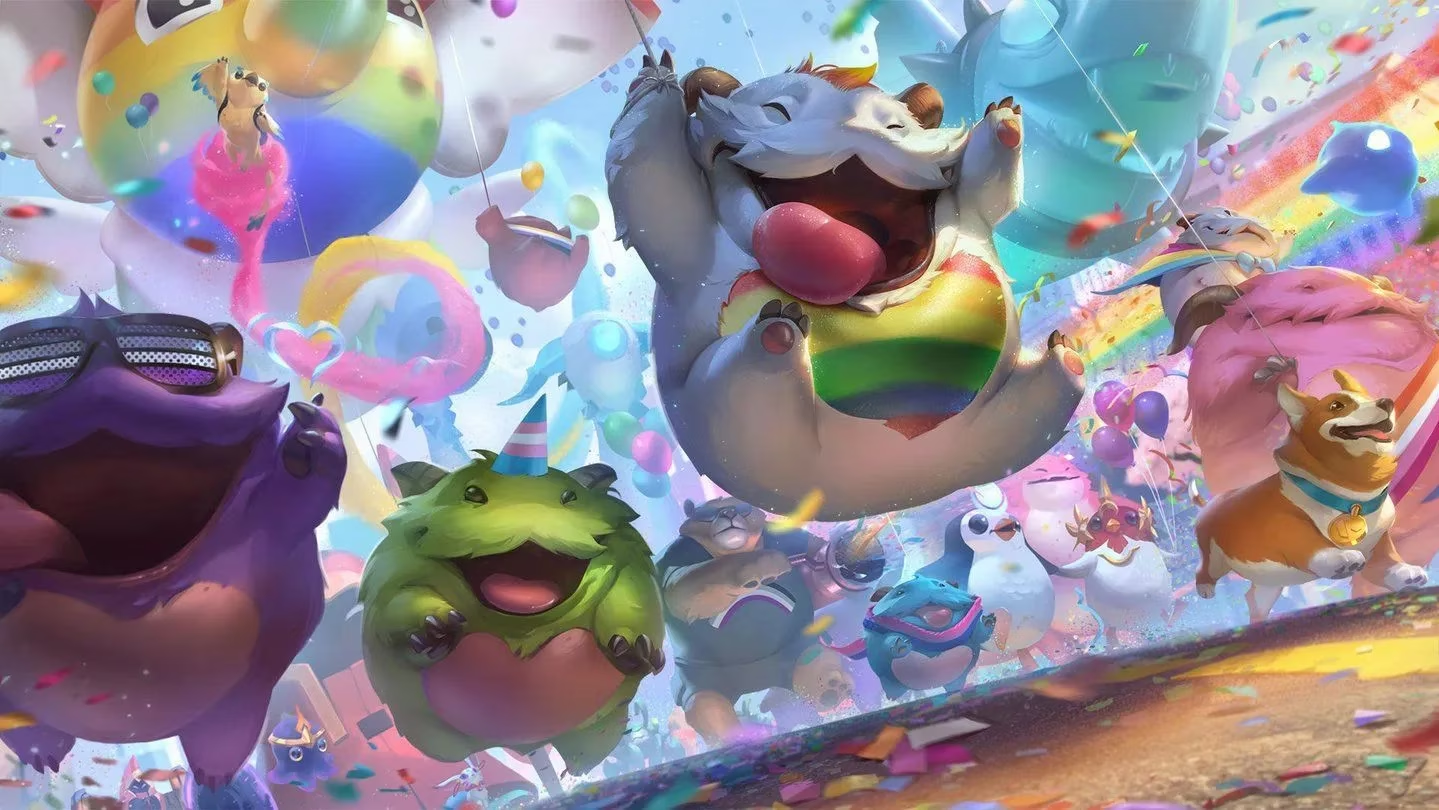
Games have long been my refuge, but for too many of us, that refuge came with invisible locks. I’ve wandered Summoner’s Rift as a silent observer since season three, back when a queer player learned to hide their heart behind ganks and kill streaks. The world outside was loud enough; inside the game, I simply wanted to play. Then Riot began to change — slowly, uneasily, and then with glorious intent. What I witnessed in 2022 felt like a hinge moment: the cross-game Pride event that splashed across League of Legends, Teamfight Tactics, Legends of Runeterra, and Valorant was no mere rainbow-washing. It was a deliberate, LOUD refusal to stay quiet. Jake Street, the TFT design manager who also leads the Rainbow Rioters RIG, once described it as “being out, proud, and LOUD,” and that phrase still rattles in my chest.
The Gardener’s Burden
I’ve learned that culture is a garden, never a monument. Street used that metaphor back in 2022, and it has haunted me since. Gardens need daily water, ruthless weeding, and someone willing to get their hands dirty long after the first bloom. What I’ve observed from the outside is a company wrestling with its own soil. The “frozen middle,” those mid-level leaders who shape the daily weather on a team, became a focus of internal D&I conversations. By 2024, Riot had started publishing annual Belonging Reports that tracked not just hiring numbers but retention and promotion rates among marginalized groups. They weren’t perfect — no garden ever is — but they were honest. I remember running through the new Valorant agent’s backstory in 2025 and finding a casual mention of his husband, a detail so effortless it felt like breathing. Legion Veteran had walked so these newer characters could run. Shomi. Tyari. They stopped being brave exceptions and became part of the landscape.
Breadcrumbs No More
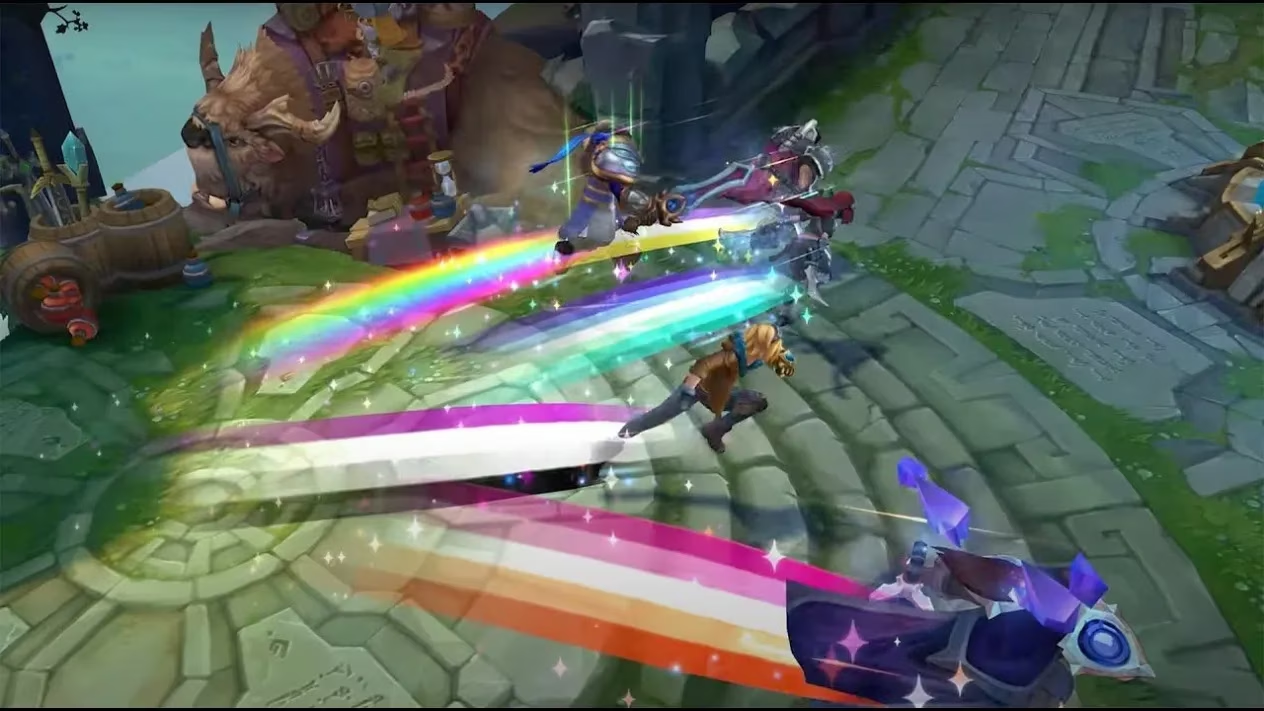
For decades, queer players survived on crumbs — a subtext here, a retconned relationship there. I still bristle when people ask, “Why do you need characters to be like you?” The answer lives in the tears of a friend who saw themselves in Tyari, Riot’s first trans champion, for the very first time. It lives in the fan art that erupted when Graves and Twisted Fate’s story dropped. It lives in the free icons and gun buddies that let me wear my identity on my sleeve without paying a tax for the privilege. Street was right when he said the sky didn’t fall after Legion Veteran casually mentioned his husband. In fact, the sky grew larger. The “casual queerness” became a beacon, then a habit, then an expectation. By 2025, nearly every new title from Riot launched with pronoun options and inclusive character creators baked in, not bolted on. Project L, their fighting game, introduced a non-binary character whose entire design rejected cliché. When a reporter asked a Riot narrative lead whether the studio worried about backlash, the answer was: “We worry more about erasure.” I wrote that down and taped it to my monitor.
The March Beyond the Client
It would be easy to stop at in-game goodies, but the true work spills into the world. The partnership with the It Gets Better Project, first forged years ago, has matured into a global mentorship program connecting LGBTQIA+ youth to game developers. I attended a virtual watch party in 2025 where Rioters from three continents talked about navigating identity in tech, and the chat scrolled so fast with heart emojis that my screen nearly froze. The Virtual March for Pride, first piloted in Europe and the Middle East, now coordinates simultaneous walks across twenty-eight cities. I remember standing in a park in my own town, clutching a phone showing the stream, surrounded by strangers who had become guildmates.
The Quiet Revolutions
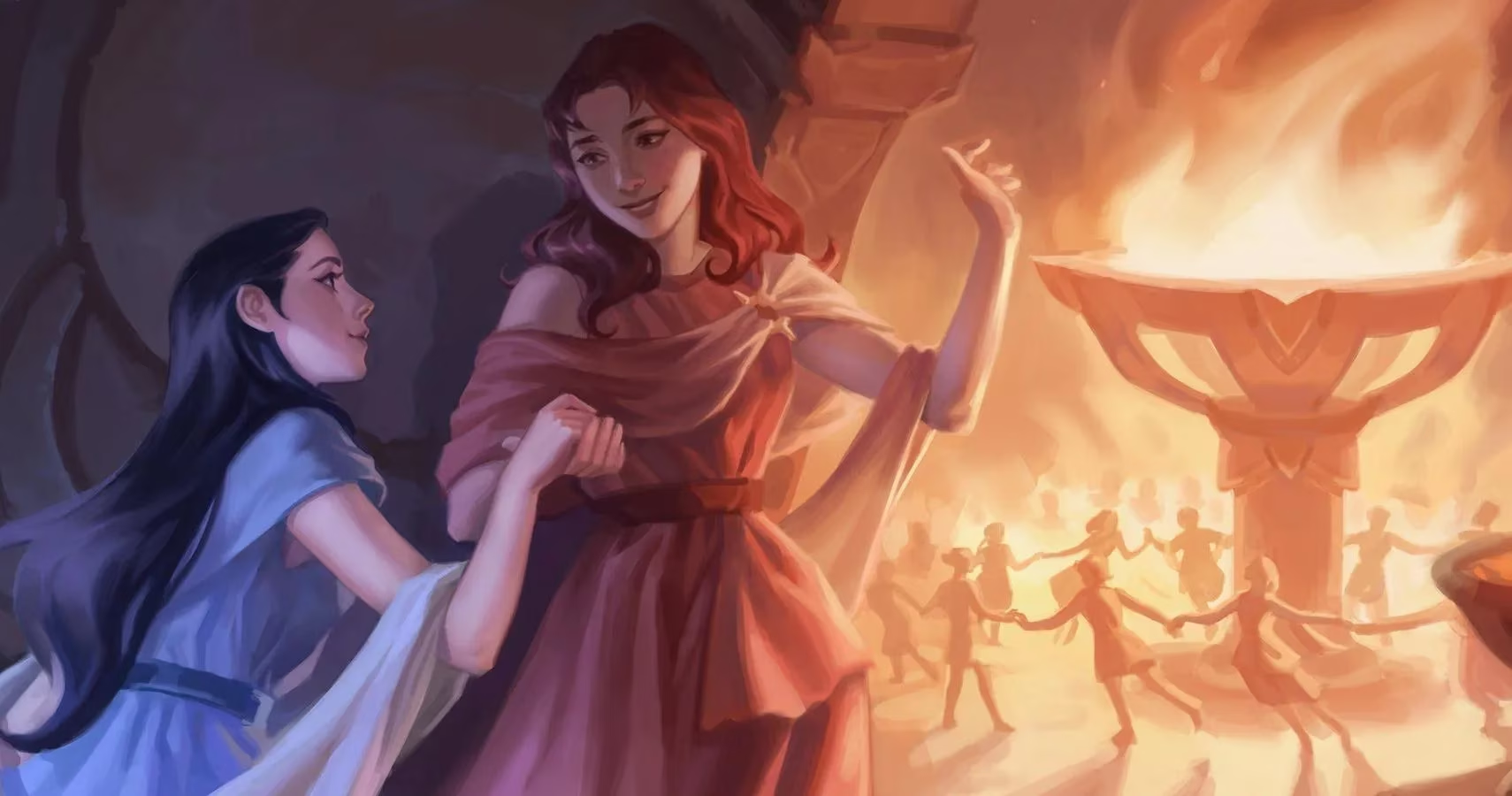
Not all revolutions are loud. Some are the result of a hundred tiny decisions: a producer choosing to normalize pronouns in their email signature, an engineer rewriting company travel policies to cover gender-affirming care while on work trips, a QA tester joining the RIG slack channel at 2 AM because they finally felt safe enough to speak. I’ve talked to current Rioters over the years (a privilege born of persistent, polite DMs) and they describe a culture still under construction, a ship that rocks but doesn’t sink. The middle managers Street once called out have started mandatory inclusive leadership training, and the results show in Glassdoor reviews and internal surveys.
Yet I remain a critic, because the ones you love deserve the sharpest eyes. The company’s historical controversies cast a long shadow, and healing is not a straight line. There are still days when a friend logs off after a match poisoned by slurs, and I watch them disappear into offline mode with a hollow ache. But I also see the widening net of protections, the swiftness of reports handled, the way younger players now demand decency as a baseline. Games once mirrored the ugliest parts of their creators; now, increasingly, they hint at what we could become.
A Constellation of Selves
At night, I sometimes scroll through my collection of Pride player cards, each one a tiny window into a different self. Here is the brooding warrior I was at sixteen, here the hopeful dreamer at twenty. Riot didn’t hand me my identity — I built that over years of joy and grief — but they did hand me a mirror I could look into without flinching. The 2026 Pride event, themed around “Constellations,” lets players assemble star maps representing different facets of identity: gender, love, history, legacy. It is, without exaggeration, the most quietly radical thing a game company has done in my lifetime. You complete simple missions — protect a teammate, share a resource, say “thank you” in chat — and the cosmos draws itself around you.
Street once said progress is “a journey and not a destination.” In 2026, that journey feels more tangible than ever. The Rainbow Rioters have grown into a sprawling network of employee subgroups that consult on every major release, and player-generated Pride content floods the partner programs. I no longer wonder whether representation matters; I watch the numbers, I read the messages, I hear the laughter in voice comms when someone realizes a champion shares their story.
So here I stand, a player with ink-stained fingers from writing fan letters I’ll never send, grateful for something that was once unimaginable: a game world that holds the whole messy spectrum of human love. The garden is still being tended, and I will keep watching, keep cheering, and keep demanding better until every wanderer in Runeterra and beyond finds themselves under a sky that knows their name.