In the sprawling digital coliseum of Runeterra, a vast and ever-growing pantheon of champions vies for glory. As of 2026, the roster stands not as a mere collection but as a living, breathing tapestry of unique souls, each thread woven with distinct purpose and power. To the uninitiated, the sheer scale can seem overwhelming, a challenge of memory and mastery that stretches the limits of the mind. Yet, for the architects of this world at Riot Games, the question is not one of running dry, but of careful cultivation. The philosophy is one of boundless potential, guided by a principle of elegant intuition. Lead designer Matt Leung-Harrison has illuminated this path, suggesting the well of creativity is far from empty; there remains, as he poetically stated, "a lot of flex to go."
The Covenant of Intuition: Weaving Uniqueness with Clarity
The creation of a new champion is a sacred act, a delicate dance between the novel and the known. The paramount goal is to ensure that every newcomer feels both singular and instinctive. This is the covenant with the player: the moment of encounter should spark wonder, not confusion. The design team labors to make the core, unique mechanic of a champion as luminous and comprehensible as possible. This practice is what conserves the precious cognitive capital of the community—the mental space players have to understand the entire cast.
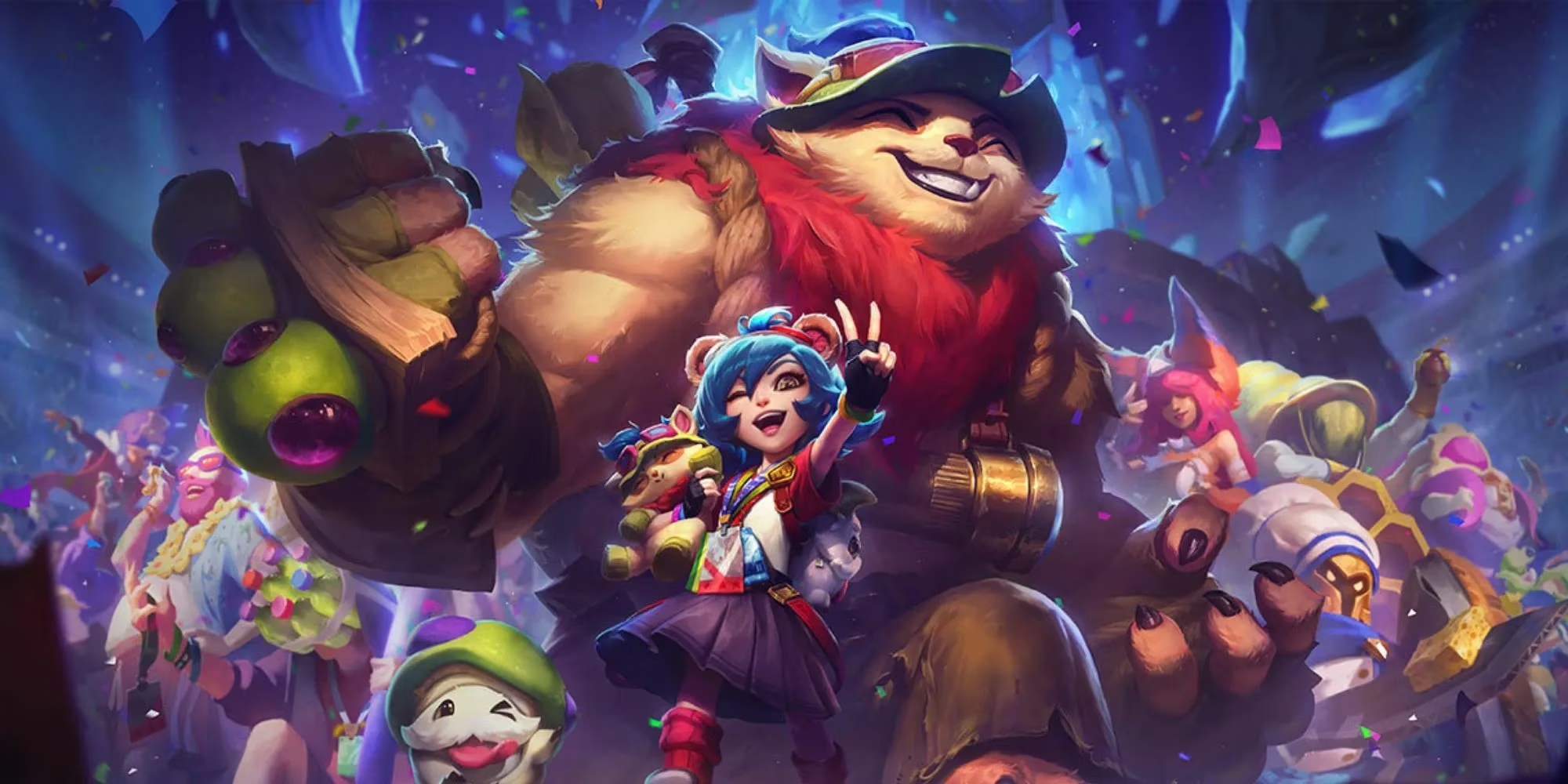
Imagine the dissonance, as Matt illustrated, of facing a spectral warden like Thresh. His chain is an iconic, fearsome projectile, a harbinger of capture. If that hook were to behave erratically—sailing past a target or curving on a whim—the foundation of understanding would crumble. "You’d be like ‘what the hell is that?" he mused. The visual language of Runeterra is a shared dialect; a hook that looks like a hook must generally behave like a hook. To subvert this expectation without clear, intuitive reason is to invite chaos and erode trust. Thus, uniqueness is forged not in breaking fundamental rules, but in introducing new nuances within a framework of recognizable archetypes.
The Tightrope of Design: Similarity Versus Alienation
Walking this line is the perpetual tightrope act of game design. Leaning too far towards homogeneity results in a roster of echoes, where champions blur into one another, devoid of soul. Yet, veering too sharply into the bizarre creates chimeras that are alien and frustrating to face. The true artistry lies in the balance. Certain spell effects, animations, and visual cues must maintain a degree of consistency to preserve the game's legibility.
The following table contrasts the outcomes of this delicate balance:
| Design Approach | Risk | Consequence for Players |
|---|---|---|
| Excessive Similarity 😐 | Champions feel like reskins; lack of meaningful choice. | Boredom, diminished strategic depth, staleness. |
| Excessive Uniqueness 🤯 | Abilities defy established visual/tactical language. | Frustration, a steep learning cliff, cognitive overload. |
| Balanced Intuition ✨ | New mechanics feel fresh yet understandable within context. | Engagement, satisfying mastery, a rich, learnable ecosystem. |
The Horizon of Possibility: Beyond the Summoner's Rift
While the traditional battlegrounds of the MOBA may have their physical and thematic constraints, the horizon for Runeterra's lore and mechanics stretches far beyond. The much-anticipated MMO project from Riot represents a new frontier, a vast continent of unexplored design space. Here, the principles of intuitive uniqueness can be applied to entirely new dimensions:
-
Professions and Crafting Systems ⚒️: Unique, lore-driven trades that feel integral to the world.
-
Exploration Mechanics 🗺️: Champion-inspired abilities for traversing majestic, dangerous landscapes.
-
Social and Faction Dynamics 👥: Deep interactions based on champion allegiances (e.g., Demacia vs. Noxus).
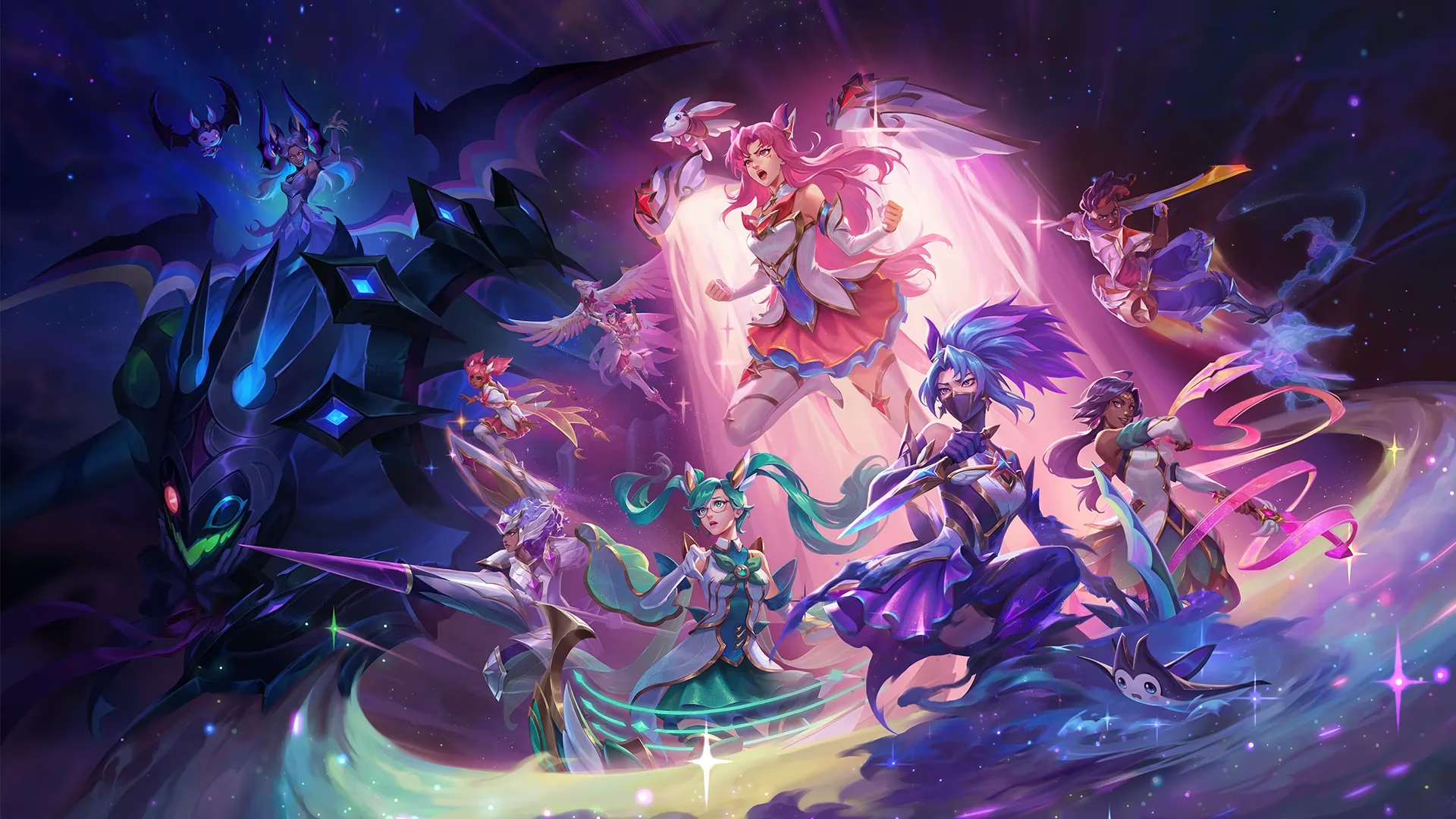
This expansion into an MMO is not an escape from design challenges, but a transmutation of them. It allows the team to explore champion identities in narrative depth, environmental interaction, and persistent world-building, offering fresh vistas for player investment without overburdening the tactical mindshare of the core MOBA.
The Eternal Forge: A Future Forged in Familiar Magic
As we look to the future in 2026, the journey of League of Legends is one of perpetual evolution, not revolution. The forge where champions are born burns with a steady, creative flame, tempered by the wisdom of clarity. The cap on new creations is not dictated by a lack of ideas, but by the sacred duty to maintain the game's soulful coherence. Each new champion must be:
-
A beacon of distinct fantasy.
-
A parable told through intuitive gameplay.
-
A harmonious note in the grand symphony of Runeterra.
The tapestry will continue to grow, its patterns becoming more intricate, its stories more profound. But at its heart, the covenant remains: to welcome both veteran and novice into a world where every encounter, though potentially unfamiliar, feels like a discovery within a realm they already, instinctively, understand. The mindshare budget is carefully managed, ensuring that the wealth of choice never becomes a curse, but remains the game's greatest, most luminous treasure.