The world of Runeterra has spent more than a decade expanding from a competitive MOBA map into one of gaming's most detailed fictional universes. Since late 2020, that universe has also carried a particularly tantalizing promise: a full-fledged League of Legends MMORPG. Riot Games first confirmed the project when a developer acknowledged the studio was working on an MMO set in Runeterra, and the company later added fuel to the fire with a recruitment page that bluntly declared, "We're Making an MMO." Now, in 2026, the game still has no release date, but the question is not whether Riot can make an MMO. The more interesting question is whether Runeterra's lore is strong enough to anchor one.
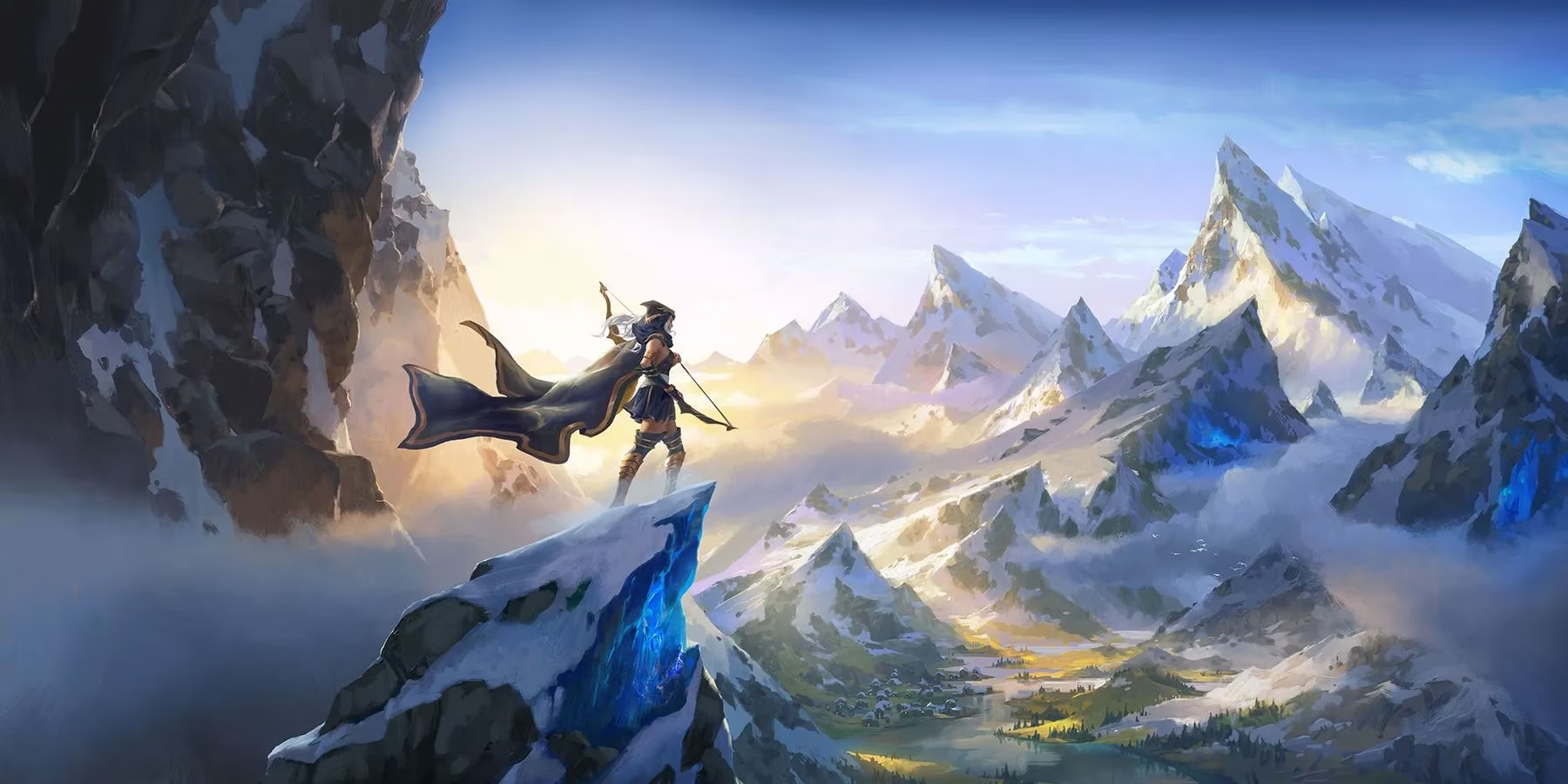
Runeterra Is More Than a Backdrop
Runeterra is not a single nation. It is a collection of regions with distinct cultures, politics, and magic systems. Piltover and Zaun are twin cities defined by technological ambition and class struggle, a dynamic that Arcane brought to a global audience. Noxus values strength and expansion. Demacia clings to order and distrusts magic. Ionia balances spiritual harmony against the scars of invasion. Freljord is a frozen land of demigods and clan warfare, while Shurima is a resurrected empire of sand and celestial power.
An MMO built on this foundation does not have to invent a world from scratch; it merely has to open the gates. Could a lore built for a MOBA support hundreds of hours of questing? Riot seems to think so, and the evidence is already everywhere. Players could travel between regions, meet familiar champions, and complete quests that make them feel like actual residents of Runeterra rather than spectators.
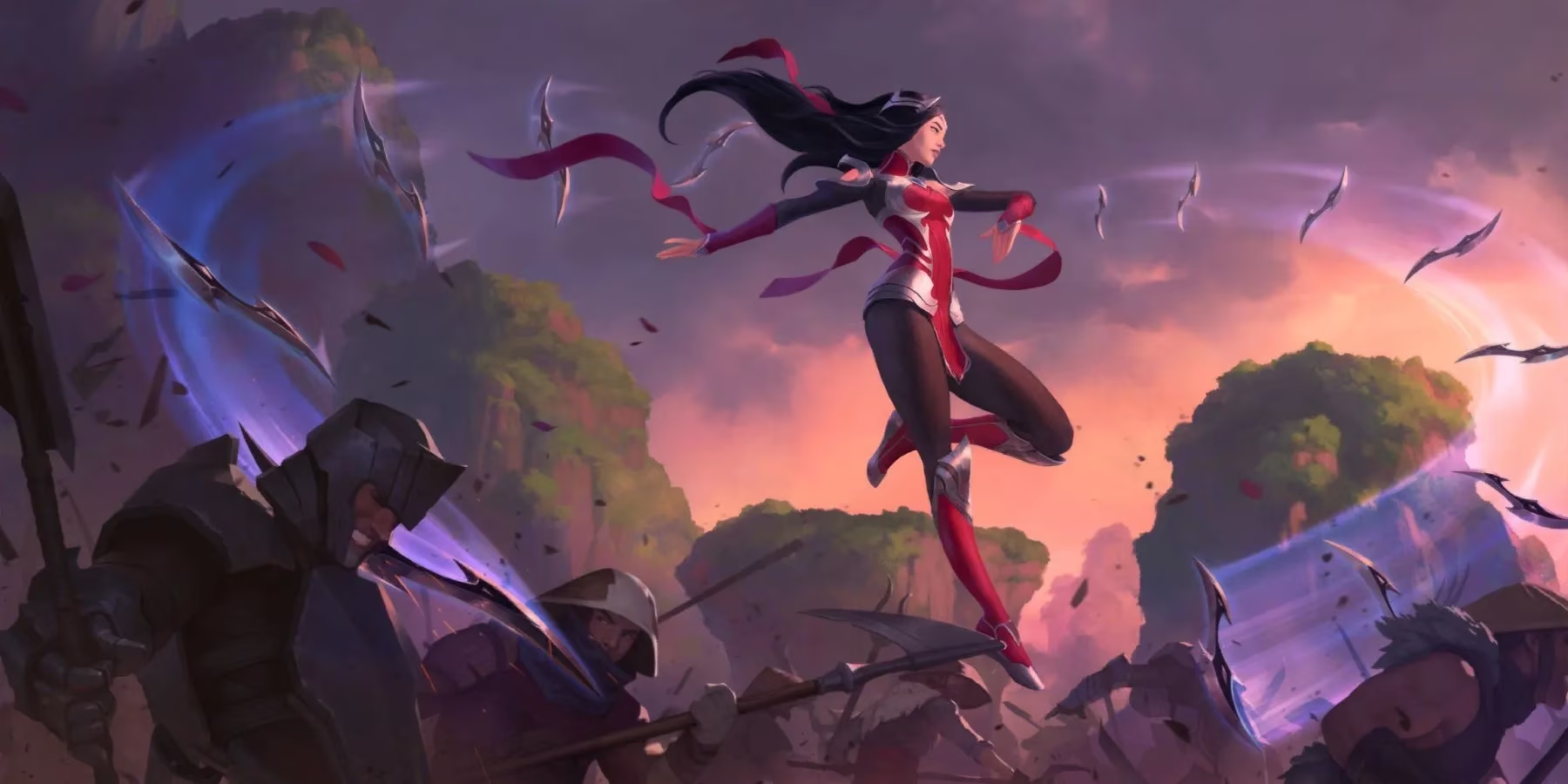
Player Freedom Through Runeterra's Existing Classes
One of the biggest advantages Riot has is that League of Legends champions are already organized into recognizable combat roles. Assassins, mages, marksmen, tanks, fighters, and supports can all translate into MMO classes or specializations. A player who enjoys Akali's mobility could choose an assassin-style build, while someone who likes Lux's ranged crowd control might gravitate toward a mage archetype. Rather than forcing every hero into the same three or four classes, Riot can use champion kits as inspiration for skill trees, weapons, and regional combat traditions.
| Region | Thematic Fantasy | Possible MMO Identity |
|---|---|---|
| Noxus | Expansion, war, ambition | Warriors, conquerors, shadow mages |
| Demacia | Order, honor, anti-magic | Knights, rangers, elite soldiers |
| Ionia | Balance, spirits, rebellion | Blade dancers, monks, spirit mages |
| Piltover & Zaun | Technology, crime, progress | Engineers, gunslingers, chemtech brawlers |
| Freljord | Survival, demigods, tribalism | Berserkers, ice shamans, raiders |
| Shurima | Ancient empire, celestial power | Sun priests, sand warriors, ascended champions |
Questlines, Factions, and Raid Bosses
Fans already theorize that Baron Nashor could serve as a raid boss, and the speculation makes sense: Runeterra is full of world-threatening entities, from the Void to the Shadow Isles. An MMO campaign could send players across Valoran to confront Noxian legions, cleanse corrupted forests in Ionia, or descend into the undercity of Zaun. Riot has an enormous narrative toolkit, from political intrigue in Demacia to cosmic horror in the Void.
The challenge is not finding content; it is structuring that content into a coherent, long-term MMO loop. Developers would need to recreate the streets of Noxus, plan overarching questlines, and balance solo play against group content. That is, of course, easier said than done, but the raw material is there.
Beyond League: Why an MMO Matters
A full MMO would also be a different kind of storytelling than Riot's other spin-offs. Legends of Runeterra explores champions through card art and voice lines, while the fighting game formerly known as Project L, now called 2XKO, focuses on competitive combat. Arcane proved that non-players can fall in love with Runeterra's characters, and an MMO could extend that emotional investment for years. Players could walk through Piltover's markets, pledge themselves to a Noxian warband, or study magic with a Demacian exile. Those experiences are far more personal than a champion's brief in-game line.
Patience Will Be Required
MMORPG development is famously slow. Riot's continued recruitment for the project suggests the team is still scaling up, and in 2026 there is no confirmed launch window. Some fans once joked that Arcane Season 2 would arrive long before the MMO, and that prediction proved accurate: Arcane concluded its second season while the MMO remains in development.
Is that a reason to worry? Not necessarily. Riot has the resources and the narrative depth to build something special, but the company has also shown a willingness to delay or restructure ambitious projects. The League of Legends MMO is still in development, and for now, that is enough to keep the community watching.
If Riot can translate the scale of Runeterra into a shared world without losing the charm of its champions, it may become one of the defining MMOs of the decade. Until then, fans can only explore Runeterra through League, Arcane, Legends of Runeterra, and the growing Riot Games catalog.
Data referenced from OpenCritic underscores a practical reality behind Riot’s long MMO timeline: player expectations for live-service launches are heavily shaped by cross-site review consensus and early critical reception. For a Runeterra MMORPG, that means the initial package can’t rely on lore alone—it will likely be judged on how well its questing, endgame loops, and technical stability hold up at scale, especially compared to other big-budget online worlds that quickly accumulate a visible critical “score gravity” after release.