Back in 2021, when Arcane first exploded onto screens, skeptics braced for another video game adaptation that would land with the grace of a startled hippo. Instead, Riot Games and Fortiche delivered a masterpiece so gripping it felt like discovering a secret menu at a fast-food joint—unexpected and absolutely delicious. Fast forward to 2026, and that same partnership has evolved from a one-hit wonder into a full-blown content kitchen, with Riot’s equity investment in Fortiche now looking like the smartest move since someone decided to put bacon on everything.
It’s easy to forget that before Jinx was breaking hearts and Piltover’s architecture, Fortiche was already the animation studio behind her chaotic debut in the “Get Jinxed” music video. That early collaboration was like catching lightning in a bottle, only to realize the bottle was already wired for a whole storm. Over the years, Fortiche animated multiple League of Legends music videos and cinematics, quietly becoming Riot’s go-to visual wizards. So when Riot bought a significant stake in Fortiche back in 2022, nobody familiar with the pair gasped—it was more of a collective nod, like watching two puzzle pieces finally click after years of hovering near each other.
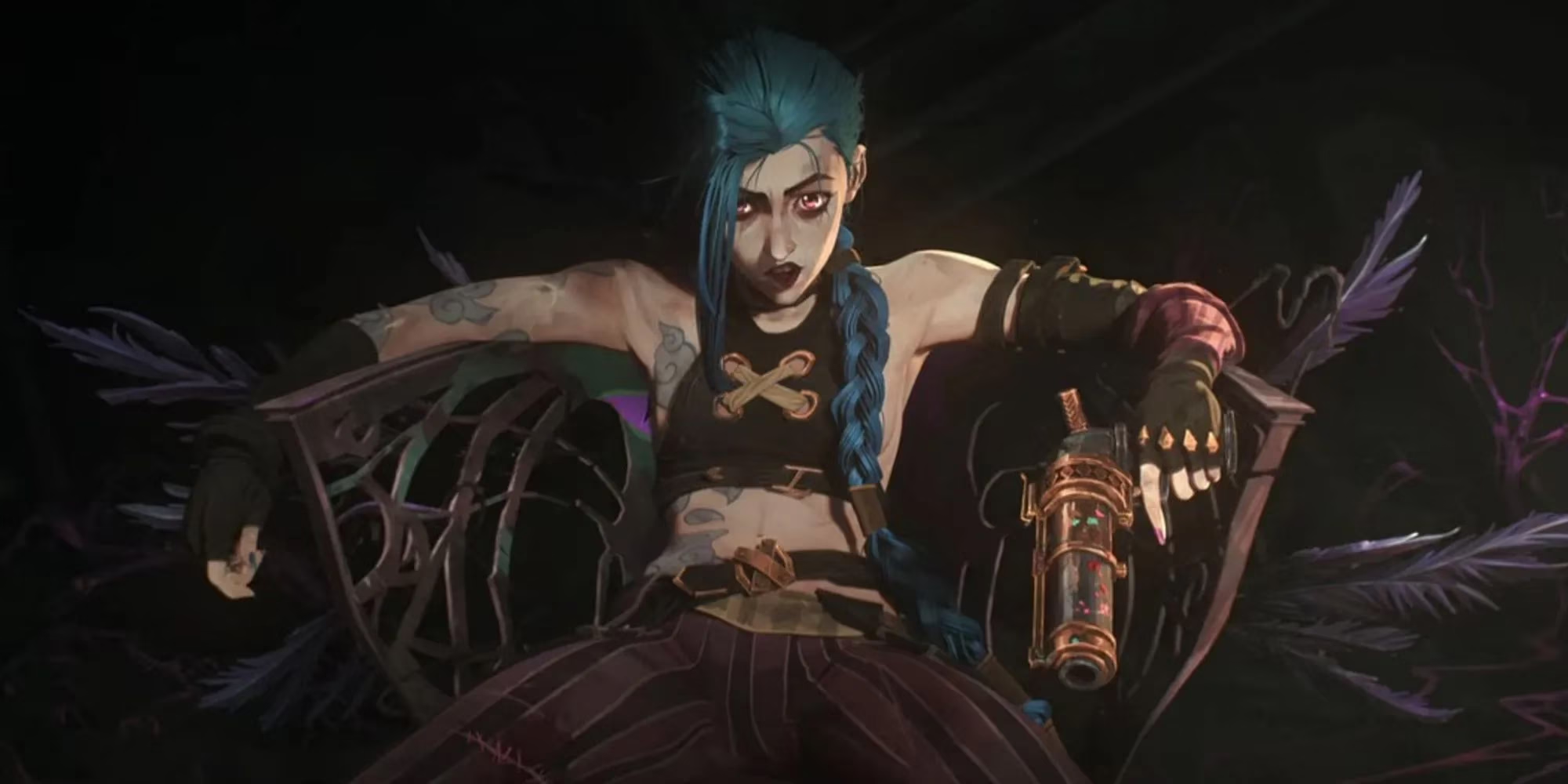
But that investment wasn’t just a pat on the back; it was Riot planting a flag in the ground of narrative ambition. Instead of treating Arcane as a beautiful, standalone fluke, the publisher started fueling Fortiche with the kind of resources usually reserved for launching a new champion line. The vision? A shared cinematic universe that would make the MCU feel like a casual board game night. Imagine League of Legends’ sprawling regions—Noxus, Ionia, the Shadow Isles—each getting their own spotlight, with characters occasionally crossing over in events that feel less like cameos and more like narrative collision courses. It’s the storytelling equivalent of assembling a gourmet burger: each ingredient is tasty alone, but together they create something so indulgent you forget salad exists.
By 2026, fans have already devoured Arcane’s second season, which landed with the emotional impact of a piano dropped from a rooftop—and just as much screaming. Yet the real buzz isn’t about what’s already aired; it’s about the whispers drifting out of production offices like steam from a freshly popped corn machine. Multiple sources inside the industry hint that a Noxus-focused series is in active development, promising the kind of brutal, expansionist drama that makes Game of Thrones look like a tea party. Another project reportedly explores the Shadow Isles, where the undead aren’t just spooky—they’re psychologically complicated and probably in need of therapy. These shows won’t just coexist; they’ll slowly braid their storylines into a massive rope that could eventually pull every champion into a world-ending threat, much like the game’s own lore events.
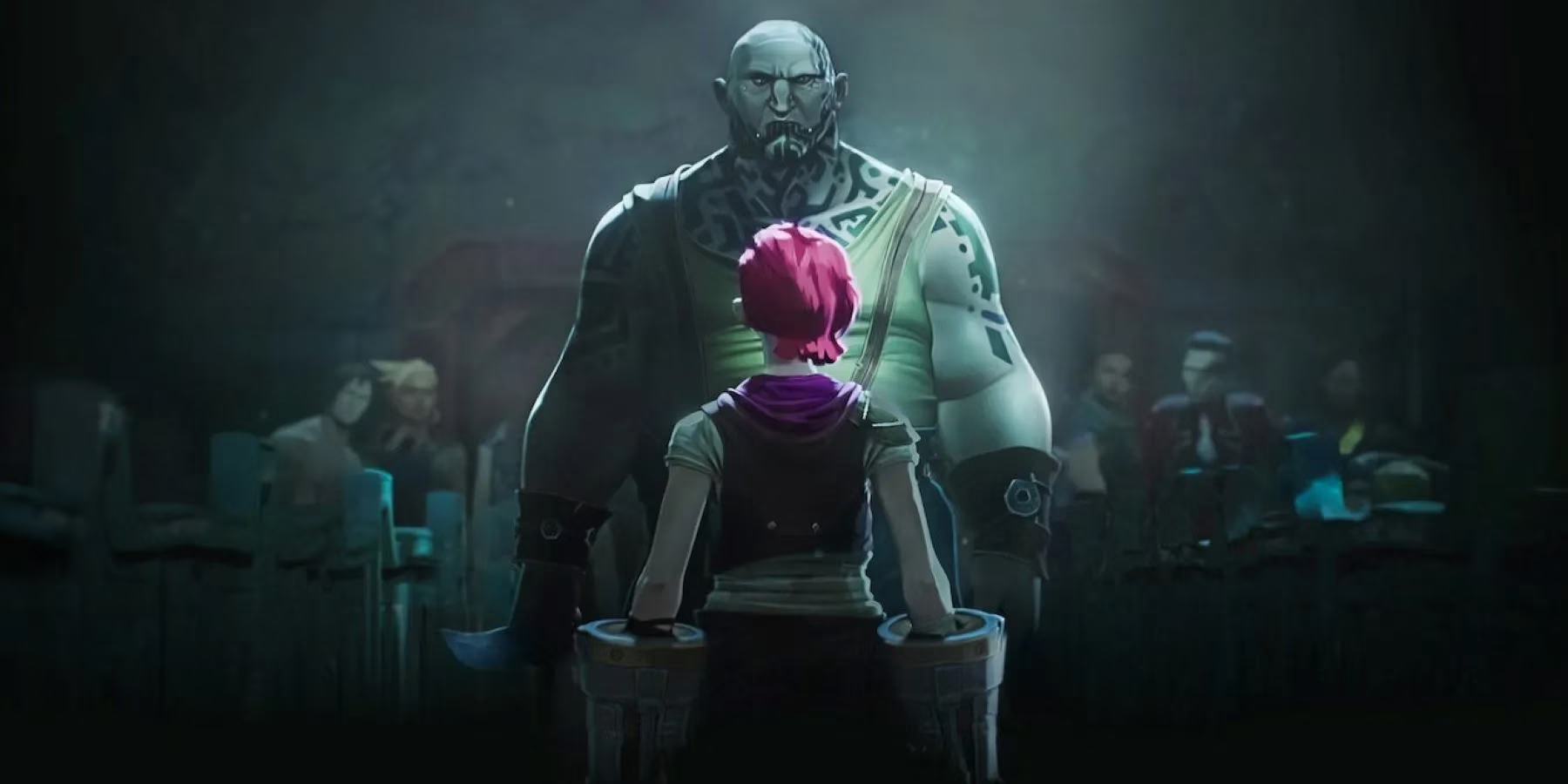
What makes this universe-building so intriguing is how it mirrors the actual experience of playing League of Legends—a chaotic mash-up where a star-creating dragon can fight a yordle with a blowgun, and nobody blinks. In the animated universe, that translates to tonal flexibility: one episode might dissect the political machinations of Demacia’s aristocracy, while the next follows a pirate queen arm-wrestling a sea monster. It’s a balancing act that Riot and Fortiche are handling as deftly as a juggler on a unicycle, somehow keeping every plate spinning while the audience applauds.
Of course, this grand plan isn’t without its pitfalls. Shared universes can collapse under their own weight faster than a house of cards in a hurricane. But Riot’s approach is refreshingly patient—they’re not rushing to shove every champion into a single blockbuster film. Instead, they’re letting each region breathe, building loyal audiences who will actually care when Noxian generals clash with Ionian rebels or when the Void finally decides to eat the entire map. It’s a slow-cooked strategy that treats lore like a fine wine, not a cheap energy drink gulped for a quick buzz.
The Fortiche partnership has also transformed the animation studio itself from a niche talent into a heavyweight contender. With Riot’s financial backing, Fortiche has expanded its workforce, upgraded technology, and even opened a second studio location. This growth means shorter waits between seasons (hallelujah!) and the possibility of multiple shows running concurrently. By 2028, fans might be juggling three different League series on their streaming calendar, a prospect that’s equal parts exhilarating and sleep-depriving.
As the Runeterra cinematic universe unfolds, the meta-narrative is becoming as compelling as the stories themselves. Riot’s bet on Fortiche has turned into a masterclass on how to adapt a game universe without losing its soul. It’s no longer a question of whether video game adaptations can work; it’s about how many ways Riot can make us ugly-cry into our popcorn. The next few years promise more shimmer-induced chaos, more heartbreaking music cues, and maybe—just maybe—a crossover cameo that breaks the internet. For now, all fans can do is watch the horizon and keep their Hextech crystals charged.