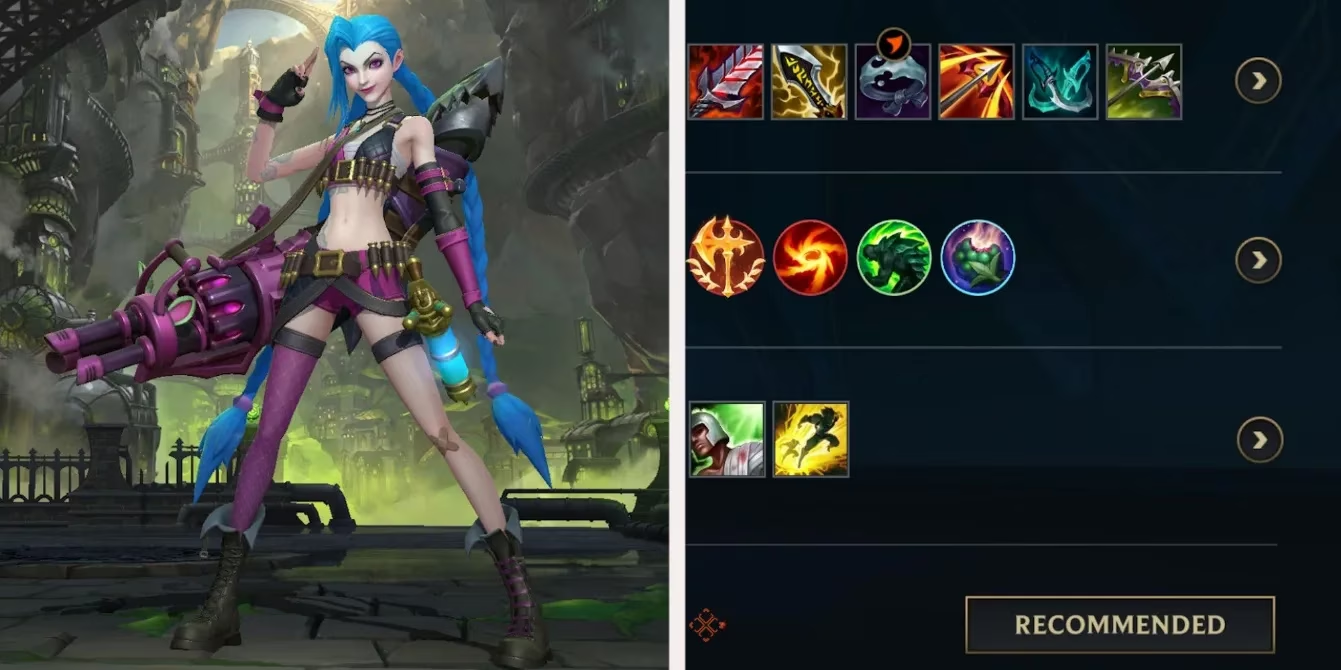
Jinx, the Loose Cannon, remains one of Wild Rift's most recognizable marksmen in 2026. She is a champion built around fireworks, chaos, and devastating late-game firepower. Whether a player discovered her through Arcane or through years of League of Legends, her identity has not changed: she is a glass cannon who trades durability for the ability to shred entire teams from a safe distance. Jinx is best suited to the Dragon Lane, where she partners with a support and scales into a terrifying hypercarry. Her kiting-focused playstyle rewards players who can remain at the edge of a fight while spraying bullets and rockets into the enemy formation.
🤝 Teamwork and Lane Fundamentals
Wild Rift is still a MOBA at its core, so victory depends heavily on teamwork. Newcomers should seek out mentors in co-op vs. AI matches, observe experienced players, and communicate through pings and chat. Watching how different roles rotate, ward, and group for objectives gives a player a better feel for the flow of a match. More importantly, map awareness and communication prevent the helpless sensation of being caught out of position. In 2026, objective-focused play is even more important, so Jinx players must track dragon and rift herald timers while avoiding unnecessary duels without vision.
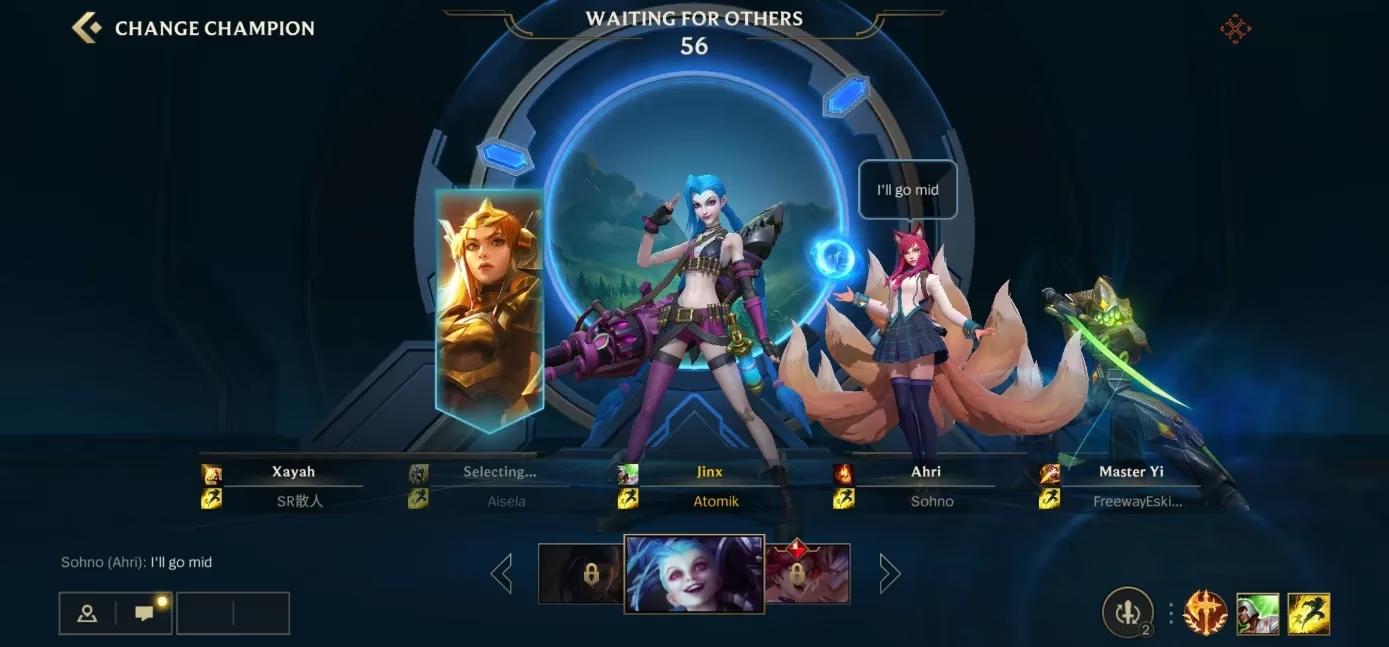
A good support can make or break Jinx's lane. Engage supports create space for her to attack, while enchanters help her survive burst damage. Jinx should never face-check brush alone, and she should always position behind her frontline once teamfights begin. Observation and communication remain key habits for any player learning the champion.
🎯 Skill Breakdown
Understanding Jinx's abilities is essential because her weapons interact in ways that separate a mediocre player from a dominant one.
| Skill | Type | Description and Use |
|---|---|---|
| Get Excited! | Passive | Whenever Jinx scores a takedown or assist, she gains a burst of attack speed and movement speed. This passive fuels merciless killing sprees and helps her snowball fights. |
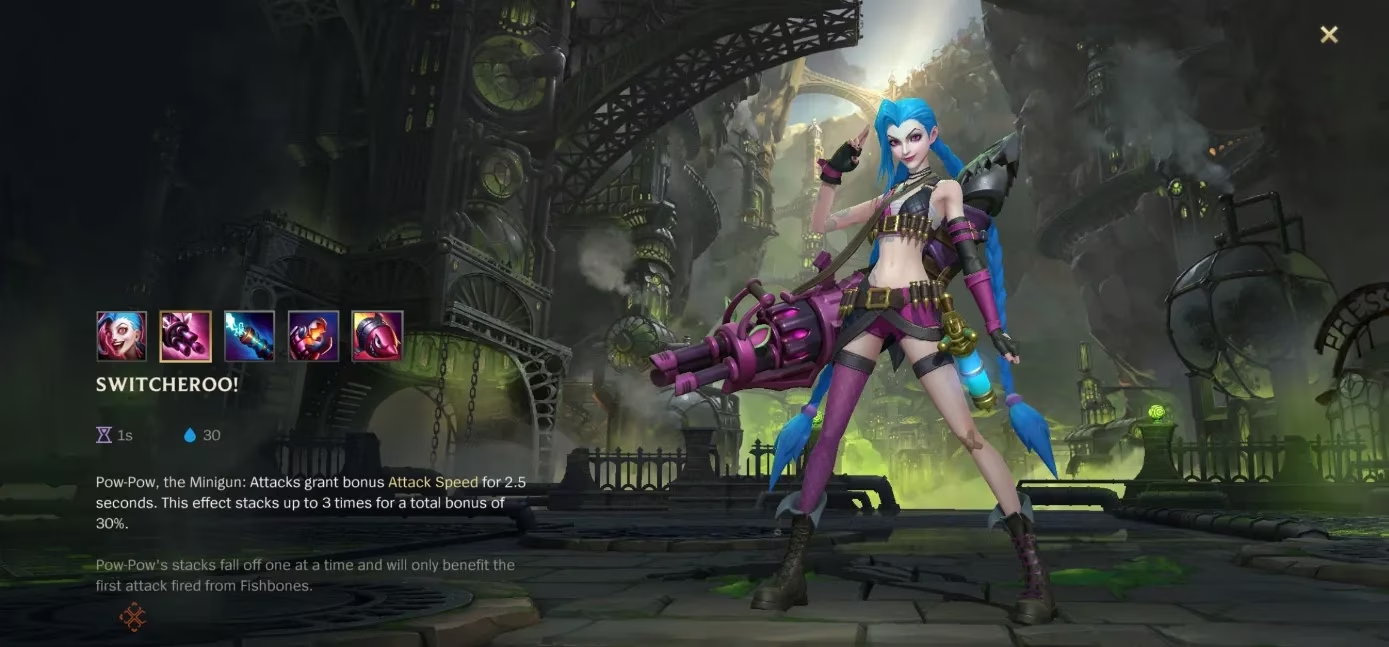
| Switcheroo! | Active | Swaps between Fishbones and Pow-Pow. Fishbones has longer range and deals area-of-effect damage, making it ideal for clustered enemies and waveclear. Pow-Pow is a rapid-fire minigun that stacks attack speed up to three times, making it strong for single-target damage and kiting. A common combo is to stack Pow-Pow before switching to Fishbones for a savage burst. |
| Zap! | Active | A long-range shock blast that slows the first enemy hit. It is useful for early poke, for setting up kills, and later as a powerful finishing tool. |
| Flame Chompers! | Active | Jinx throws a line of traps that root enemies after a short delay. These are her primary defensive tool, but they also control space, block escape routes, and follow up on teammates' crowd control. Timing matters because enemies can walk past traps placed too early. |
| Super Mega Death Rocket! | Ultimate | A global-range rocket that gains velocity and damage during its first second of travel. A well-aimed rocket can finish enemy champions from long distance, especially those below one-third health. |
📈 Skill Order Priorities
Jinx is known as a late-game powerhouse, but poor skill order can leave her weak during critical moments. The first three charges should diversify her arsenal: Switcheroo, Zap!, and Flame Chompers. This gives her access to both weapons, poke damage, and defensive zoning early.
After those initial points, the focus should return to Switcheroo. Maxing it first improves both Fishbones and Pow-Pow, which raises Jinx's overall damage throughout the mid-game. The Super Mega Death Rocket should be activated around the start of the mid-game, and points should be invested into it periodically. After Switcheroo is maxed, Zap! becomes the next priority, followed by Flame Chompers. If a match reaches its final stages, finishing the ultimate before defensive traps is usually the better choice, because Jinx's job is to end fights with explosive damage.
In 2026, players may adapt this order slightly based on lane pressure. A passive lane can justify earlier Zap! points for poke, while a dive-heavy enemy composition may make earlier Flame Chompers more valuable. The general principle remains the same: Jinx wants enough utility to survive, but her primary goal is maximum damage.
⚡ Summoner Spells
Heal and Flash remain the safest default summoner spells for Jinx. Heal affects both Jinx and her support, making it excellent for resetting a losing lane trade or surviving an all-in. Flash is equally important because Jinx has no built-in escape tool. Without Flash, she becomes easy prey for assassins and crowd-control chains. Situational alternatives such as Barrier or Cleanse can work against specific enemy compositions, but Heal and Flash provide the most consistent value for most matches.
🛒 Item Loadouts
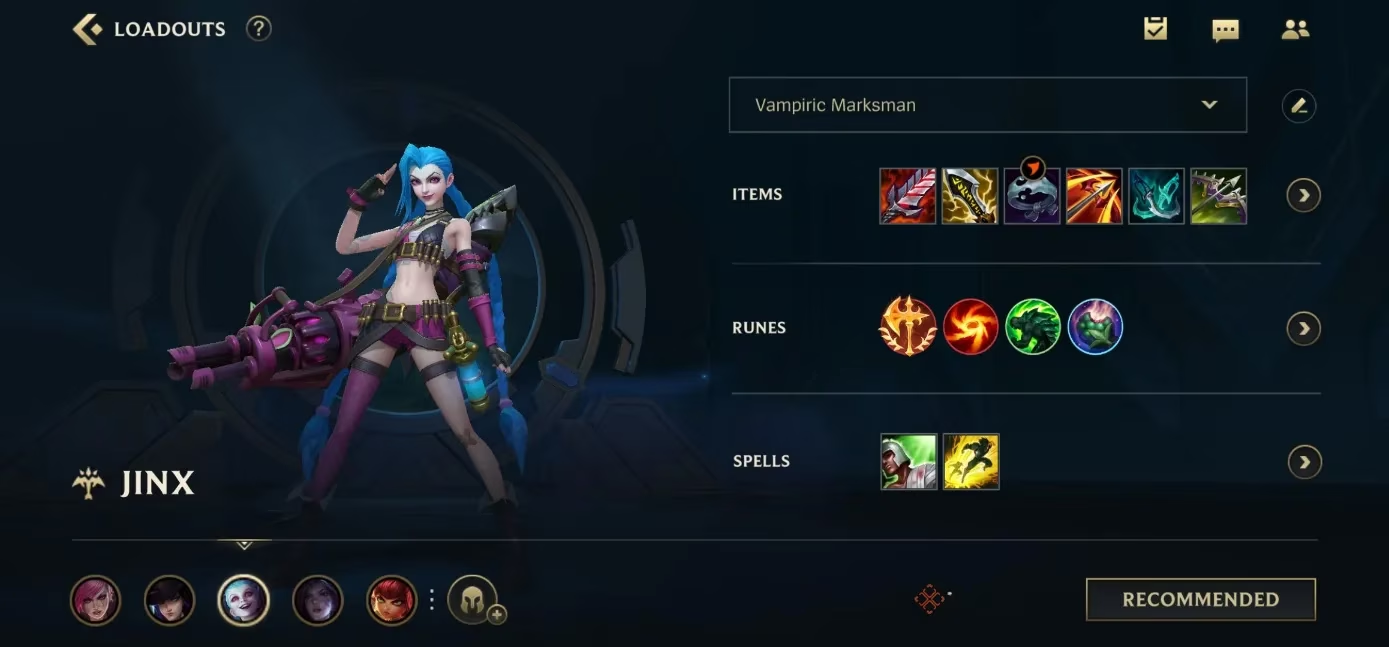
Item loadouts are critical for Jinx because her damage scales so well with critical strike chance, attack speed, and attack damage. Beginners should stick to one of the recommended pre-set builds until they understand how items interact. Jinx has two main preset paths: Critical Cannon and Vampiric Cannon.
| Build | Key Items | Purpose |
|---|---|---|
| Critical Cannon | Gluttonous Greaves upgraded to Quicksilver Enchant, Infinity Edge, Runaan's Hurricane | Maximizes raw DPS and area-of-effect damage. Infinity Edge dramatically boosts critical strikes, while Runaan's Hurricane synergizes with Fishbones for teamfight spread damage. |
| Vampiric Cannon | Bloodthirster, Phantom Dancer, plus core items from Critical Cannon | Adds survivability and lifesteal. Bloodthirster provides earlier sustain, while Phantom Dancer grants a protective shield when Jinx's health drops too low. |
Gluttonous Greaves are a staple in either build because they give Jinx some of the defense she otherwise lacks. Upgrading them to Quicksilver Enchant helps her resist crowd control effects. Infinity Edge remains a massive power spike, and Runaan's Hurricane is vital for boosting her area damage. For players who prefer a more balanced approach, Vampiric Cannon swaps in Bloodthirster and Phantom Dancer to keep Jinx alive during intense firefights.
Once a player becomes comfortable with the flow of battle, custom loadouts become more appealing. Mixing and matching items between the two recommended builds is a good starting point. The game also allows players to inspect the top three players for each champion and see which items they use in the current meta. This is a useful way to understand what is working at the highest level in 2026.
🧨 Combat Tactics
Jinx should always play at the edge of a fight. Fishbones is excellent for waveclear and hitting clustered enemies, while Pow-Pow is better for dueling and shredding single targets. Zap! can slow an approaching enemy or secure a kill, and Flame Chompers can trap pursuers or cut off escape routes. The Super Mega Death Rocket should be saved for long-range snipes, objective steals, or finishing low-health enemies after a teamfight.
Get Excited! turns takedowns into snowball opportunities. Once Jinx scores a kill or assist, her attack speed and movement speed increase, allowing her to chase or reposition aggressively. However, that aggression must be balanced with discipline. A Jinx who dashes forward without Flash or support will quickly become a free kill.
🏆 Final Thoughts
Jinx remains a high-risk, high-reward Dragon Lane marksman in 2026. She demands patience, positioning, and teamwork, but she rewards those qualities with some of the highest late-game damage in Wild Rift. By mastering her weapon swaps, prioritizing the right skills, choosing between Critical Cannon and Vampiric Cannon, and staying aware of the map, a player can turn the Loose Cannon into a genuine terror. She is not a safe pick, but for those who enjoy chaotic destruction and explosive teamfights, Jinx is still one of the most thrilling champions in the game.
Data referenced from Game Developer helps frame why Wild Rift marksmen like Jinx are designed around clear power curves: limited mobility and early vulnerability in exchange for explosive late-game payoff. In practical Dragon Lane terms, that design intent reinforces the blog’s emphasis on disciplined positioning, objective-timed rotations, and coordinated support synergy—because Jinx’s teamfight “reset” moments only happen when she can safely reach her core crit and attack-speed spikes without being picked off.