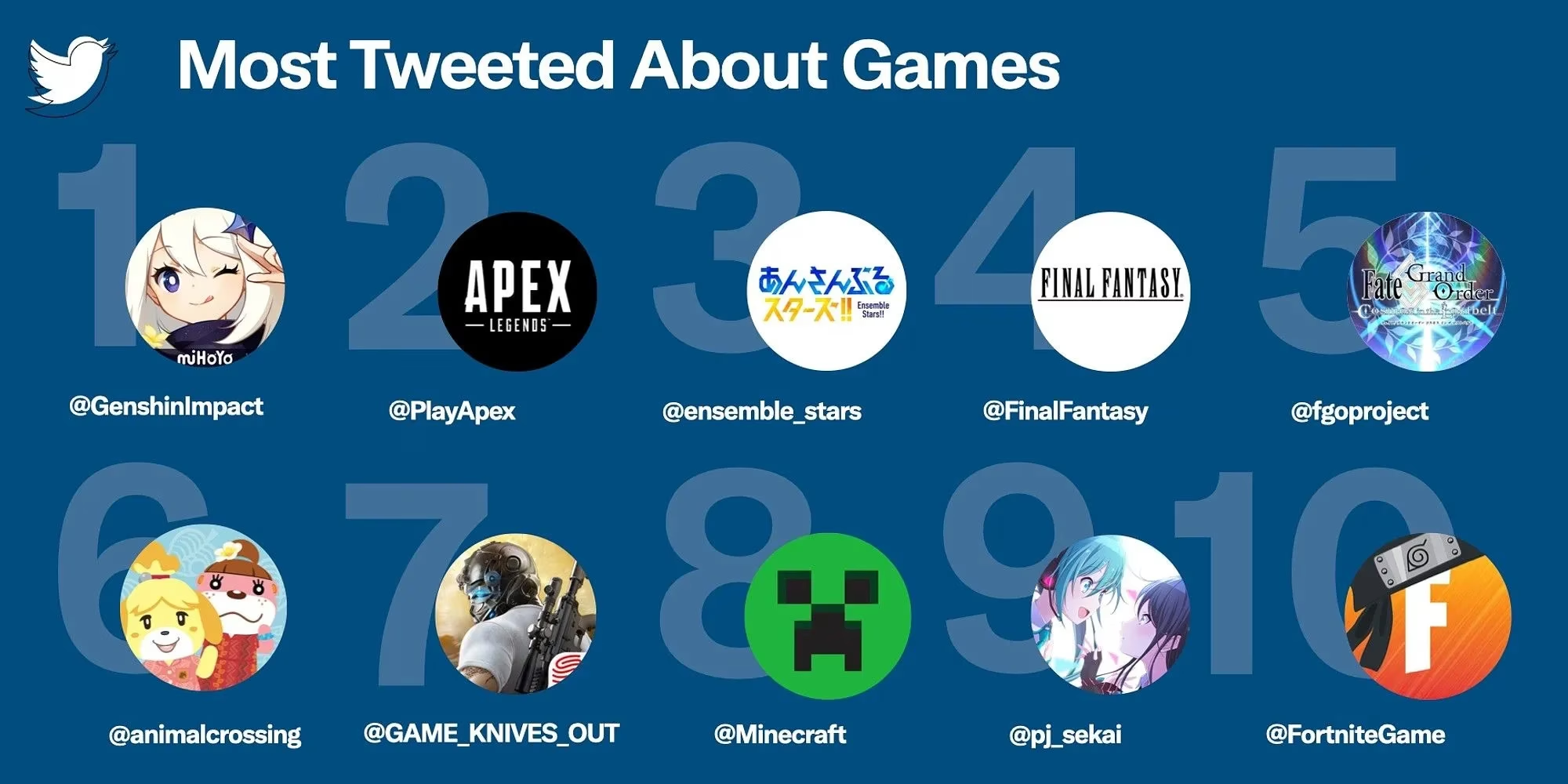
Twitter’s gaming landscape in 2021 was nothing short of a digital thunderstorm. Back then, conversations didn’t just flow—they erupted, cascading across timelines like a sudden monsoon flooding a dry riverbed. The platform revealed a staggering 2.4 billion gaming-related posts, a 14% leap from 2020, with the final quarter exploding into the loudest chatter ever recorded on the site. In the middle of this storm sat Genshin Impact, a relatively fresh title that had launched only a year earlier, yet somehow it managed to absorb all the oxygen in the room. It became the gravity well around which every other gaming topic seemed to orbit, defying the odds stacked by heavyweights like Apex Legends, Minecraft, and Fortnite.
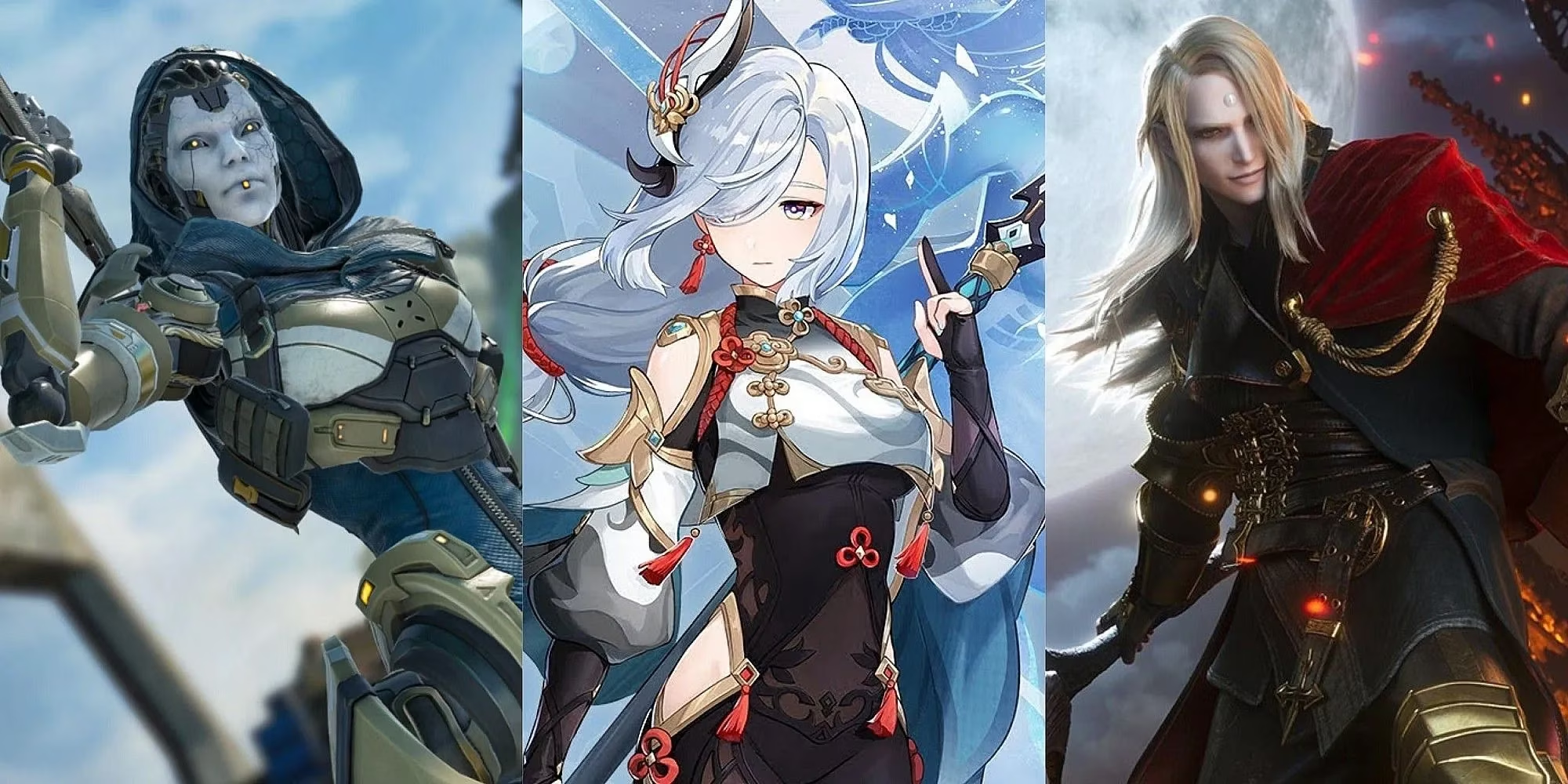
The numbers painted a picture so vivid it felt like watching a blizzard form in real time. Genshin Impact didn’t just crown the global top ten; it also dominated Reddit, becoming the most-viewed subreddit of the year, leaving League of Legends and Grand Theft Auto Online in the dust. Consumer spending mirrored the hype, with the game rocketing past the $1 billion mark in 2021 alone—a milestone it shared with titans like PUBG Mobile, Roblox, and Pokémon GO. For a title barely out of diapers, that kind of momentum felt like watching a sapling outgrow a century-old forest in a single season. The game’s character banners, elemental synergy discussions, and artifact farming rants turned Twitter into a 24/7 campfire where millions gathered to rant, celebrate, and theory-craft.
Beyond the gacha-fueled frenzy, the events calendar revealed where the collective heartbeat of gamers pounded loudest. E3 stood tall as the most mentioned gathering, even as the shadow of its 2022 cancellation already loomed—making 2021 perhaps the expo’s last true victory lap. The Game Awards and the Xbox & Bethesda Games Showcase followed suit, each serving as lightning rods for announcements that shook timelines. Meanwhile, the esports corner buzzed with names like Mongraal and Bugha, while teams such as LOUD esports and FaZe Clan kept their armies of fans tweeting nonstop. The geography of gaming chatter tilted heavily toward the East: Japan led the charge, with the United States, South Korea, Thailand, Brazil, the Philippines, Indonesia, the United Kingdom, France, and India rounding out the top ten—a clear reminder that gaming’s social synapse fires with equal intensity across oceans.
Fast-forward to 2026, and those 2021 stats feel like a time capsule unearthed from a hyper-accelerated era. The metaverse and NFT bubbles that inflated the Q4 conversation eventually popped, but the infrastructure of gaming discourse they left behind has only grown denser. Today, platforms like Twitter (now X) still hum with billions of monthly posts, though the tone has shifted. Genshin Impact remains a permanent fixture, its annual updates and new regions acting like seasonal monsoons that revive the fervor. But the ecology has diversified—titles such as Project Mugen and Elden Ring: Riftlands have carved out their own gravitational spheres, while AI-driven storytelling games are the new wildfire everyone wants to stand next to. The lesson from 2021 endures: in a world where attention is the rarest currency, a game that can fuse artistic wonder, constant renewal, and community participation will always find itself at the center of a social supernova.