In 2026, the jungle whispers have become reality—Riot Games has officially brought back the infamous Chemtech Drake to League of Legends after its dramatic exit following player backlash. This isn't just a simple re-release; it's a complete metamorphosis, like a volatile chemical compound finally stabilizing into something useful rather than explosive. The developers have spent years in their labs, analyzing every piece of feedback, every frustrated forum post, and every match where the original drake tilted games into oblivion. The return announcement feels less like adding a feature and more like reintroducing a reformed character with a compelling redemption story. For veterans who remember the Season 12 chaos, this moment carries the weight of history—will this be the triumphant return or another cautionary tale?
🔬 The Phoenix Formula: Chemtech Drake 2.0's New Identity
Gone are the days of the oppressive attack buff against high-health targets and the game-warping resurrection soul. The 2026 Chemtech Drake has been rebuilt from the molecular level up. Slaying this drake now grants your team enhanced shield strength, healing effects, and tenacity—a defensive-oriented package designed to empower sustained fights rather than create sudden-death scenarios. Think of it as swapping a grenade for a reinforced shield; the power is still there, but it's channeled into resilience.
The Chemtech Soul has undergone the most radical transformation. Instead of granting a temporary resurrection, it now provides bonus damage when your champion's health falls below a specific threshold. This creates dramatic 'clutch moment' potential without removing counterplay. It's like a adrenaline injection that kicks in at the brink of defeat, turning desperate situations into potential outplays rather than guaranteeing second lives.
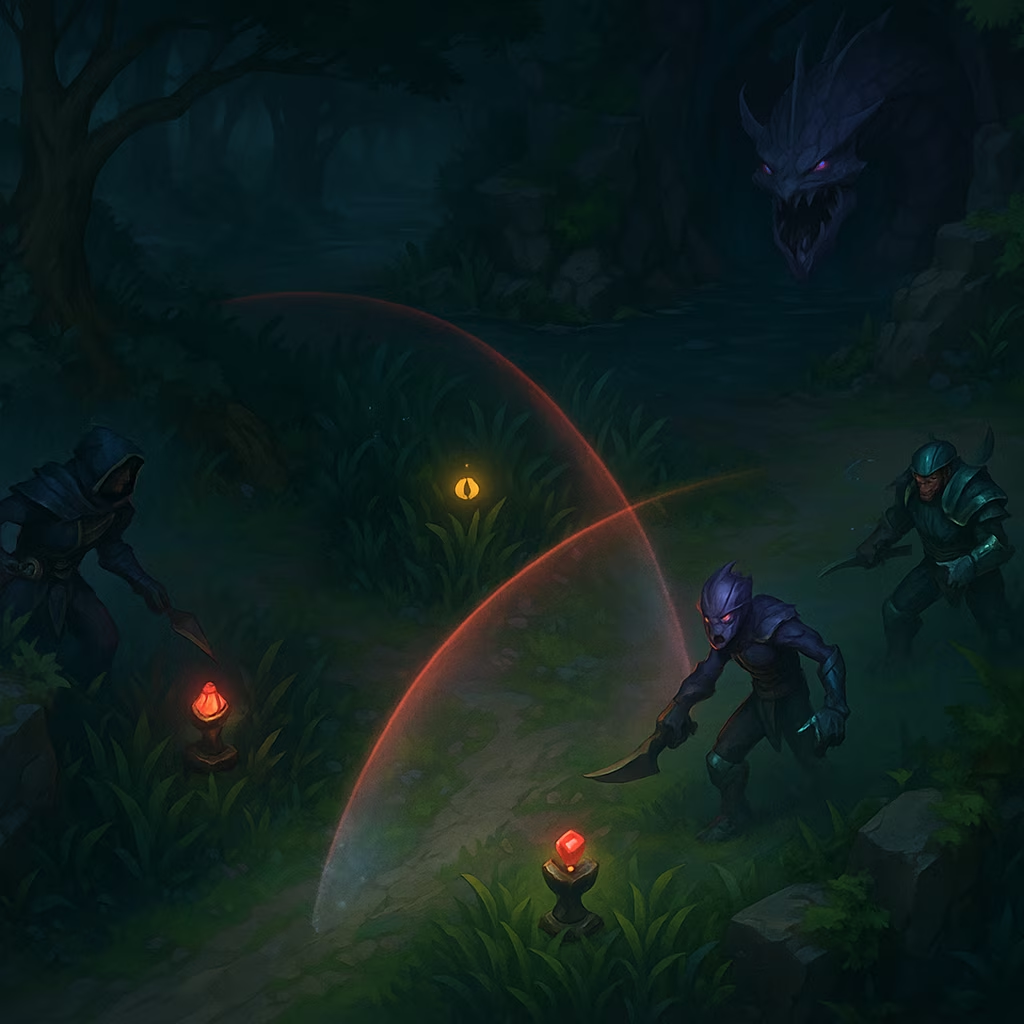
🌿 Jungle Alchemy: The Transformed Rift Ecosystem
The drake's return isn't isolated—it brings a complete chemical makeover to Summoner's Rift itself. The environment morphs to reflect Chemtech's influence, with new visual effects that make the jungle feel like a living laboratory. But the real gameplay changes come from the overhauled jungle plants, which have been completely re-engineered:
| Old Plant | New Chemtech Variant | Effect Change |
|---|---|---|
| Blast Cone | Enhanced Blast Cone | Launches champions twice as far |
| Honeyfruit | Stim Fruit | Provides small heal + shield (no slow) |
| Scryer's Bloom | Stalker's Bloom | Grants vision + movement speed toward enemies |
These changes fundamentally alter jungle navigation and skirmishing. The super-powered Blast Cones create new escape and engage routes—imagine being launched across terrain like a cork from a champagne bottle at a celebration gone wonderfully wrong. Stim Fruits offer sustain without the vulnerability of being slowed, while Stalker's Bloom turns vision control into aggressive tracking tools.
🧪 Learning From Past Experiments: Riot's Transparent Approach
What makes this 2026 iteration different isn't just the mechanics, but the development philosophy behind it. After the original Chemtech Drake's reception—which players described as 'like trying to solve a puzzle while someone shakes the table'—Riot has embraced radical transparency. The Summoner's Rift team released these changes earlier than usual specifically to gather community feedback during extended testing periods.
This marks a significant shift from the unannounced meta changes that frustrated competitive players during the drake's first incarnation. Now, developers are treating the community as co-experimenters in this chemical renaissance. Some veteran players who saw potential in the original concept feel vindicated; their feedback wasn't discarded but used as catalyst for this refined version.
⚖️ The Delicate Equilibrium: Balancing Innovation and Fairness
The challenge Riot faces is navigating the fine line between innovative mechanics and competitive integrity. The original Chemtech Drake failed because its resurrection soul created situations with minimal counterplay—it was like trying to argue with someone who gets to come back from being proven wrong. The new version seeks to maintain the high-stakes, thematic identity of Chemtech (risk, transformation, power at a cost) while ensuring opponents have clear windows to respond.
The tenacity and defensive buffs from drake kills encourage teams to commit to longer engagements, while the low-health damage bonus from the soul creates dramatic tension without guaranteeing victory. It's a design that rewards calculated aggression rather than random chance—a chemical reaction with predictable catalysts rather than an unstable explosion.
🔮 The Future of Elemental Drakes: What This Means for League
Chemtech Drake's return represents more than just one mechanic coming back; it signals Riot's confidence in the elemental drake system as a core part of League's identity. By successfully reintegrating the most controversial element, they demonstrate that even failed experiments can yield valuable data for future innovations.
Players in 2026 are already theorizing about how Chemtech will interact with other drake types, which champions will benefit most from the new effects, and whether this could shift the jungle meta toward more durable, sustained-fight compositions. The defensive nature of the buffs might make engage tanks and healing supports more valuable, while the execute-style soul damage could empower assassins who dive into backlines.
As League of Legends continues evolving in 2026, the Chemtech Drake's journey from reviled to refined serves as a testament to iterative game design. It's a reminder that in the right laboratory conditions—with proper testing, community feedback, and thoughtful adjustments—even the most volatile elements can be harnessed for exciting gameplay. The jungle will never be the same, and for once, that might actually be a good thing.