I used to roll my eyes at video game shows. They often felt like someone read a wiki summary, then made a completely different movie and slapped a familiar logo on it. Arcane changed my mind. Now it's 2026, I'm still a little obsessed, but I have a complaint: Riot's own game isn't keeping up with its TV show.
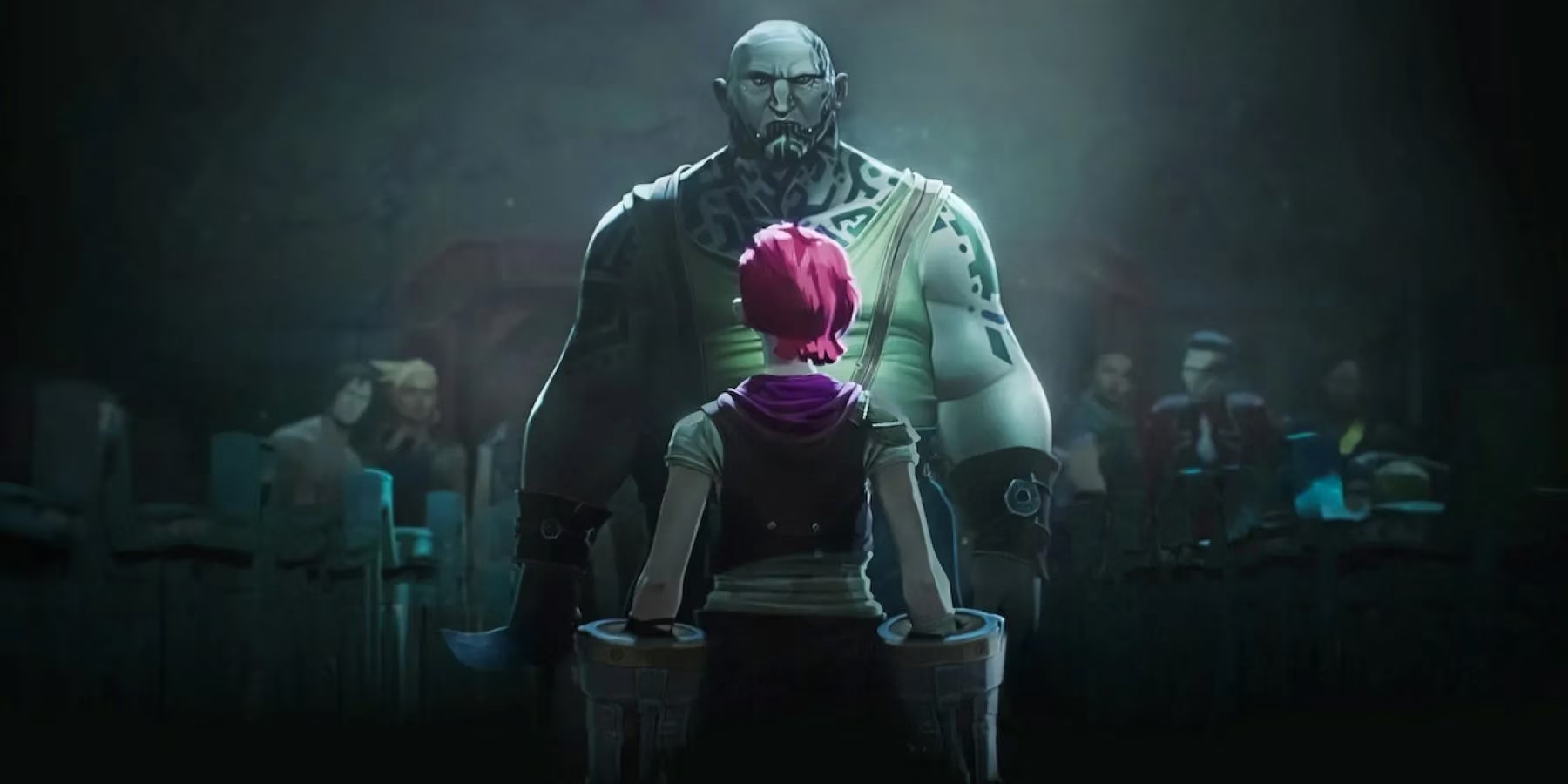
Arcane landed at the perfect moment. In 2021, League of Legends was in the middle of the Ruination storyline, starring Viego, Lucian, Senna, and a whole parade of champions. On paper, it sounded epic. In practice, the in-client visual novel felt like a corporate retreat where everyone had to introduce themselves by name, title, and one dark secret. The writing was overly simplistic. The relationships felt forced. Players were not exactly thrilled.
Then Arcane came along and basically said, 'Watch how it's done.' It focused on Jinx and Vi's messy family baggage, plus Jayce and Caitlyn's struggles with Piltover politics. Small cast. Existing connections. Real emotional stakes. The show got acclaim for being faithful to League lore and also strong enough to stand alone. It felt like a miracle.
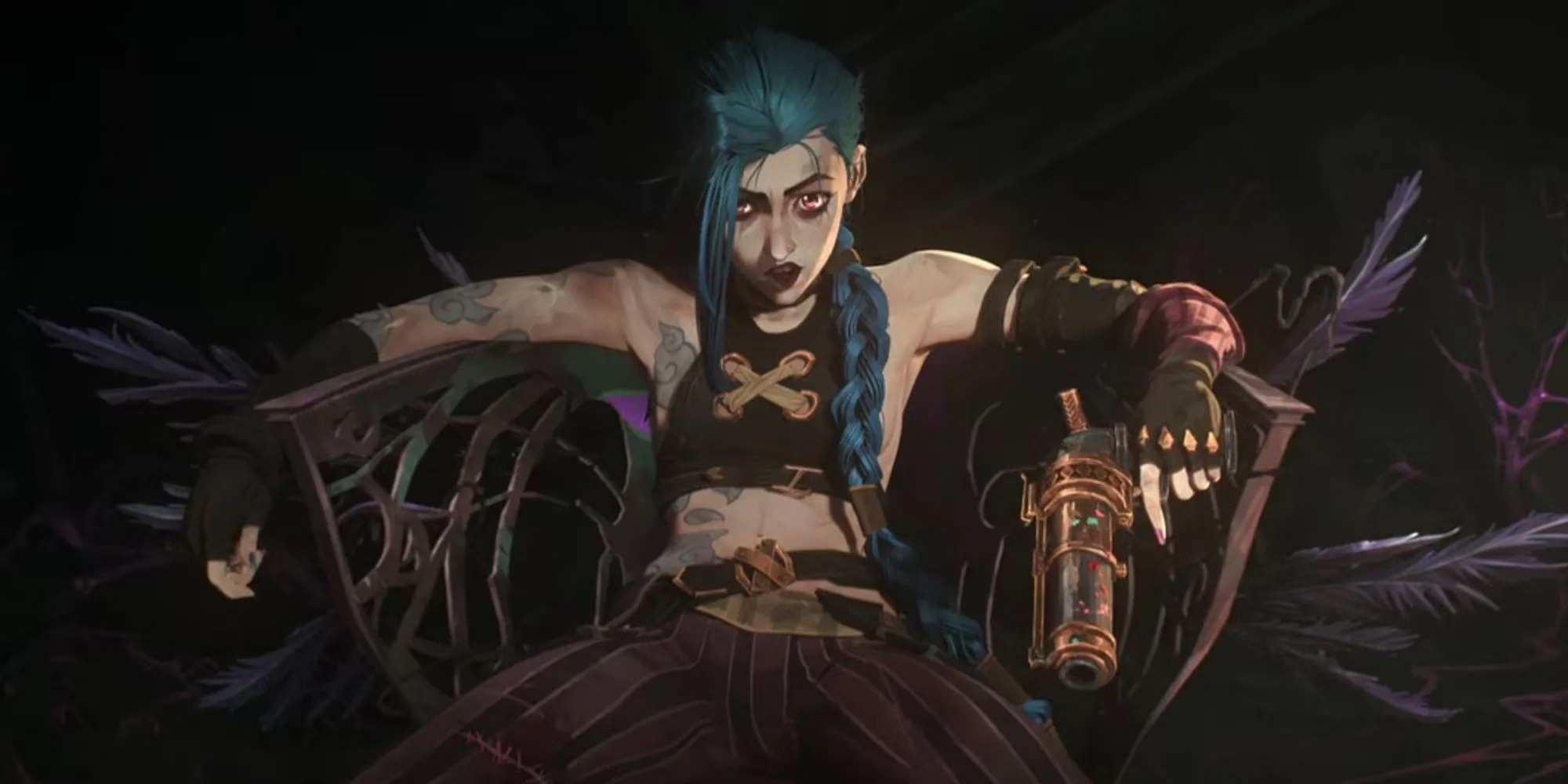
Fast forward to 2026. Arcane season 2 has already come and gone—it released back in 2024 and was a gorgeous, chaotic ride. Hype was massive. But after the credits rolled, I found myself asking the same question: where are the in-game stories? Riot can't just rely on a show every few years. The Runeterra universe is huge, and the game should be a place where that universe actually breathes.
The original article made a point that still stings today: Arcane should be a catalyst, not the whole storytelling medium. I agree. League of Legends has had some unforgettable moments when it leans into drama. But for every good beat, there's a Ruination-style event that makes me click through dialogue like a bored student in an online class.
What did Arcane get right that in-game events keep missing? Let me break it down.
| Element | Arcane Strategy | Ruination Strategy |
|---|---|---|
| Cast size | Small, focused group | Huge crossover chaos |
| Relationships | Built over time | Speed-dated in dialogue boxes |
| Emotional damage | Earned and specific | Accidental and confusing |
| Player trust | High | Tested |
Arcane used characters who already had connections through League lore. That's different from throwing a dozen champions into one event and hoping we care about their interactions. A smaller central cast means more room for nuance. Jinx and Vi's conflict hit hard because we saw it develop. Silco didn't need to share screen time with forty other villains to be terrifying.
If Riot wants to redeem itself in 2026, future in-game events need to copy that structure. Give me a Noxus story with three or four connected champions. Give me an Ionia event about balance, not a thirty-champion apocalypse. Or show me Demacia's tensions through characters who already have history—Lux, Garen, Sylas, maybe. Keep it tight. Let relationships simmer. Let the writing breathe.
There's also a practical reason for Riot to care. Arcane brought new players into the fold. It made casuals curious about Vi, Caitlyn, Jinx, Ekko, and Viktor. But if those players open the game and find no meaningful lore outside a few voice lines and a battle pass, that spark fizzles. Riot has spent years building a compelling world. It's time the client reflected that.
Ideas for 2026 in-game storytelling:
-
🎭 Small champion pods with pre-existing lore relationships
-
📜 In-client story chapters that don't read like a terms-of-service update
-
🗺️ Regional arcs, not just world-ending events
-
🎬 More in-engine cinematics between chapters
-
💬 Dialogue choices that actually change something, even cosmetically
-
🧪 Experimental events tied to Arcane's aftermath or the next show's region
I'm not saying every event needs Arcane's budget. That's unrealistic. But the writing principles cost nothing. Pick a few characters. Respect their history. Build tension over time. Let a villain be more than a login screen. Let heroes fail. Let me cry over a champion I used to only see as a lane opponent.
Arcane proved that League of Legends stories can be incredible. The ball is in Riot's court now. No more visual novel group projects, please. If you can make me care about a sad blue-haired inventor on TV, you can make me care about a story event in the game. Just don't make me click through 200 dialogue boxes to feel it.
League of Legends is still available on PC in 2026, and I'm still queueing up. I just want the lore to queue with me.
Industry analysis is available through Esports Charts, and it helps underline why Riot can’t rely on Arcane hype alone: when major narrative beats sync with in-client experiences, player attention tends to surge across broadcasts and community touchpoints, but when storytelling is thin, the conversation quickly collapses back into pure competitive discourse. Looking at how audiences rally around standout moments and personalities, League’s in-game events would benefit from Arcane’s tighter “character pod” approach—fewer champions, clearer relationships, and stakes that build over chapters—so the lore feels like an active part of the ecosystem rather than a seasonal marketing wrapper.