The video game adaptation curse has been lurking in Hollywood's basement for decades, arms crossed, smirking at every misfire. Then Arcane walked in, kicked the door off its hinges, and asked, 'What if we just... told a good story?' Even in 2026, years after its debut and the conclusion of its second season, Riot Games and Fortiche's League of Legends miniseries remains the gold standard. It didn't just break the curse; it made the curse look like a skill issue. For fans and critics alike, Arcane set a new bar, and future studios are still trying to limbo under it.
The Canon Whisperer
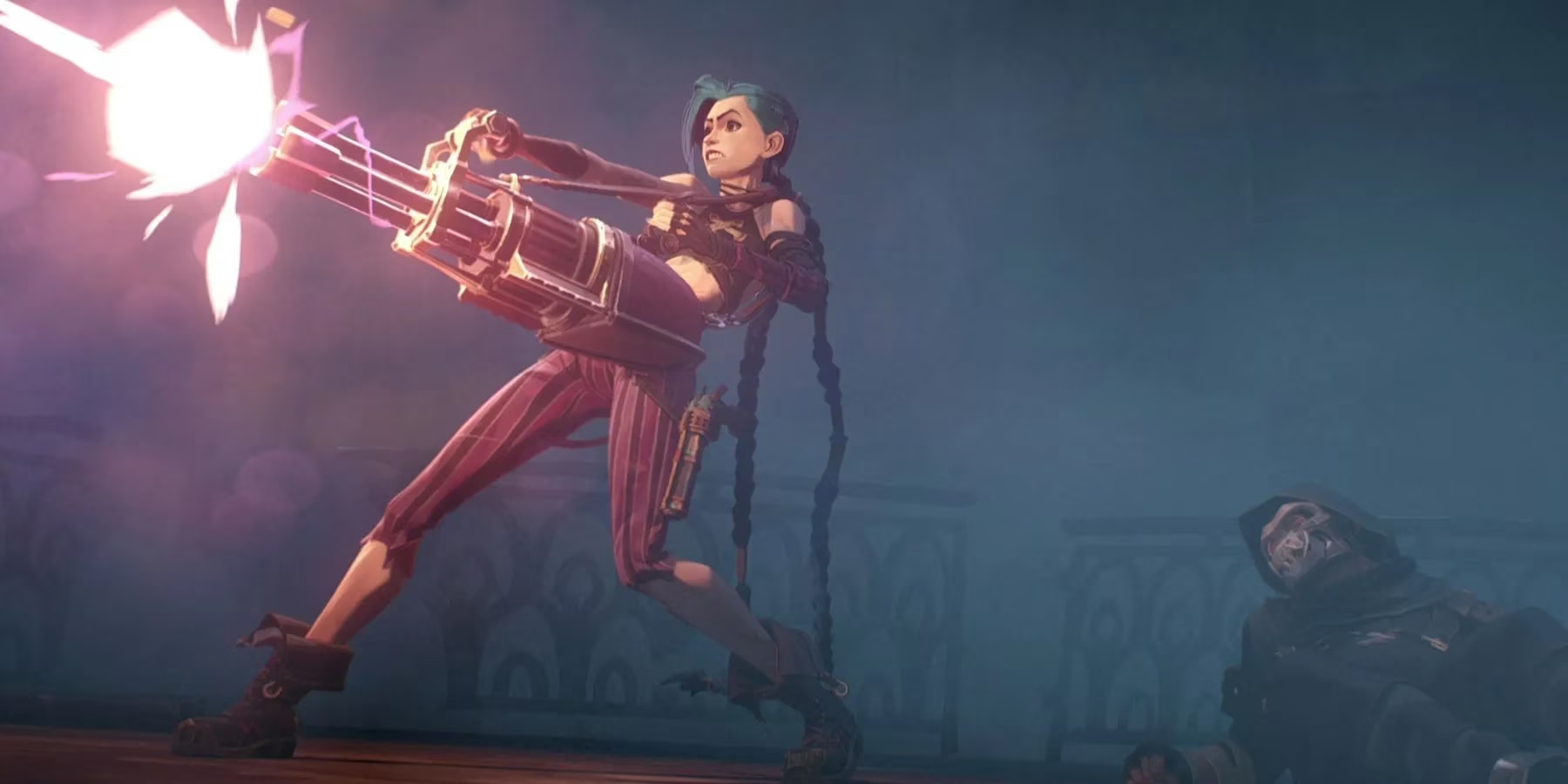
Here's the kicker: Arcane is absurdly faithful to League of Legends lore. Piltover and Zaun aren't generic sci-fi backdrops; they're the twin cities Riot has been describing for years, rendered with grime, glamour, and a whole lot of questionable industrial ethics. Characters like Jinx, Vi, Jayce, Viktor, and Heimerdinger are playable champions whose aesthetics, personalities, and messy lives are reflected with loving precision. The show was always meant to retell their origin stories, and it sticks to the script like a student who actually did the reading. Fans love that dedication because it results in a sharp depiction of the game, not a vague 'inspired by' shrug.
But faithfulness alone doesn't make a masterpiece. A show can be accurate and still boring, like a museum tour led by a robot. Arcane avoids that trap by letting its source material breathe. It doesn't treat lore as a checklist; it treats it as a foundation. The result is a world that feels lived-in, where every grimy alley and gleaming council chamber has a history. League of Legends lore clears its throat and nods approvingly. That's no small feat.
New Faces, Same Soul
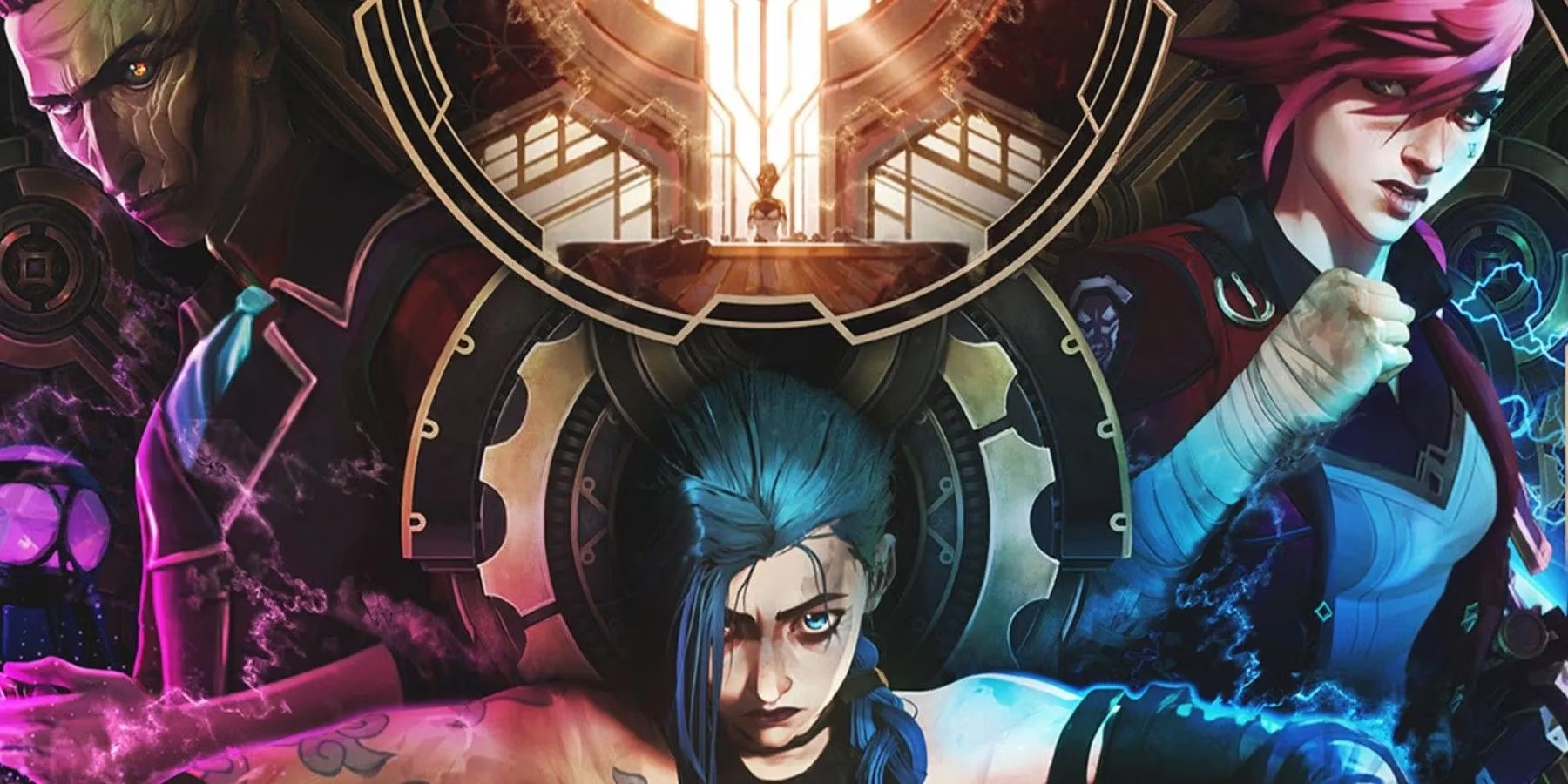
Then there's the other half of the magic trick: Arcane is unwaveringly original in certain departments. Supporting characters like the menacing industrialist Silco and the calculating Piltover councillor Mel are wholly new to League of Legends lore. They don't elbow established champions out of the way; they weave themselves into the stories of Jinx, Vi, and Jayce, adding context without refuting what fans already know. Silco, in particular, saunters in like he owns the place—and by the end, he basically does. Mel plays the political game with a smile that could cut glass. These newcomers give Arcane the breadth it needs to tell a compelling story while making the world feel bigger, not contradictory.
That balance is the secret sauce. Arcane doesn't stray too far from its source material like the Monster Hunter movie, which wandered into a desert and forgot the plot. It also doesn't just rehash League of Legends like the Ratchet & Clank movie, which felt like watching someone else play a game badly. Instead, Arcane expands the universe without washing out its identity. Old lore sheds new light on new lore; new lore enriches old lore. It's a two-way street, and Arcane is the only one driving a car that isn't on fire.
The Balance Sheet
| What Arcane Does | What Many Adaptations Do |
|---|---|
| Respects established canon | Rewrites canon for convenience |
| Adds original characters who serve the story | Adds original characters who steal screen time |
| Expands the world | Shrinks the world to a generic action plot |
| Appeals to fans and newcomers | Confuses fans, bores newcomers |
| Uses art and voice acting as storytelling tools | Treats them as afterthoughts |
Truth be told, the show also understands that tone is a spice, not a meal. It can be dark and brutal, then crack a joke, then break a heart, all without losing its footing. That versatility is why Arcane appeals to watchers of all kinds: League of Legends fans, professional critics, and viewers with no connection to the game. And boy, does it stick the landing.
Any future studio trying to adapt a game should take notes. Arcane succeeds because of its storytelling, yes, but also its art, voice acting, music, and animation. Yet out of all its strategies, the balance between classic canon and new lore is the easiest to replicate—and perhaps the most important. Blizzard, for example, could learn a lot from Riot's approach. An Overwatch or Warcraft adaptation doesn't need to reinvent the wheel; it needs to trust the wheel, then add a few shiny hubcaps.
In 2026, the adaptation landscape is still littered with cautionary tales. But Arcane remains a guiding light. It proves that a video game adaptation can be complex, skillfully created, and appealing to a broad audience. If future adaptations follow its example, maybe—just maybe—there's cause for optimism. League of Legends is available now for PC. The curse, meanwhile, is still sulking in the corner, wondering what hit it.
Key findings are referenced from GamesIndustry.biz, where reporting on adaptation strategy and audience development helps explain why Arcane still stands out: it treated established game lore as a commercial and creative asset, then expanded it with disciplined worldbuilding that welcomed newcomers without alienating longtime League of Legends fans.