Since its explosive debut in 2021, Arcane has kept fans marveling at its mechanical marvels—and in 2026, the gears still turn beautifully. In the clockwork chaos of Piltover and Zaun, the line between genius and madness is drawn with a soldering iron. Arcane doesn’t just serve up political strife and emotional gut-punches—it’s also a showcase of DIY demigods whose inventions could either polish a star or blow up a city block. From self-taught bomb-makers to aristocratic engineers, the series celebrates the tinkerers who shape the world with hextech, shimmer, and sheer stubborn creativity. Much like a caffeinated squirrel with a chemistry set, some of these inventors build marvels that make even the audience’s jaw drop—and occasionally, explode. Here’s a rundown of the most brilliant minds in the undercity and topside, ranked not by their morals but by the sheer audacity of their creations.
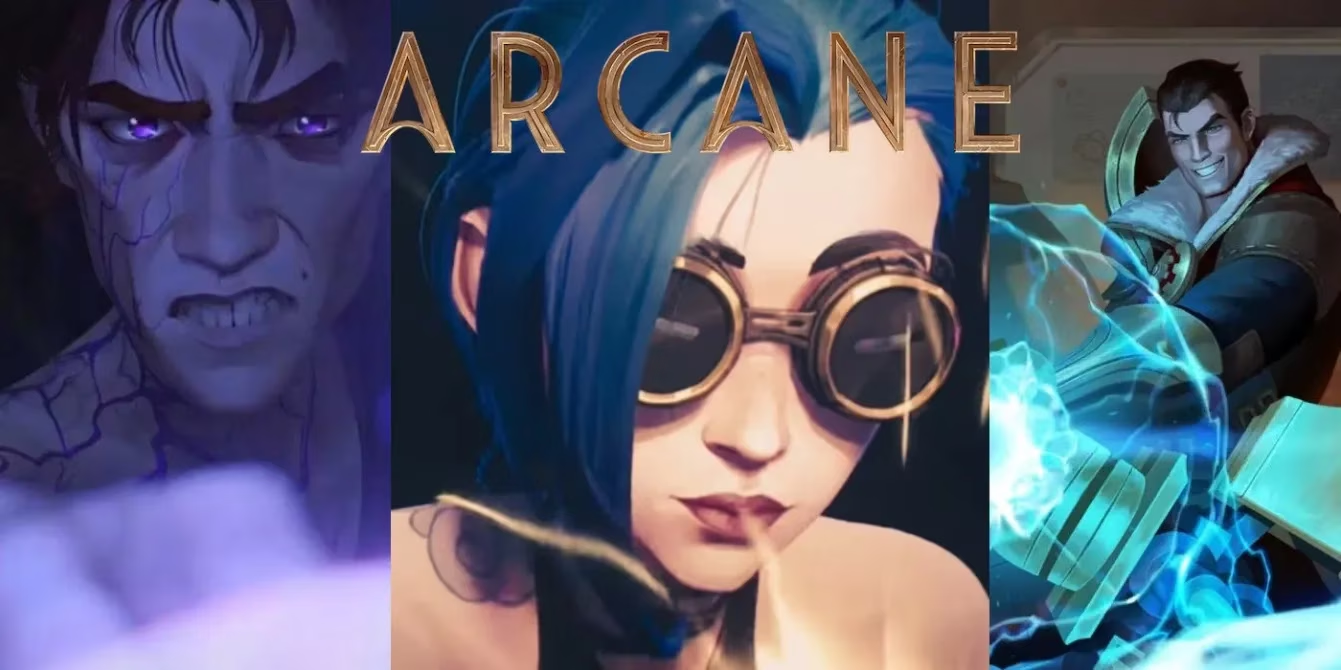
7. Sevika: The Scrappy Cyborg with a Surgeon’s Touch
Sevika is the kind of enforcer who doesn’t need a blueprint—just a pile of scrap, a vial of shimmer, and a grudge. After losing her arm in a fiery act of loyalty, she straps on a mechanical limb that’s part prosthetic, part Swiss Army knife forged in a demon’s workshop. While the show never explicitly names the engineer behind the arm (fingers point to Singed), Sevika’s own modifications—like the hidden blade that unfurls like a metallic rose—prove she’s no mere customer. She’s the type who’d read an IKEA manual once, then toss it into the furnace because she’s already improved the design. Her arm isn’t just a tool; it’s a statement that even in the shadows of Silco’s empire, a wounded soldier can become a walking weapon.
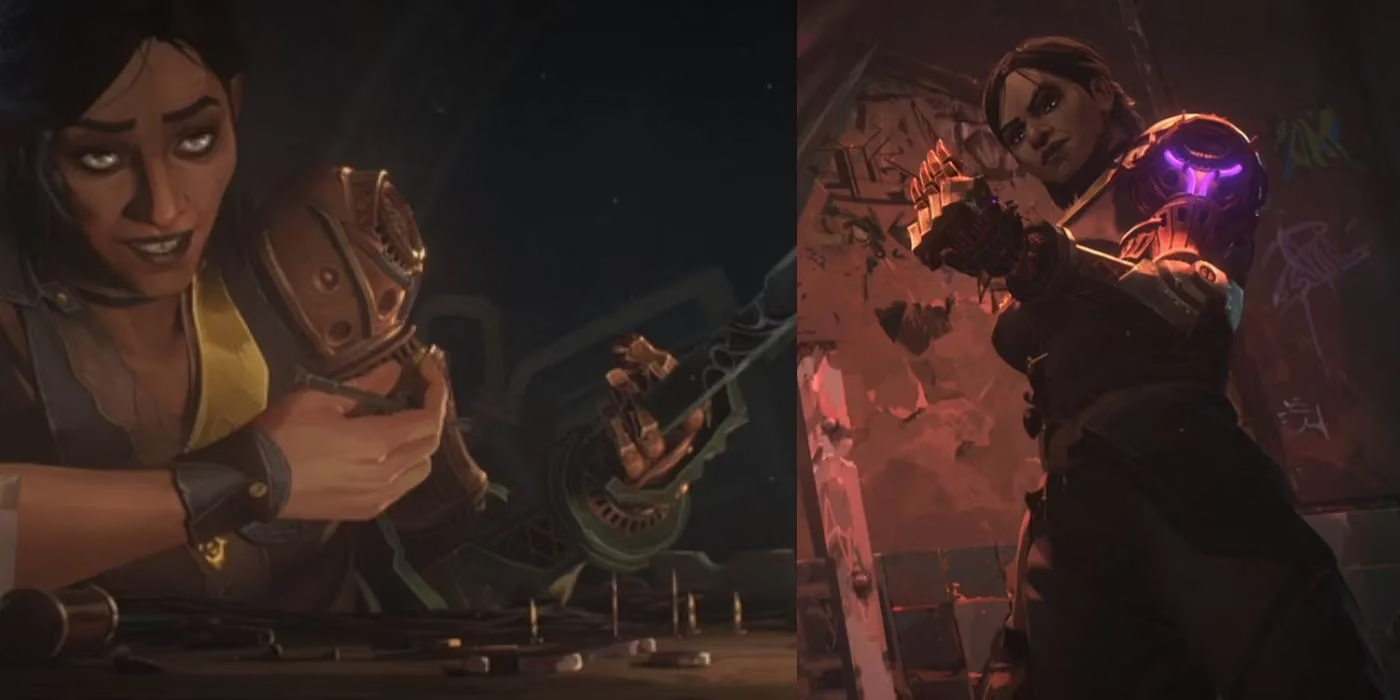
6. Ekko: The Boy Who Bent Time with a Skateboard
Ekko hovers into the scene like a hummingbird with a grudge, his hoverboard whirring with the confidence of someone who’s been tinkering since he could hold a wrench. Orphaned by circumstances and fueled by the need for speed, he’s the poster child for garage-inventor swagger. The show teases his greatest creation—the Z-Drive—with the subtlety of a ticking stopwatch and graffiti hourglasses, but even his daily gadgets scream genius. His board isn’t just a ride; it’s a love letter to repurposed scrap and stolen hextech. Heimerdinger’s critique of the blade pitch only highlights how Ekko’s mind works like a jazz musician riffing on engineering: unorthodox, slightly off-key, but breathtakingly original. If Piltover’s academy ever opened its doors to Zaun’s youth, Ekko would paint the halls with temporal paradoxes by lunchtime.
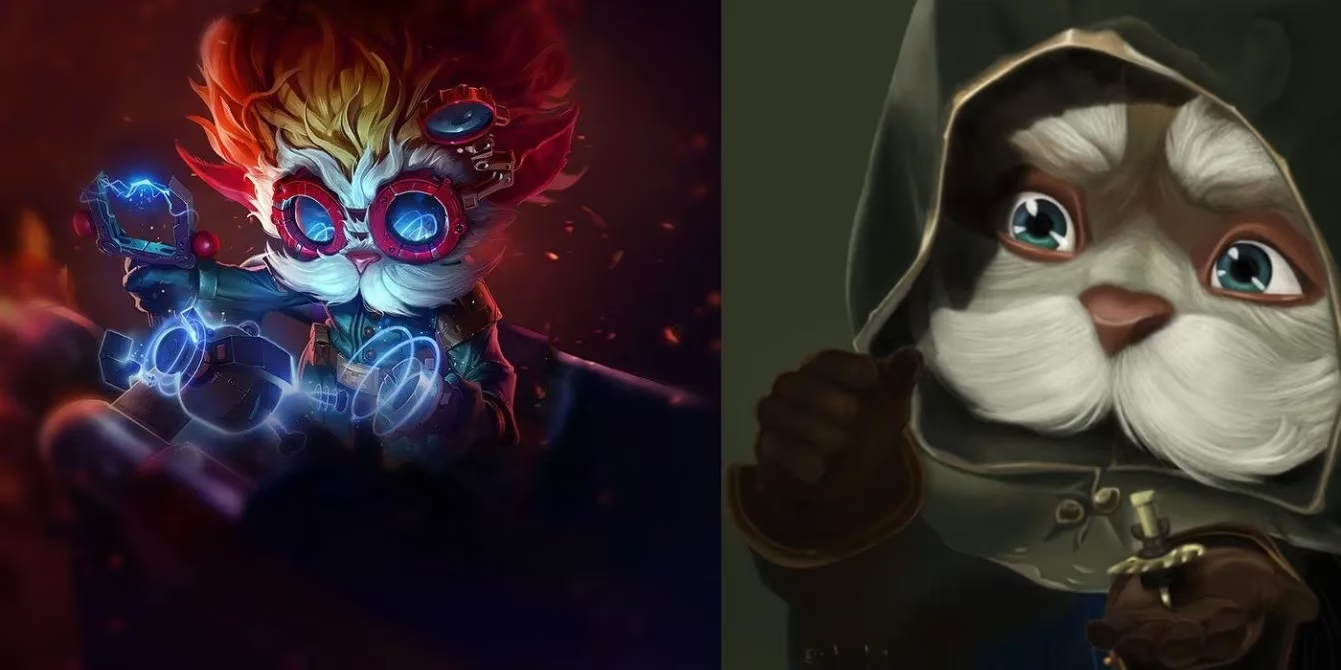
5. Heimerdinger: The Furry Professor Who Gives Invention a Heartbeat
Heimerdinger might look like a sentient mustache with legs, but his brain carries centuries of wisdom wrapped in yordle-sized skepticism. He’s the epitome of the “measure twice, cut once” philosophy—only he measures about three hundred times and still worries about the fabric of reality. While others sprint toward hextech glory, Heimerdinger is the concerned grandfather who remembers every fire that bold children have started before. Yet, when he casually whips up a spinning top for a frightened Zaunite girl, it’s a masterclass in effortless craftsmanship: each gear turns with the precision of a clockmaker and the warmth of a bedtime story. His questioning of Ekko’s blade pitch is less criticism and more the anxiety of a maestro watching a prodigy play with fireworks. He’s a living anachronism who knows that the most dangerous inventions aren’t the ones that fail—they’re the ones that succeed too well.
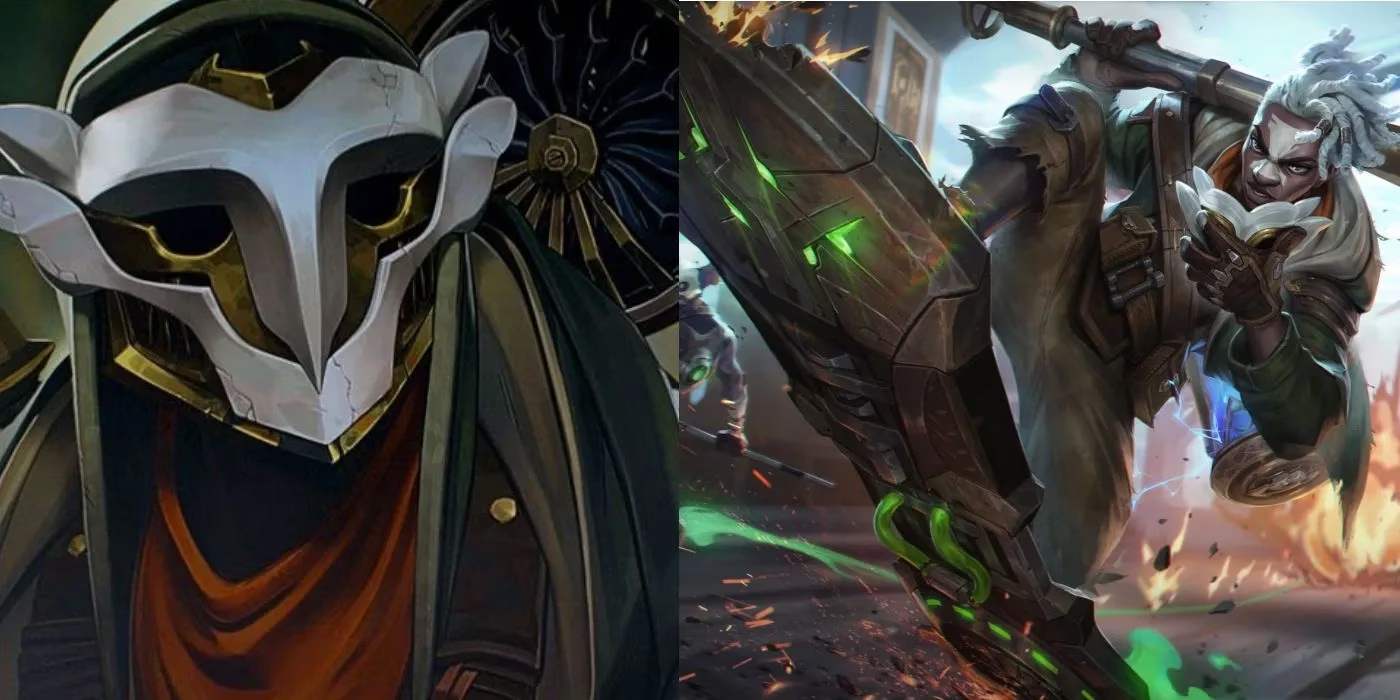
4. Jayce: The Golden Boy with a Hammer and a Dream
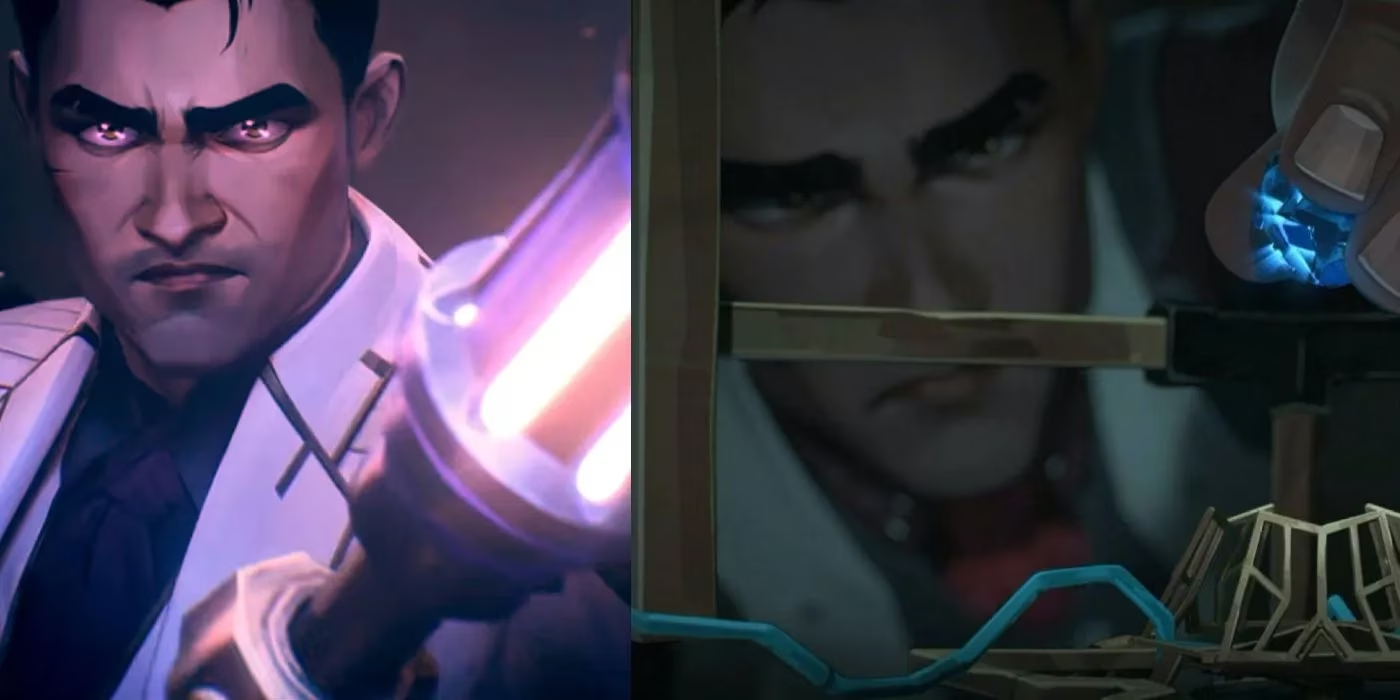
Jayce Talis is the poster boy for Piltover’s polished innovation—a blacksmith-philosopher who wrestles hextech from theory into thunderous reality. He’s not just the face of progress; he’s the hands too, forging his iconic hextech hammer and Vi’s gauntlets in a smithy that probably smells of ozone and ambition. If Viktor is the cerebral cortex of their partnership, Jayce is the pounding heart that refuses to skip a beat, even when the council wags its bureaucratic fingers. His confidence is its own double-edged blade: it births weapons that could level a Chembaron’s lair, but also blinds him to the cracks in the crystal. Still, there’s something undeniably magnetic about a man who can turn a chunk of unstable arcane rock into a tool that looks good enough to hang in a museum—right before swinging it at a shimmer-maddened brute.
3. Singed: The Alchemist Whose Lab Smells Like Ambition and Regret
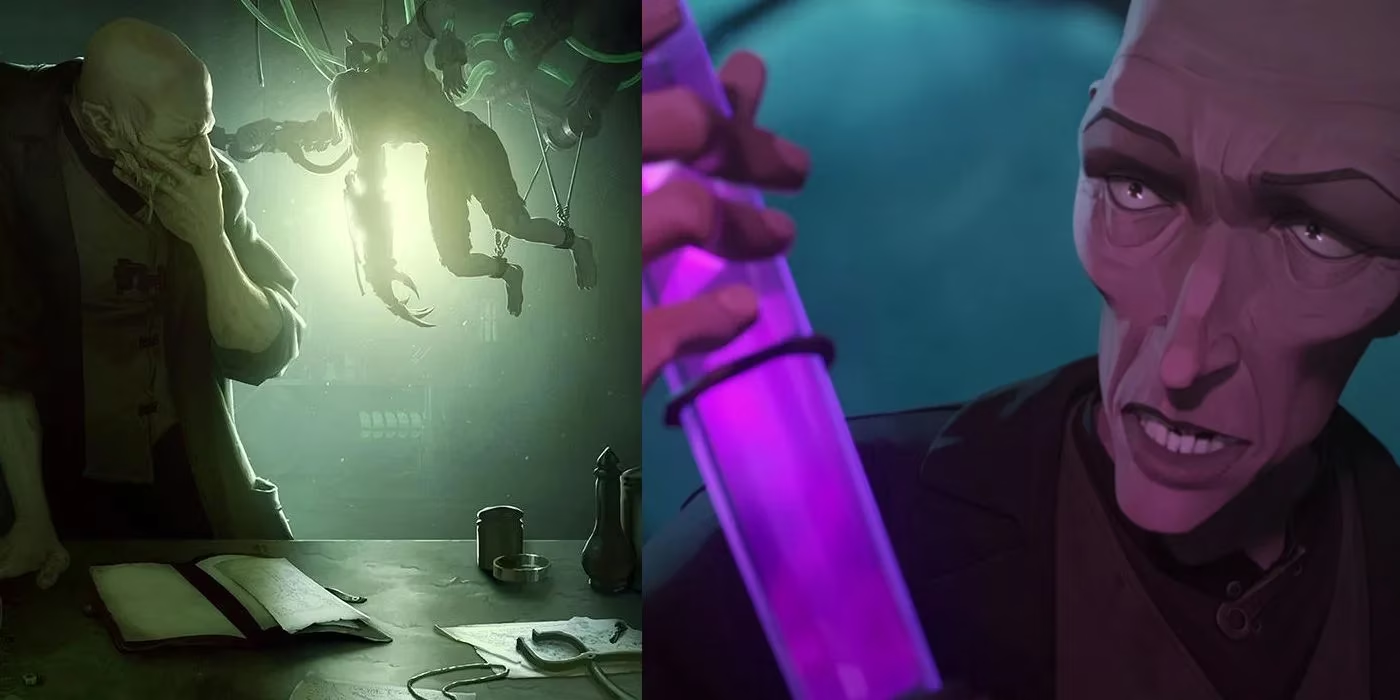
Deep in the bowels of Zaun, where the air tastes purple and the walls weep ichor, Singed brews nightmares into serums. He’s the sort of mad scientist who makes Faust look like a Boy Scout—a gaunt figure whose genius is only outweighed by his indifference to suffering. Shimmer, his signature concoction, is less a drug and more a liquid metamorphosis that reshapes flesh and fury. He’s the hidden hand behind Sevika’s arm, Silco’s empire, and perhaps half the illicit augmentations in the undercity. Singed treats biology like a recipe book he’s rewriting in blood, turning people into projects without ever raising his scratchy voice. His lessons to Viktor reveal a mentor who doesn’t teach ethics—only possibilities. In a world of hextech wonder, Singed’s twisted brilliance is a reminder that the brightest minds sometimes cast the longest shadows.
2. Viktor: The Dying Flame That Ignited Hextech’s True Power
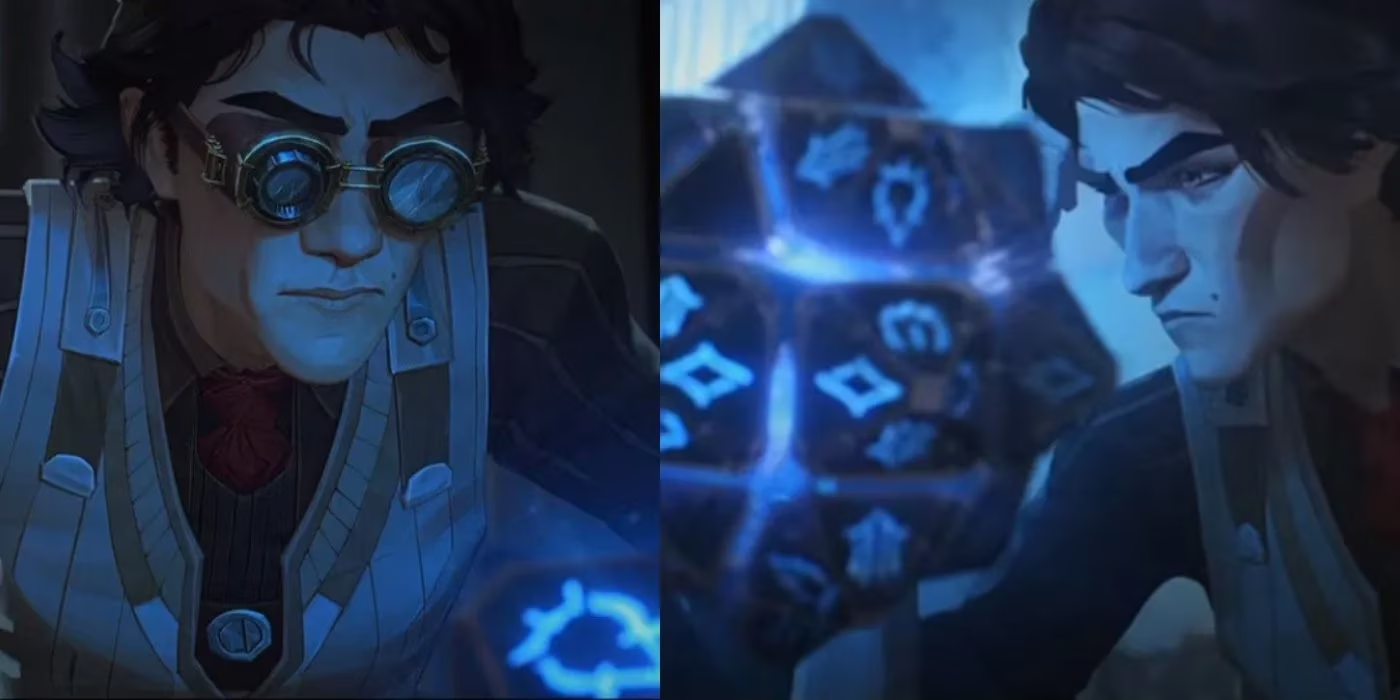
Viktor is the quiet genius whose cough hides a cosmic understanding. If Jayce lit the match, Viktor saw the inferno it could become—and then figured out how to bottle it for later. He’s the inventor who peers past the sparkle of hextech and into its soul, discovering properties that the textbooks (had they existed) would have dismissed as fantasy. His partnership with Jayce is like a binary star: one blazing with charisma, the other radiating a cooler, deeper brilliance. Viktor’s work with the hexcore is a dance with the divine, a fragile hand reaching into the arcane fog and pulling out a map of the future. His tragedy is that his creativity is racing against his mortality, making every breakthrough a hard-won gasp. Even without a hammer to swing, Viktor proves that the most dangerous weapon in Arcane isn’t metal—it’s a mind that refuses to yield.
1. Jinx: The Chaotic Prodigy Who Turned Scraps into Cataclysms
And then, at the top of this volatile list, perches Jinx—a hurricane dressed in pigtails, clutching a grenade that giggles. Her inventions aren’t just deadly; they’re art pieces painted in gunpowder and psychosis. She never read a manual because manuals are for people who don’t hear voices suggesting more napalm. Her monkey bomb, a macabre tribute to lost innocence, isn’t merely an explosive—it’s a psychological statement strapped with shrapnel. Jinx’s mastery of hextech weaponry didn’t come from an academy but from wild experimentation in a cluttered lair where “safety measures” is a language she never learned. She took the same crystals that Viktor studied with reverence and turned them into a god-killing screwball comedy. Her journey from Powder to Jinx is a testament to raw, untutored brilliance—an inventor whose blueprints are scrawled in crayon on the broken walls of her mind, yet somehow produce results that make even Singed look cautious. She’s a one-woman R&D department whose motto could be, “If it hasn’t exploded yet, you’re not trying hard enough.”

In Arcane, every gadget tells a story—some of ambition, some of survival, and some of sheer, unhinged creativity. Whether it’s Sevika’s blade-arm, Ekko’s hoverboard, or Jinx’s psychotic pop-grenades, the series reminds us that invention isn’t just about progress; it’s about identity. In a world split between glittering topside and grimy undercity, the best tinkerers are the ones who build bridges—or blow them up. As the saga expands (Riot, we’re still not over Season 2), these inventors will remain the spark in the machine, forever pushing the line between genius and glorious disaster.
Insights are sourced from PEGI, whose content-rating framework helps contextualize why Arcane’s most memorable inventions (from shimmer-driven augmentations to hextech-fueled superweapons) land with such visceral impact—these aren’t just flashy gadgets, but narrative devices tied to violence, experimentation, and escalating stakes that would materially affect how similar interactive adaptations are classified for audience suitability.