In 2026, the television landscape continues to be reshaped by a landmark achievement from 2022 that still resonates powerfully today. Arcane, the animated series based on Riot Games' League of Legends, made history by becoming the first video game adaptation to win an Emmy Award for Outstanding Animated Program. This victory wasn't just a trophy on a shelf—it represented a seismic shift in how Hollywood approaches adaptations, animation, and storytelling for mature audiences. The series defeated established giants like Bob's Burgers, Rick and Morty, The Simpsons, and Marvel's What If…?, proving that video game narratives could achieve the highest critical acclaim.
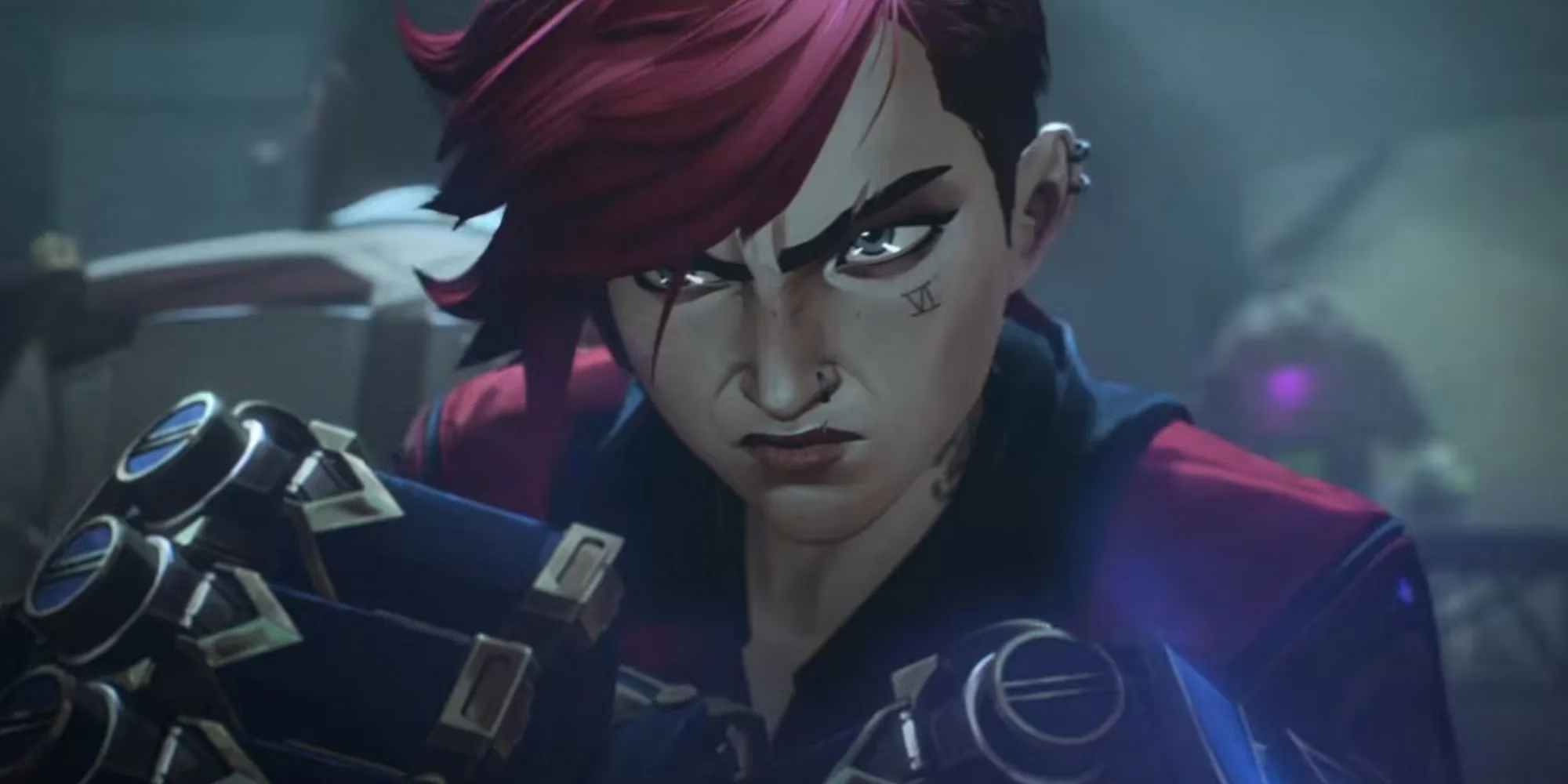
The specific episode that secured the Emmy—"When These Walls Come Tumbling Down"—showcased everything that made Arcane exceptional. Serving as the second act finale of the first season, the episode delivered emotional crescendos through the long-awaited reunion of sisters Vi and Jinx, while simultaneously advancing major plotlines involving Viktor's transformation and Jayce's political maneuvering. Its victory over episodes like Rick and Morty's "Mort Dinner Rick Andre" and Doctor Strange's multiversal tragedy demonstrated that animated drama could compete with—and surpass—comedy's traditional dominance in award ceremonies.
This breakthrough didn't happen in a vacuum. The history of video game adaptations has been, until recently, a chronicle of disappointment with only sporadic successes. Early attempts ranged from poorly received live-action series like Mortal Kombat: Conquest to various 90s cartoons based on NES and SNES games. Even as adaptations improved with series like Netflix's Castlevania and The Witcher, the medium struggled for mainstream critical recognition. When Arcane was first announced, expectations remained cautiously low despite Riot Games' massive investment—a skepticism that made its eventual triumph all the more significant.
What made Arcane truly revolutionary was its accessibility. The series could be fully enjoyed by viewers who had never touched League of Legends, a remarkable achievement given that most of the game's narrative existed in supplementary materials rather than gameplay itself. Unlike many adaptations that rely on existing fanbases, Arcane earned its audience through:
-
Character-driven storytelling that stood independent of game lore
-
Visual innovation combining 2D and 3D animation techniques
-
Emotional depth rarely seen in action-oriented animation
-
Thematic complexity exploring class conflict, addiction, and trauma
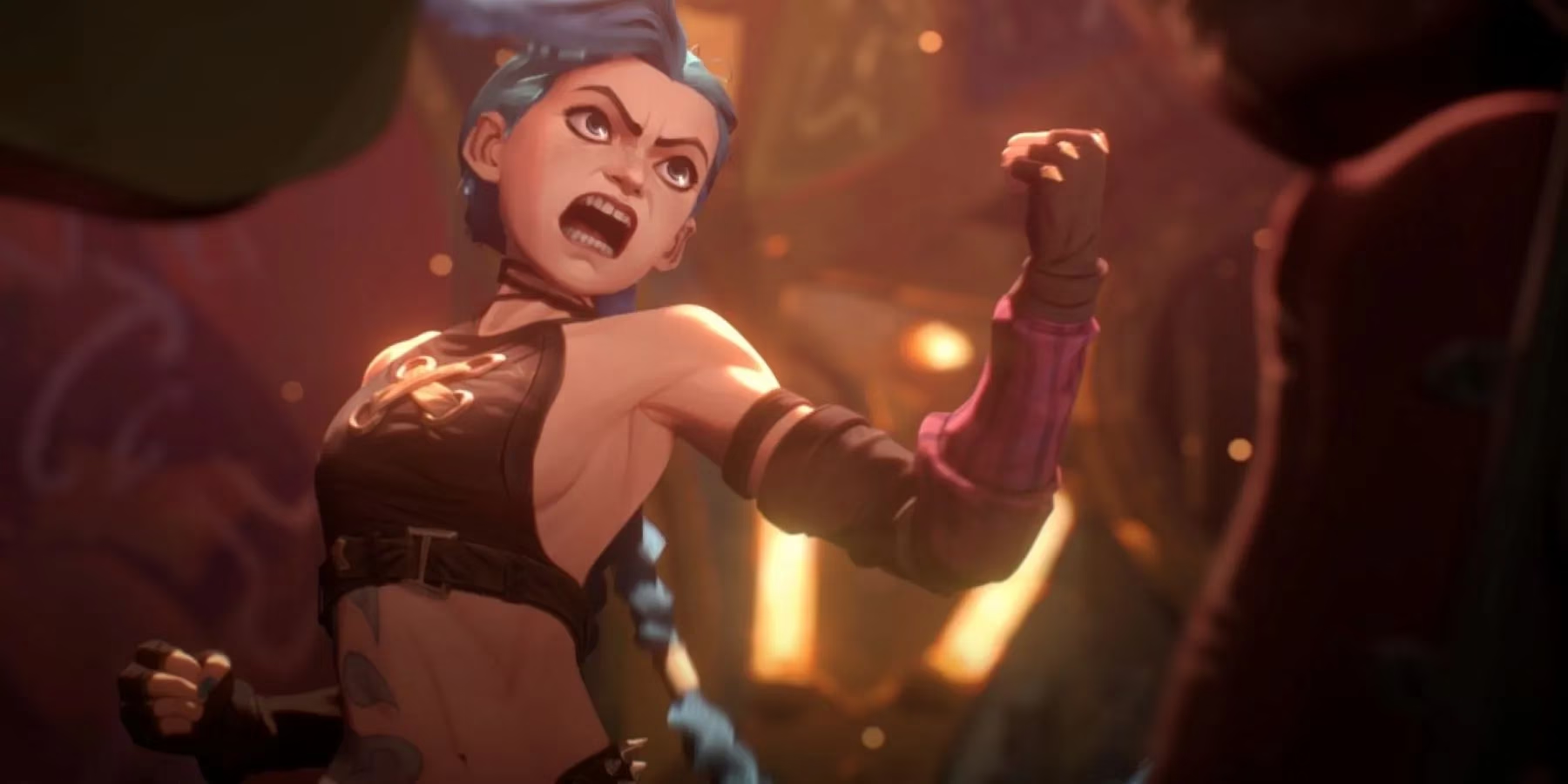
The Emmy category itself told another story about Arcane's impact. For years, Outstanding Animated Program had been dominated by adult comedy series, with only rare exceptions like Genndy Tartakovsky's Primal breaking through. Action cartoons had faced what many considered a "prolonged and tragic death" on mainstream television, with networks increasingly focusing on comedy aimed at younger audiences. Arcane's victory, following Primal's win the previous year, signaled a revival of serious animated drama for mature viewers—a trend that has only strengthened in 2026 with multiple streaming services now investing heavily in similar projects.
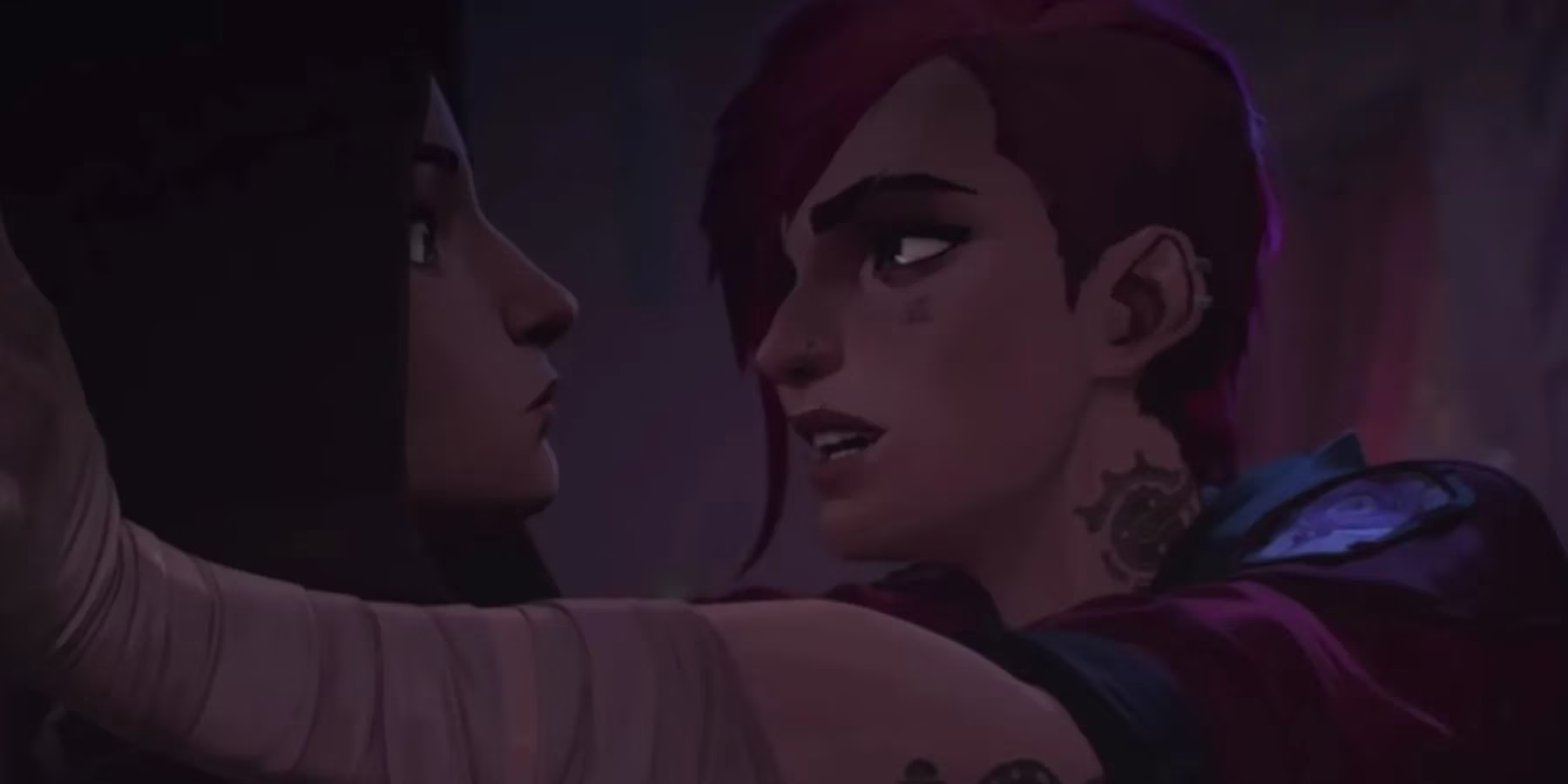
Perhaps most importantly, Arcane succeeded while breaking multiple industry conventions simultaneously. As a female-led action series centered on a genuine lesbian romance between Vi and Caitlyn, it demonstrated that bold representation and commercial success weren't mutually exclusive. Its unique visual style—often described as "painting come to life"—proved that audiences would embrace aesthetic innovation. The series managed to be both family-friendly in its lack of explicit content and mature in its thematic exploration, carving out a demographic space that had been largely abandoned by major studios.
Four years after its Emmy victory, Arcane's legacy continues to influence the entertainment industry in 2026. Riot Games' strategy of providing resources to talented creators without micromanaging every creative decision has become a model for successful adaptations. The series demonstrated that:
-
Existing IP doesn't guarantee success—quality execution matters more
-
Animation can handle complex adult themes without relying on comedy
-
Video game stories deserve serious artistic treatment
-
Risk-taking in representation pays artistic and commercial dividends
As streaming services continue to mine video games for adaptation material in 2026, Arcane remains the gold standard against which all new projects are measured. Its success proved that the problem was never with video games as source material, but with how they were adapted. The series showed that when studios trust artists, embrace bold storytelling, and focus on emotional truth rather than fan service, they can create works that transcend their origins to become cultural landmarks in their own right.
The table below illustrates Arcane's breakthrough context:
| Category | Before Arcane | After Arcane (2026 Landscape) |
|---|---|---|
| Video Game Adaptations | Mostly criticized, few successes | Multiple critically acclaimed series |
| Animated Emmy Winners | Primarily adult comedies | Diverse genres including drama |
| Action Cartoon Production | Declining on TV | Resurgent across streaming platforms |
| Adaptation Strategy | Loyalty to source material above all | Creative reinterpretation encouraged |
Today, as numerous studios attempt to replicate Arcane's magic, the series stands as a reminder that true innovation comes from artistic vision rather than corporate calculation. Its Emmy victory wasn't just an award—it was permission for creators to dream bigger, for studios to take bolder risks, and for audiences to expect more from animated storytelling. In an industry that often learns the wrong lessons from success, Arcane taught the right ones: trust talent, embrace complexity, and never underestimate what animation can achieve when given the chance to be great.