In the shimmering, steam-choked world of Arcane, light and shadow dance a perpetual, intricate waltz. The year is 2026, yet the show's haunting exploration of societal divides and moral ambiguity feels more resonant than ever. Fortiche and Riot Games did not merely adapt a video game; they birthed a living, breathing universe where the air of Piltover tastes of polished brass and ambition, while Zaun's atmosphere is thick with chemical dreams and desperation. This is a world built on a perfect, painful divide—a gleaming city of progress perched atop a festering undercity of forgotten souls. Yet, within this stark binary, Arcane masterfully weaves threads of profound similarity, revealing that the chasm between the haves and the have-nots is bridged by shared human frailties and flickering hopes.
The series achieves this not through simple allegory, but through a brilliant, poetic subversion of narrative archetypes. It takes the classic Hero-Villain Triangle—the Good, the Evil, and the terrifying Other—and shatters it into a kaleidoscope of grayscale. In Arcane, these roles are not fixed destinies but fluid states of being, sliding along a scale where empathy and disdain are constantly renegotiated. There is no pure 'Other' to universally fear; instead, each side views its counterpart with a mixture of horror and haunting recognition. The true conflict emerges not from absolute evil, but from the terrifying realization that the 'other' is a mirror, reflecting a version of oneself that could have been, or perhaps, still might be.
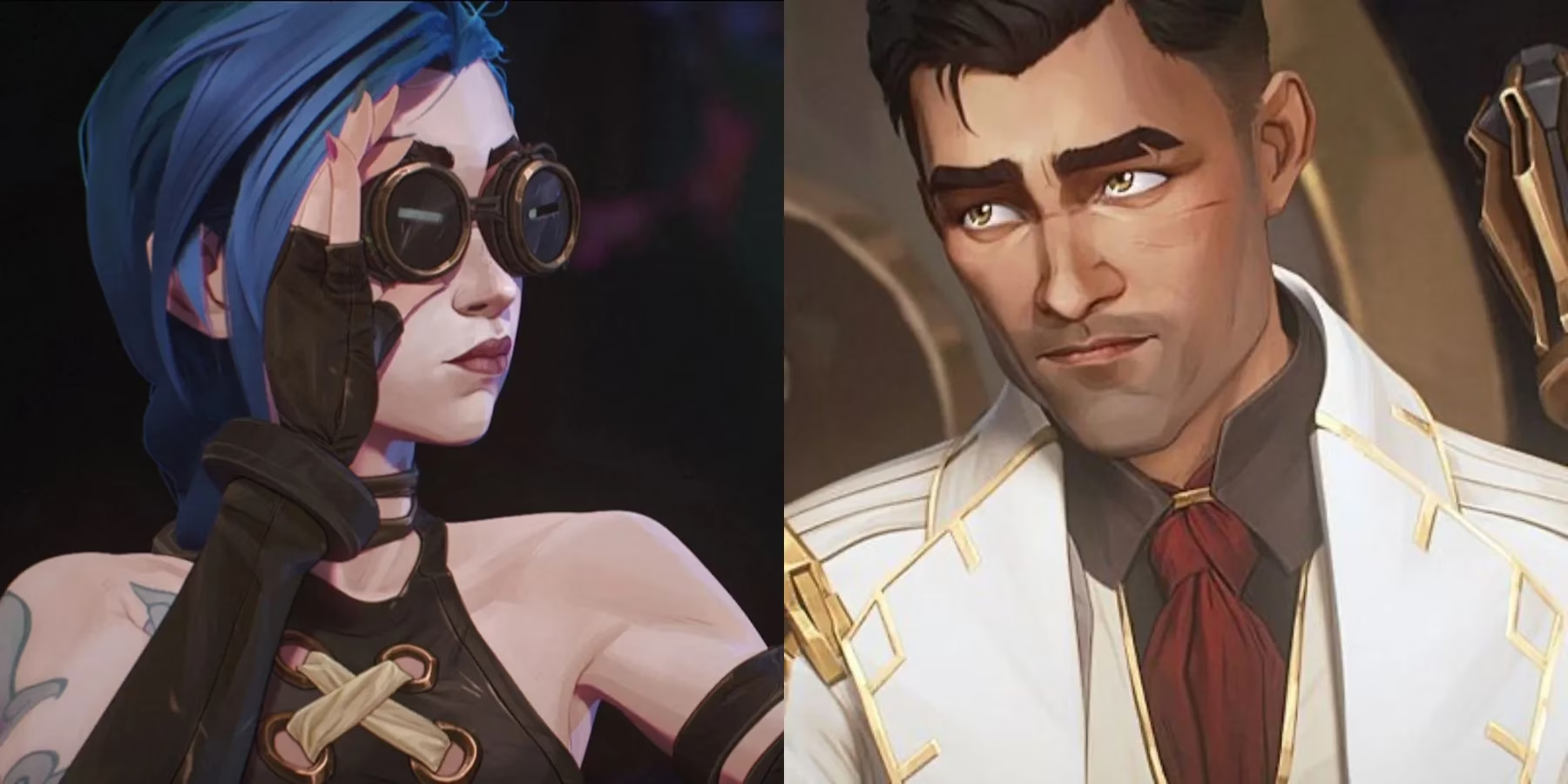
Consider the parallel souls of Jayce, Piltover's golden prodigy, and Jinx, Zaun's fractured spark. 💥 Both are scientific geniuses, vessels of immense potential for their respective cities. Jayce is ostensibly the 'Good'—the innovator seeking to uplift his society. Jinx, acting as the agent for the formidable Silco, is the 'Evil,' leaving chaos and tragedy in her wake. Yet, Arcane refuses to let these labels hold. Jayce's pursuit of 'progress' leads him to a moment of devastating violence, the accidental death of a Zaunite child. In that instant, he stares into the abyss of his own capacity for harm, seeing a flicker of Jinx's destructive path in his own actions. His fear is not of an external monster, but of the monster within—the 'evil' he could so easily become if he continues to justify ends by any means.
This theme echoes in the weathered minds of the veteran scientists, Heimerdinger and Singed. 🧪 Heimerdinger represents the 'Good' tempered by centuries of caution, while Singed, the creator of the transformative and corrupting Shimmer, is his 'Evil' counterpart. Heimerdinger's rigid fear of unchecked magic and science stems from a profound understanding. He has already walked the razor's edge between creation and calamity; he sees in Singed not an alien 'Other,' but the ghost of his own potential future—a path where noble pursuit twists into monstrous consequence. Their parallel is one of time and choice: Heimerdinger chose restraint out of fear of becoming Singed, while Singed chose to plunge forward, believing his 'evil' is a necessary price for a greater good.
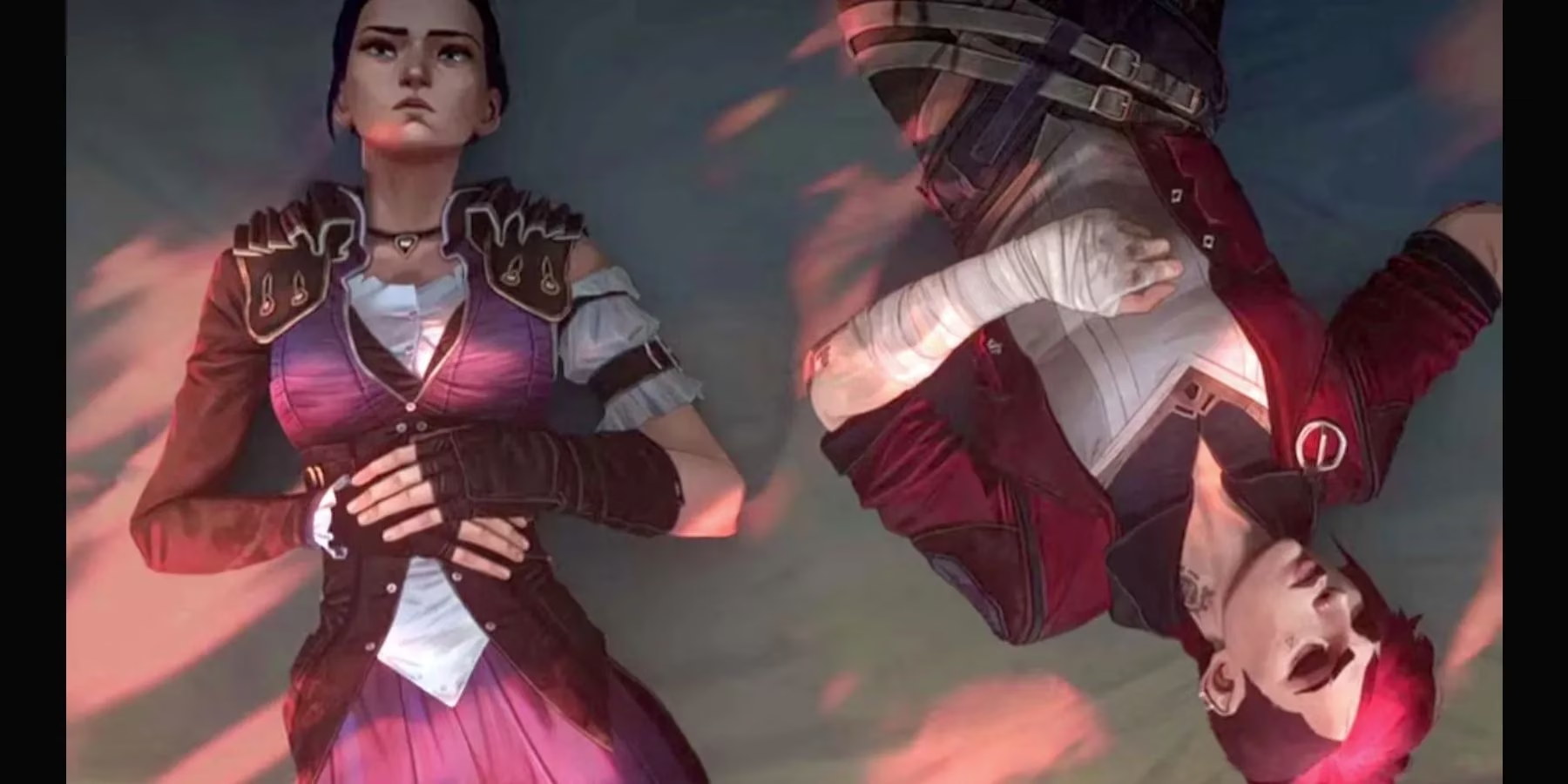
Perhaps the most beautiful defiance of the binary comes in the union of Vi and Caitlyn. 🤝 They are the outsiders, the misfits who find their true belonging not in the worlds that birthed them, but in the liminal space between. Vi, the brawler from Zaun's depths, and Caitlyn, the sharp-eyed heir of Piltover's elite, are neither classic 'Good' nor 'Evil.' Their story is one of embracing the perceived 'evil' of the other to become something better, something whole. Vi, by aligning with an Enforcer—the very symbol of Piltover's oppressive order—fights the corruption of her own home. Caitlyn, by trusting a criminal from the undercity, challenges the rotten foundations of her privileged society. Their parallel is one of synthesis, proving that growth lies not in fearing the opposite, but in integrating its strengths.
This nuanced dynamic was once embodied by the city's peacekeepers: Vander, the heart of Zaun, and Grayson, the steadfast Sheriff of Piltover. They represented an older, more honorable parallel—two 'Good' figures on opposite sides who maintained order through mutual respect and a fragile agreement. Their understanding showed that cooperation across the divide was possible, a poignant memory against the backdrop of the series' escalating strife.
Arcane's genius is its empathetic alchemy. It transforms what appears to be a straightforward tale of opposing forces into a profound meditation on duality. The show presents not a world of 'Good vs. Evil,' but one of 'Other vs. Other,' where each side is both hero and villain in its own story, capable of immense beauty and terrifying brutality. The citizens of Piltover and Zaun fear each other not because they are fundamentally different, but because in the other's eyes, they see a distorted, yet recognizable, reflection of their own potential for greatness and ruin. In blurring these lines so masterfully, Arcane holds up a mirror to our own world, challenging us to see the humanity in the reflection we've been taught to fear.
| Piltover Parallel | Zaun Parallel | Core Dynamic |
|---|---|---|
| Jayce Talis (The Prodigy) | Jinx (The Spark) | The fear of one's own destructive potential. The road to hell paved with good intentions. |
| Heimerdinger (The Cautious Sage) | Singed (The Unbound Alchemist) | Restraint versus reckless pursuit. The same knowledge leading to preservation or perversion. |
| Caitlyn Kiramman (The Idealist Enforcer) | Vi (The Rebellious Brawler) | Synthesis from opposition. Finding strength and truth in embracing the 'other.' |
| Grayson (The Honorable Sheriff) | Vander (The Protective Father) | Mutual respect across the divide. Order maintained through understanding, not force. |
In the end, the world of Arcane teaches us that the most dangerous divide is not the physical chasm between the cities, but the one we construct in our minds. The show whispers that in the heart of the gleaming councilor and the desperate chem-barren addict beats the same desperate, human rhythm—a longing for power, for belonging, for a legacy. It is a poetic tragedy where every character, in their struggle to not become the 'other,' inevitably must confront the pieces of that 'other' already living within them. This is the enduring power of its storytelling: a reminder that light cannot exist without shadow, and that to understand either, one must be brave enough to stand in the twilight between.