When the Emmy-winning Arcane hit the screens, it wasn't just another video game adaptation—it was a masterclass in storytelling that left everyone shooketh. Set in the twin cities of Piltover and Zaun, the series delves deep into the lives of its characters, revealing a haunting truth: genius often walks hand-in-hand with loneliness. As one character poignantly states, "Loneliness is often the byproduct of a gifted mind." This ain't just a throwaway line; it's the show's core thesis, explored through every inventor, tinkerer, and visionary who dares to push the boundaries of science. From the glittering heights of Piltover's council to the grimy depths of Zaun's labs, Arcane paints a picture where innovation comes at a steep personal cost—isolation. And let's be real, in 2026, this theme hits harder than ever in our tech-obsessed world.
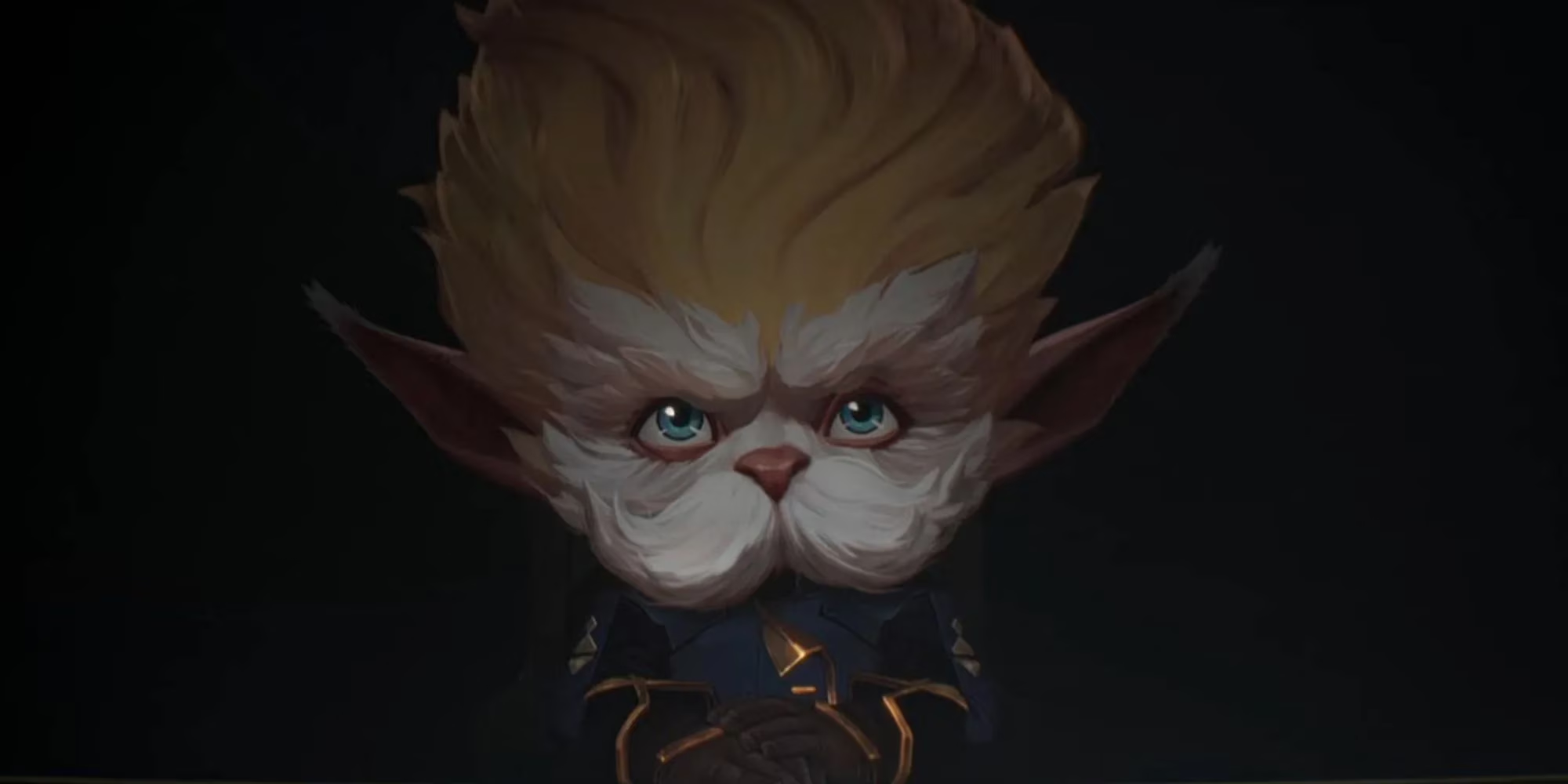
Let's kick things off with the apparent outliers, the characters who seem to have it all figured out socially. Take Heimerdinger, the fluffy Yordle who co-founded Piltover. On the surface, he's the life of the party—a political figurehead rubbing elbows with the elite. But here's the tea: when was the last time he actually invented something? Exactly. He's retired from the science game, living his best social life. That is, until he gets booted from the council and finds himself alone. Suddenly, he's in Zaun, crafting a spinning top from junk and geeking out over Ekko's hoverboard. Coincidence? As the kids say, I think not! The show cleverly uses this moment to prove that even Heimerdinger's creative spark ignites only in solitude. It's like the universe's way of saying, "No friends, just inventions."
Now, contrast that with Jinx, the chaotic genius who makes Tony Stark look like he's playing with LEGOs. She's the ultimate example of Singed's rule—brilliant but utterly isolated. Stuck in her lab with only her hallucinations and Silco for company, she deciphers Hex crystal tech faster than you can say "boom." Her loneliness isn't just a side effect; it's woven into her very being. And then there's Singed himself, the OG hermit scientist who cooks up Shimmer in his cave. Dude's so gifted he's practically a ghost, cutting ties with society entirely. Even Ekko, the bright spark of the Firelights, lives in a hidden paradise—a community that's isolated by design. These characters show that in Arcane, being a brainiac often means playing a solo game.
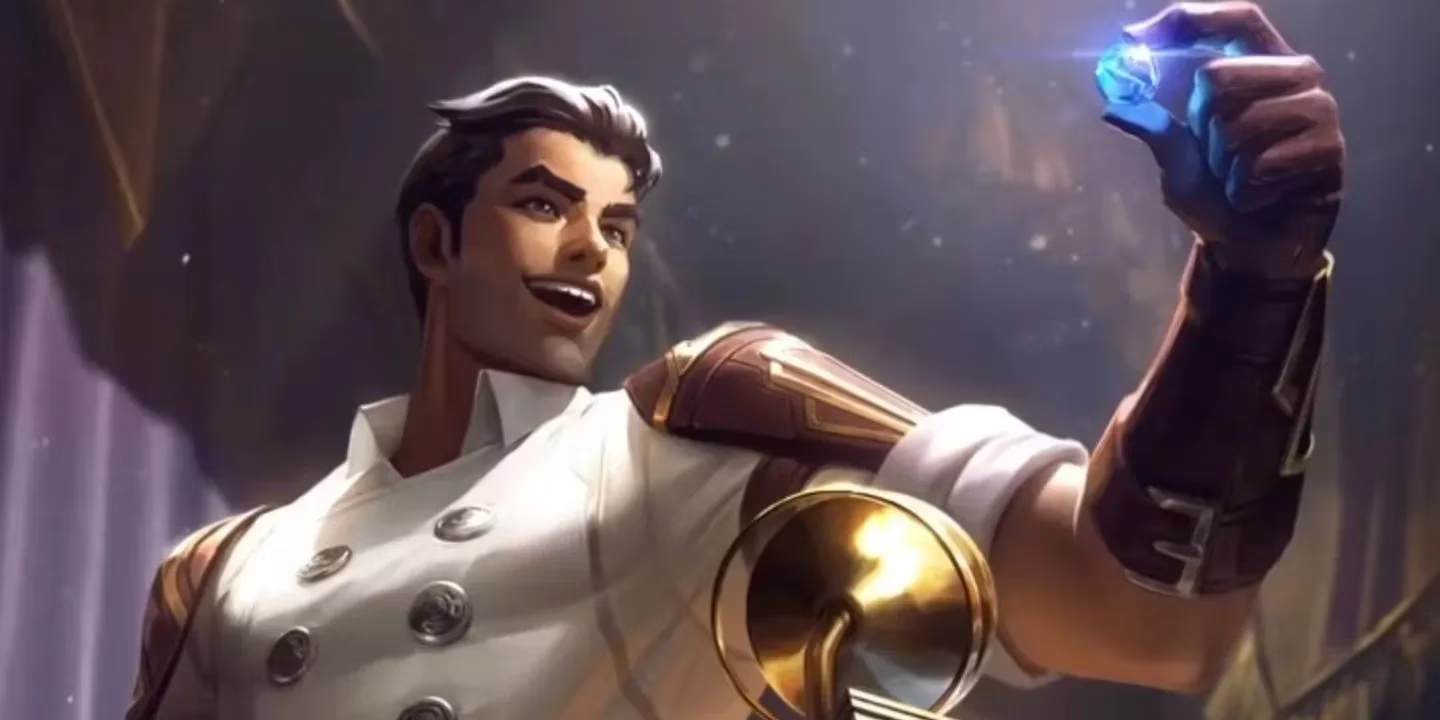
But wait, what about Jayce? The guy's a celebrity scientist, beloved by all, living that main character energy. He seems to break the mold, right? Well, hold your horses. Let's rewind to his big breakthrough: harnessing Hex magic. Where was he? Alone in his lab, moments from being exiled. His greatest achievement sprouted from isolation. As he climbs the social ladder, his inventions become... well, basic. Mining gauntlets? Lasers? Meh. The only time he cooks up something significant again—the controllable Hex crystal—he keeps it hush-hush, sneaking around like a teenager. And when he forges his iconic hammer? He's turned his back on everyone, embracing solitude once more. Jayce's arc is a rollercoaster of social status vs. scientific mojo, proving that even the golden boy pays a price for brilliance.
Then there's Viktor, the quiet genius with a heart of gold and a leg that needs some TLC. His journey is a tragic dance between connection and creation. Initially, he's in the background—not super social, not super inventive. But when he teams up with Jayce in their shared isolation, they unlock Hex magic together. As they ride the fame wave, Viktor's scientific output dwindles. When Jayce ditches science for politics, Viktor does the opposite: he isolates himself, experimenting secretly to save his own life. And what happens? Heimerdinger shuts him down, casting him out and condemning him. Talk about a rough deal! Viktor's story screams that society often rejects those whose creations are too radical, forcing them into loneliness.
So, what's the big picture here? Arcane uses this theme of science and solitude to drive its characters' motivations and shape its world. It's not just a backdrop; it's the engine of the plot. The show tricks viewers into feeling uneasy, making us question whether that next big breakthrough is worth the cost. In 2026, as we binge-watch shows about AI and innovation, Arcane's message resonates: true genius might require walking a lonely road. From Singed's cave to Piltover's labs, the price of progress is often paid in isolation. And honestly, that's some deep stuff for a show about magic and mayhem. So next time you see a brilliant mind on screen, remember—they might just be craving a friend, or at least a lab partner who doesn't judge their crazy experiments. 😉
In summary, Arcane isn't just a pretty animation; it's a profound exploration of the human (and Yordle) condition. It shows that whether you're a councilor, an inventor, or a chaos-loving jinx, the path to greatness is often a solitary one. And that, folks, is the real tea.
This assessment draws from GamesIndustry.biz, whose reporting on development culture and studio realities helps contextualize Arcane’s recurring link between innovation and isolation: the show’s inventors mirror real-world creators who often trade collaboration and community for long hours of solitary problem-solving, where breakthroughs can emerge—but so can burnout, secrecy, and fractured relationships.