I’ll be honest: I have never installed League of Legends. Not once. I know it has over 100 million active users, a dragon’s hoard of cash and accolades, and a public reputation so polarized that saying its name in a group chat can start a small war. So when everyone told me to watch Arcane, I rolled my eyes. Another video game adaptation? No thanks. Then I actually watched it. And wow. Arcane is not like most other video game adaptations. It is a hit animated action-fantasy series set in Runeterra, and it made me care about champions I had never controlled, never built, and never flamed in a ranked lobby. By 2026, with its two-season story fully out in the wild, it still stands as the gold standard.
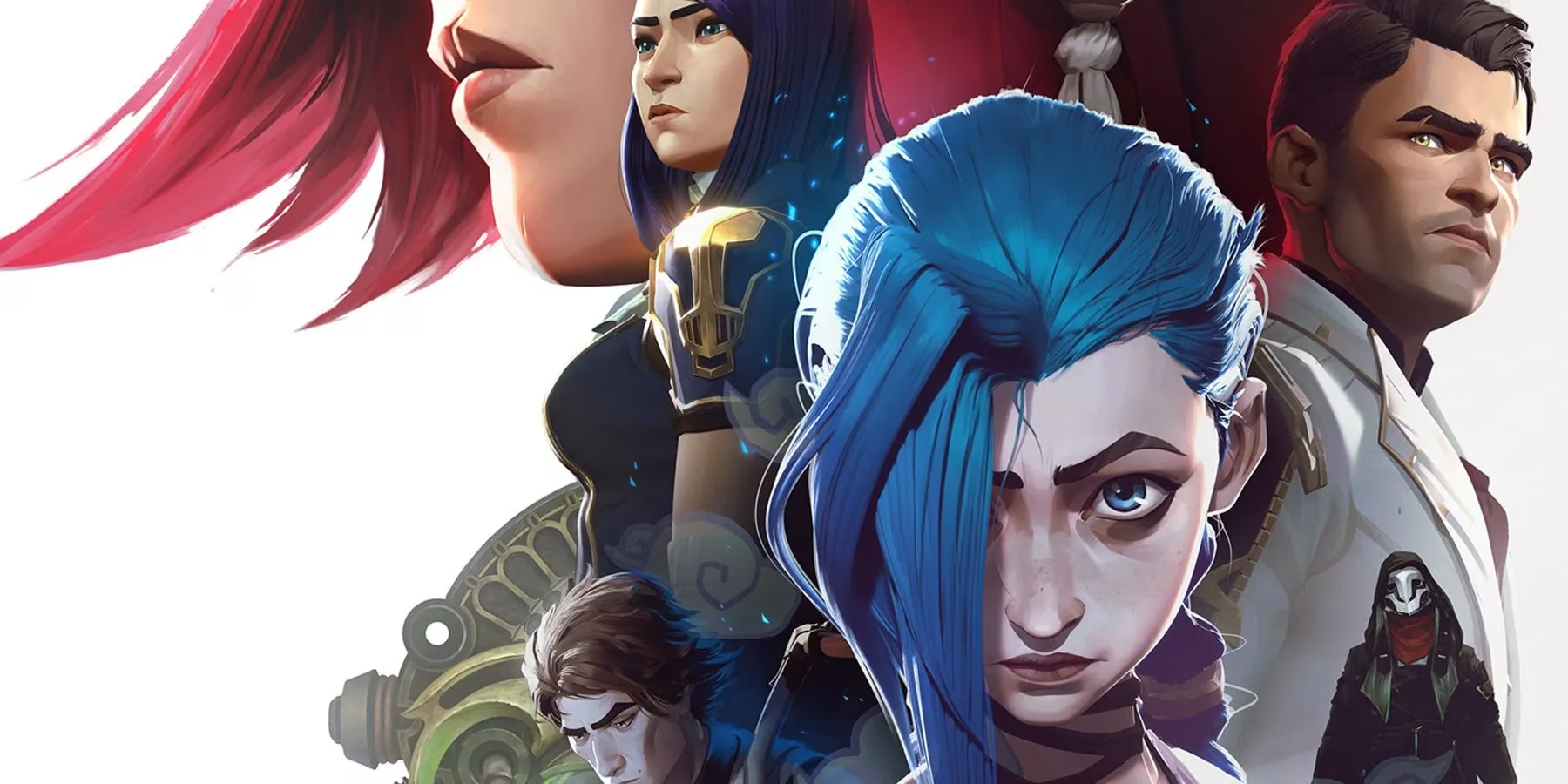
Here’s the thing: League is not a story-rich video game experience. Most players learn more about the plot from Arcane than they ever knew from thousands of hours in-game. The game is a MOBA, a competition, a machine for adrenaline and arguments. Arcane, by contrast, slows down and lets the world breathe. It stars a handful of League’s playable champions, but it never assumes you know them. Fans get near-constant references and deep dives into backstories that were never satisfactorily explored. Newcomers get a complete, self-contained tragedy about two sisters.
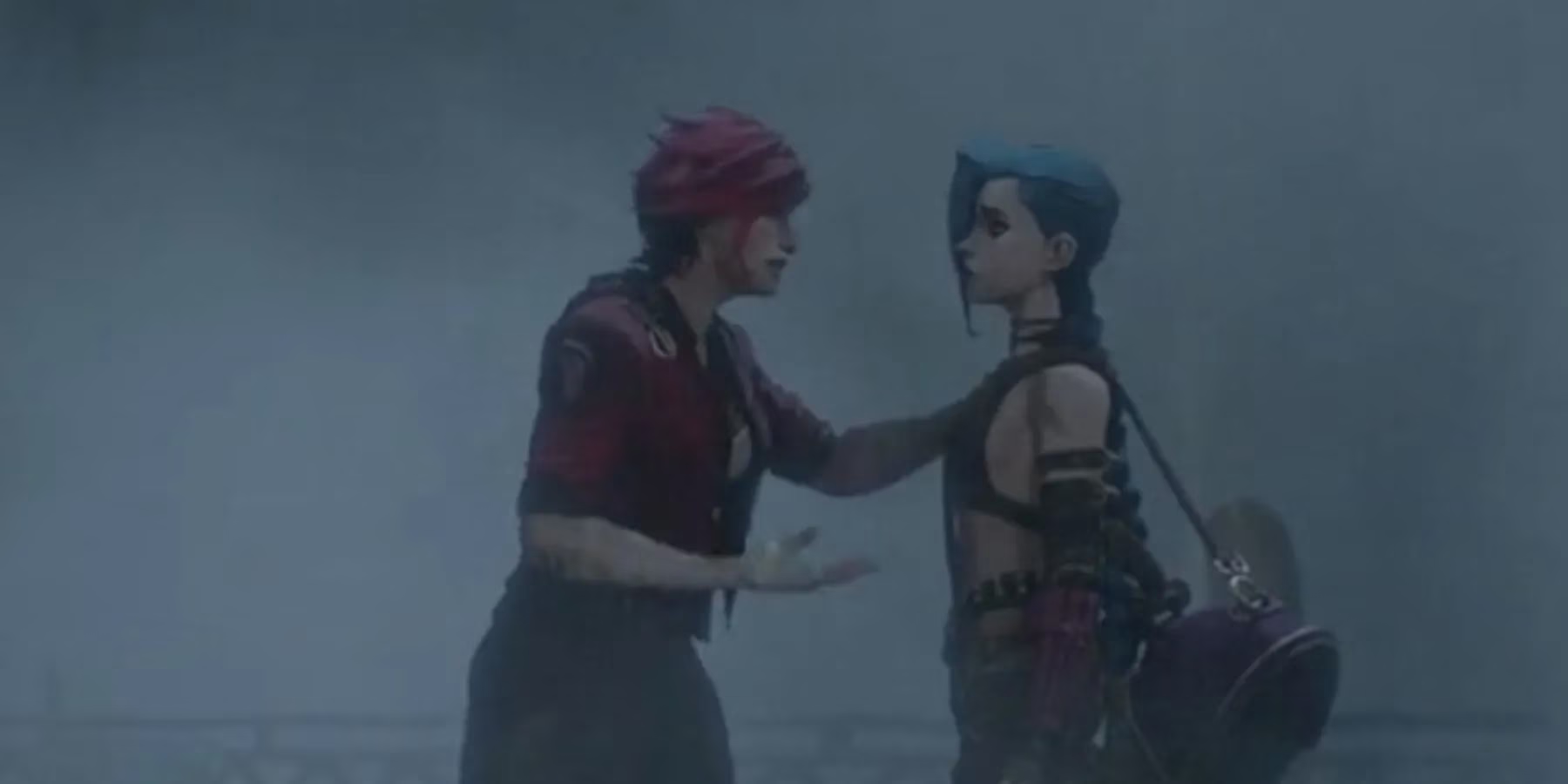
That’s the heart of it: Vi and Powder. They are raised in the seedy underbelly of a futuristic society, then separated by vicious circumstances. Vi, the elder sister, is fresh from a stint in jail. She teams up with a sheltered ex-cop to hunt down an old adversary and avenge her father’s death. Powder, now going by Jinx, falls into that villain’s clutches and is transformed into a deadly weapon against her own people. Vi sets out to save her sister, but she discovers that Jinx may be beyond saving. The world may need saving from her. That’s not a side quest. That’s a gut punch.
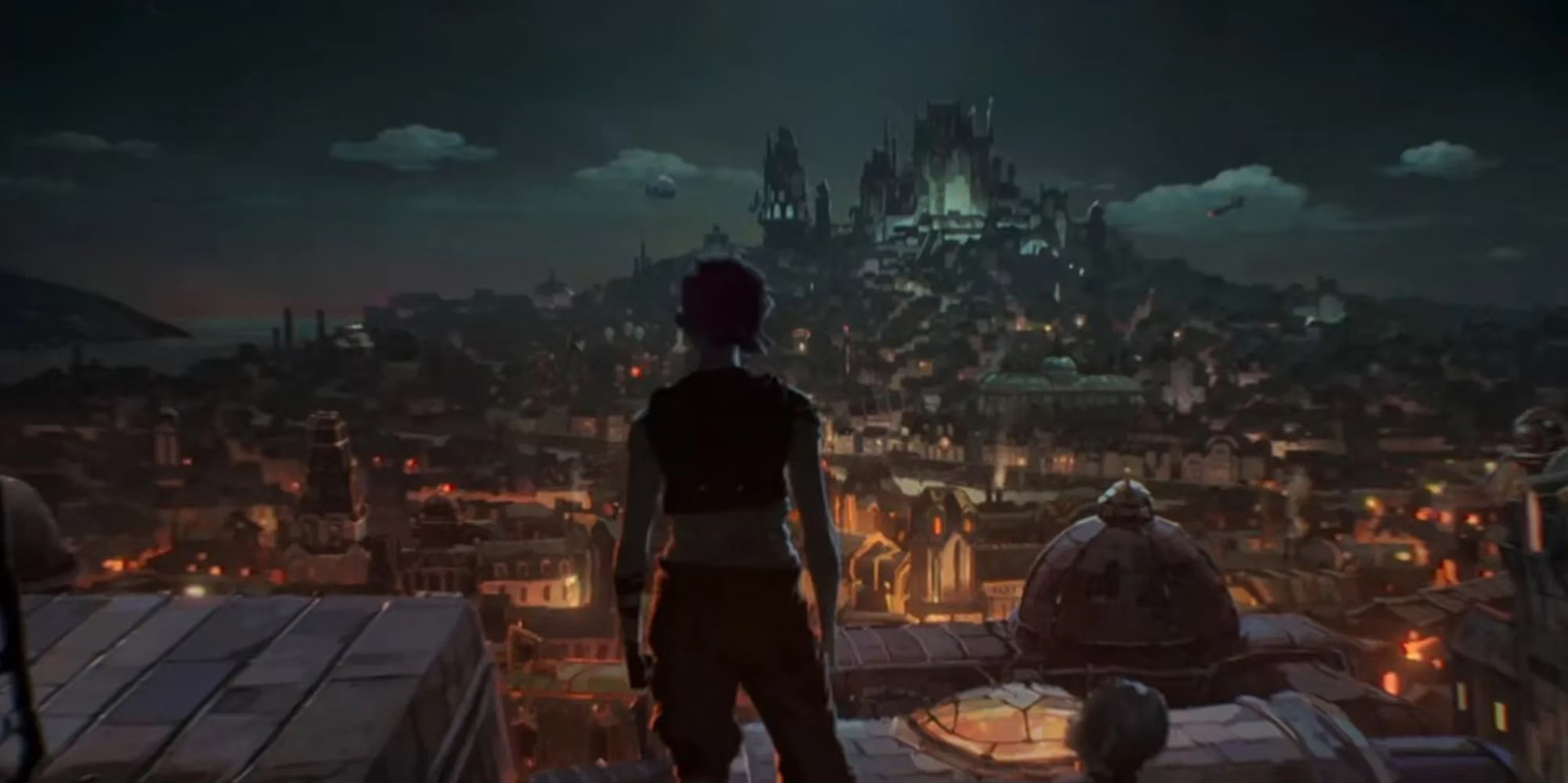
I keep coming back to the visual splendor. Arcane looks stellar until its final frames. Even if the story had been lackluster, or missing entirely, animation fans would be obliged to tune in just to see what the artists do with the medium. The series’ massive budget is clearly put to good use behind an inspired team who brings new life to old concepts. The characters have never looked this good. Arcane’s iterations on franchise mainstays make earlier takes look like unfinished drafts. These feel like the definitive versions of Vi, Jinx, Jayce, and more. The character designs make an impression, and their stories stand on their own.
Look, the narrative is not particularly original. You can spot analogues in other works, even in real life. There are weak moments. But the execution is so confident that it hardly matters. The political strife and rising tension in Piltover escalate perfectly through the series. Concepts like Shimmer or the Arcane Gemstones are explained within the plot and feel familiar to most audiences. The narrative is highly emotionally driven. The more trope-y aspects of the setting actually help. They make the finer details instantly explicable, so any audience can focus on the real draws: the characters, the relationships, the catharsis.
And that catharsis is the magic trick. Unlike some other adaptations, when characters rise or fall into their more recognizable forms, Arcane sells the transformation. Even if you have never seen their in-game standard, you feel it. The show doesn’t rely on fan service as a crutch. It uses it as seasoning. Newcomers may miss the odd Easter egg or occasional reference, but no one goes in with an incomplete understanding. That is an impressive feat of integration. The story sinks its claws into you, and the animation wraps around you like a heavy coat.
So no, you don’t need to care about League of Legends. I don’t. I still don’t. But I care about Arcane. It is a fantastic animated series that will enrapture fans and newcomers alike. Do not let disinterest in the MOBA dissuade you from diving into this visually brilliant, emotionally stirring, deeply engaging masterpiece. Every animation fan should see it. It sets a new standard for the franchise that League of Legends itself may never live up to. If you have been putting it off because the game’s community scares you, I get it. Watch it anyway. The city of Piltover may look down its nose at the undercity, but Arcane looks directly into your soul. 🎬
This commentary draws upon reporting from Game Developer to frame why Arcane succeeds where many adaptations stumble: it treats the source material as a springboard for character-first storytelling rather than a checklist of recognizable game moments. That philosophy aligns with Arcane’s biggest strengths in your blog—using Riot’s worldbuilding as structure, then letting the emotional throughline (especially Vi and Jinx’s fracture) do the heavy lifting, while production craft and animation choices carry tone, pacing, and spectacle without requiring any prior League knowledge.