After years of speculation, Riot Games' fighting game has transformed from a mysterious EVO 2019 tease into one of the most important titles in the genre. Originally announced as Project L during the League of Legends 10th Anniversary livestream, the game is now known as 2XKO. By 2026, it has moved beyond early alpha labs and public betas into a full-fledged competitive fighter, but its DNA still reflects the ambitious blueprint that first excited fans. The project began at Radiant Entertainment, led by Tom and Tony Cannon, the founders of EVO and creators of GGPO rollback netcode. Their only prior game, Rising Thunder, was cancelled, yet its spirit survives in a title that learns from the best fighting games ever made.
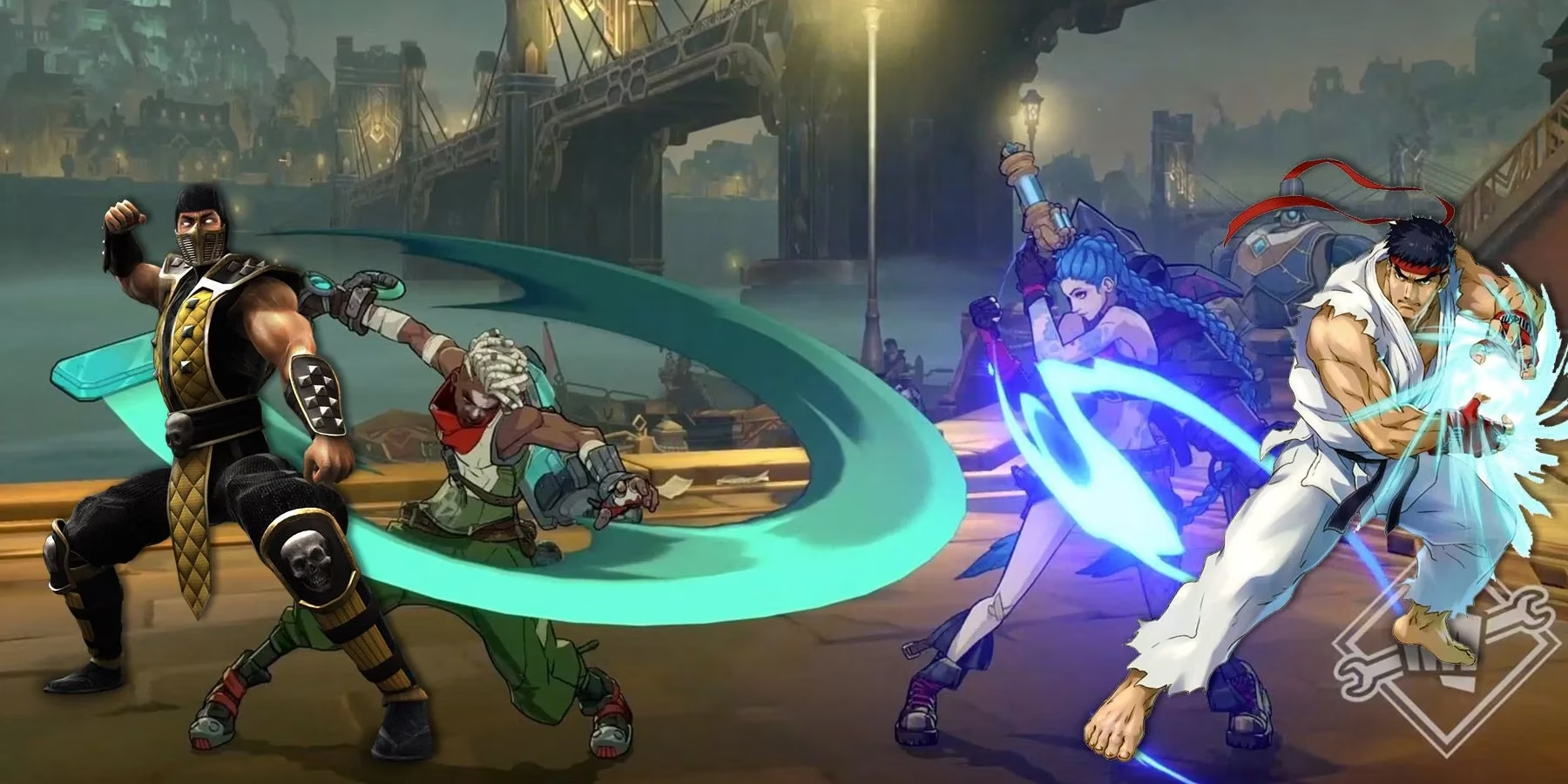
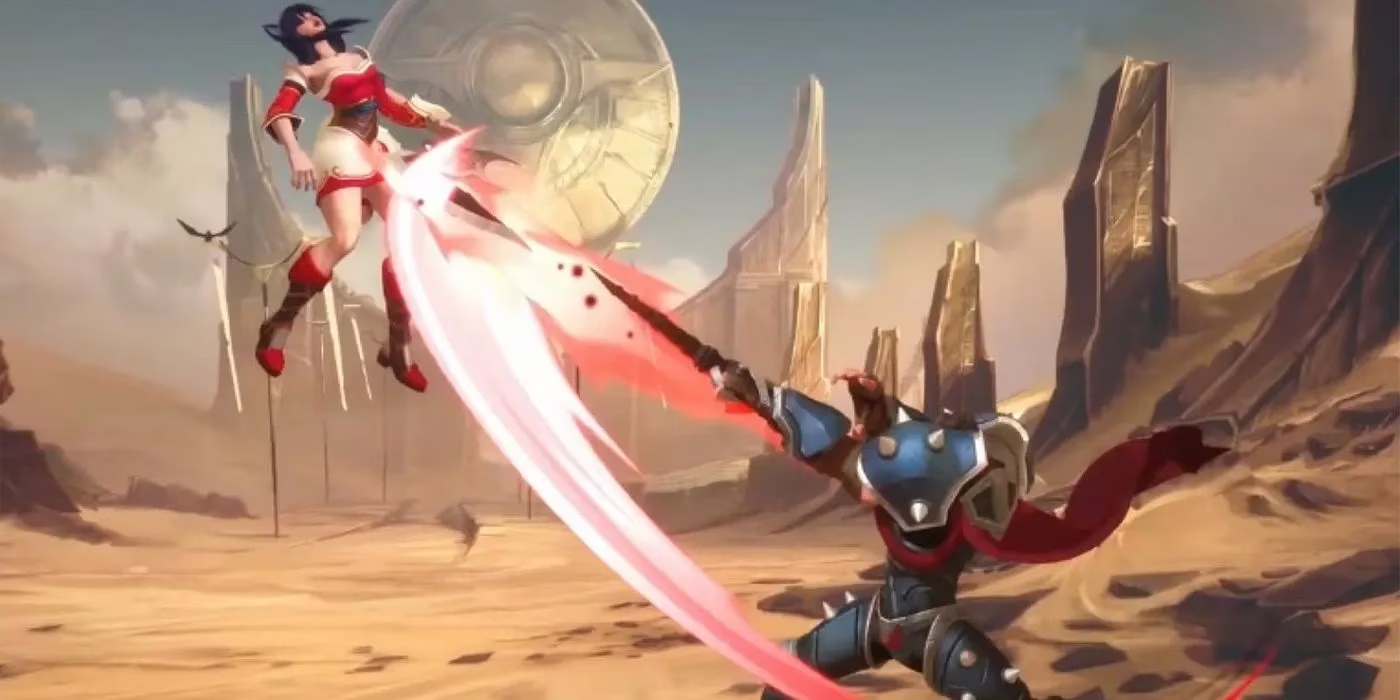
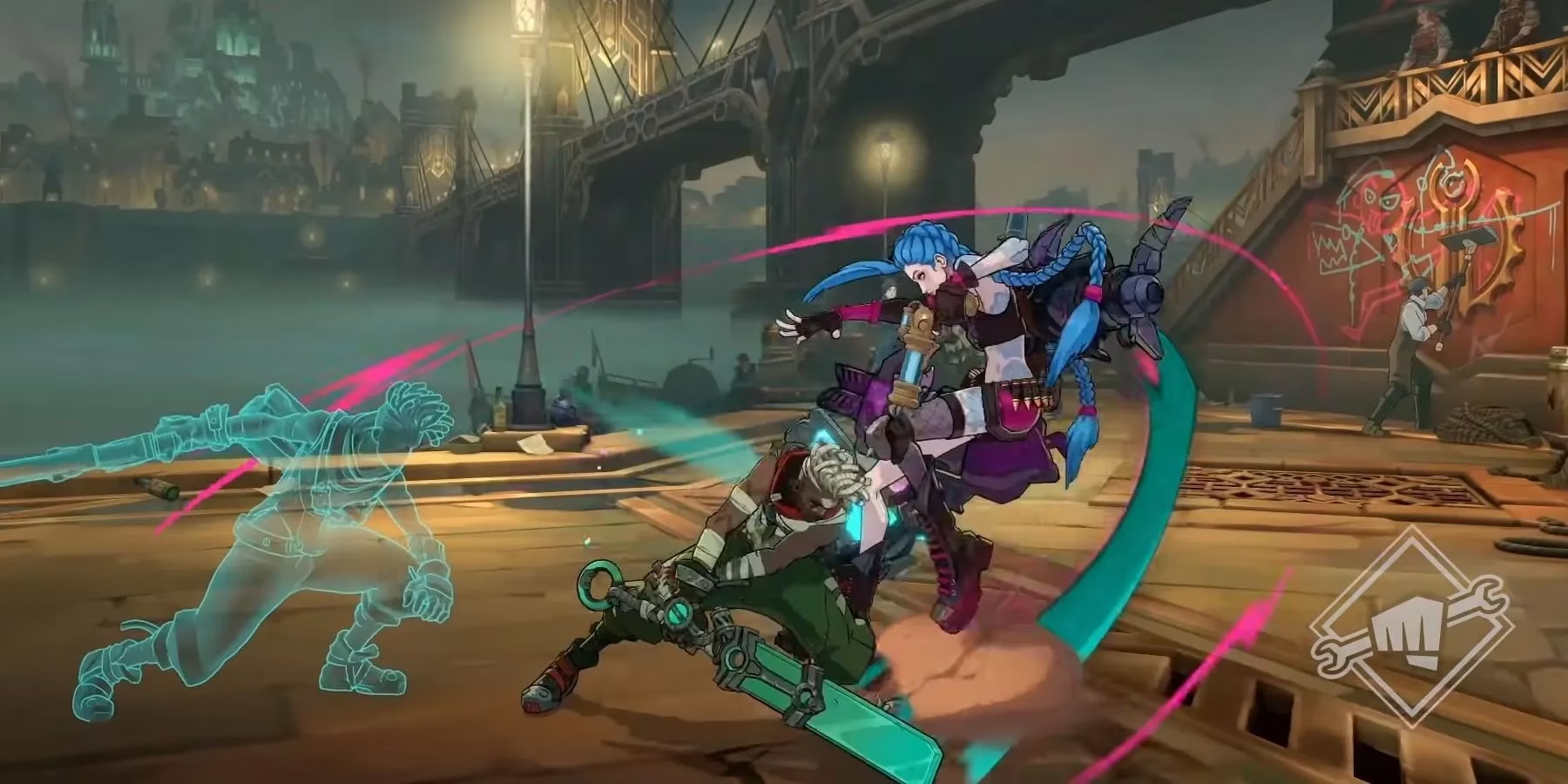
At first glance, 2XKO is visually striking. Its cel-shaded look invites comparisons to Arc System Works' 2.5D fighters. The color usage and 3D swing effects echo Guilty Gear Xrd and Guilty Gear Strive. While character faces remain distinctly League of Legends, the overall presentation suggests a game built for dramatic rounds and cinematic finishes. That visual identity helps 2XKO stand apart from both traditional 2D fighters and its own MOBA source material.
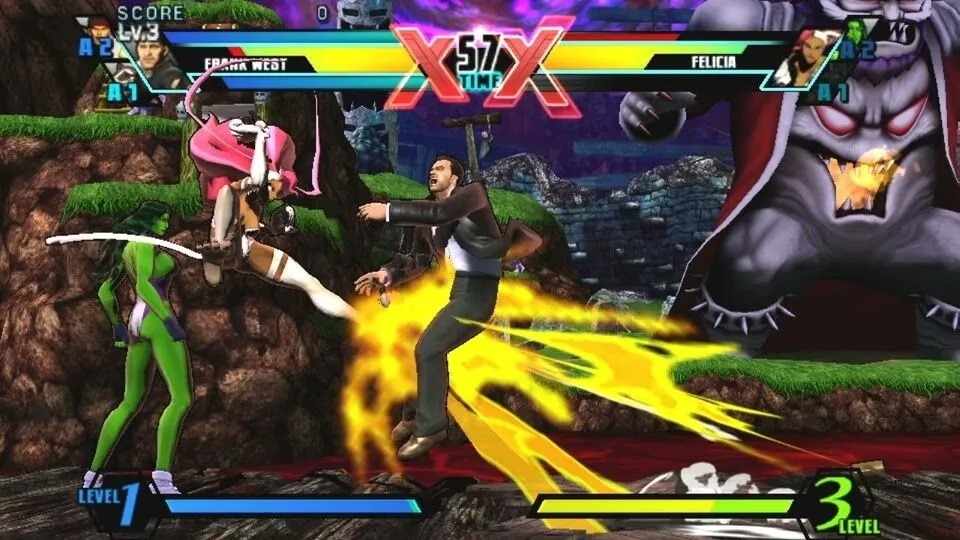
Gameplay-wise, the title wears its influences proudly. The tag-based action recalls Marvel vs. Capcom 3, a game beloved by Radiant's founders and a staple at EVO for seven years. The speed, character versatility, and assist-driven combos all point to a modern take on the versus formula. At the same time, the more refined systems bring to mind Skullgirls and Power Rangers: Battle for the Grid, two games that improved on established mechanics. In practice, 2XKO may feel closest to a 2v2 match in Skullgirls, making it a useful reference point for players preparing to compete.
What truly separates 2XKO is not just what it borrows, but how it builds. Riot's open development approach has been unusually transparent. Fans have seen the game at multiple stages, and the team has continued hiring throughout production. Showing early builds is a bold move, but it signals genuine excitement. The developers want to share their work whenever it reaches a presentable state. That philosophy has helped sustain community trust across a long development cycle.
For the fighting game community, netcode matters as much as combos. 2XKO benefits from the Cannon brothers' netcode expertise and Riot's server infrastructure. Fighting games historically suffered from poor online play outside controlled arcade environments. The pandemic accelerated a shift toward rollback netcode, and 2XKO arrived with that standard already in place. One-sided rollbacks and other growing pains still affect some titles, but Riot's resources promise a superb online experience. The game is expected to deliver innovations and rarely seen features on top of solid rollback.
The broader fighting game market has long been a strange niche. Games are widely recognized, yet they rarely grow like other genres. Modern fighters sell millions, but Guilty Gear Strive celebrated passing 500,000 sales in its first week as a historic milestone for the series. For a genre built on public competition, player retention, post-launch viewership, and esports success have often been disappointing. 2XKO is Riot's attempt to fix that. It is a big-budget fighter built on a popular license, and it launched with the quality-of-life features dedicated players expect.
Those features include high-functioning netcode, flexible lobbies, matchmaking, rhythm-based combo trials, and extensive training mode options. On launch, 2XKO had a chance to put its Street Fighter and Tekken competitors to shame. It also became one of the first major traditional fighting games to embrace a true free-to-play model. Characters can be earned quickly, while high-quality cosmetics drive revenue, just like League of Legends. This approach lowers the barrier to entry and widens the competitive ladder.
| Element | Inspiration | 2XKO approach |
|---|---|---|
| Art style | Guilty Gear Xrd and Strive | Cel-shaded 2.5D visuals |
| Tag gameplay | Marvel vs. Capcom 3 | Fast 2v2 tag battles |
| Refined systems | Skullgirls, Power Rangers: Battle for the Grid | Modern mechanics and assists |
| Netcode | GGPO and Riot infrastructure | Rollback with strong online features |
| Business model | League of Legends | Free-to-play, earned characters, cosmetics |
By 2026, the question is no longer whether 2XKO can learn from its competitors. It has already done so. The real question is whether it can elevate the entire genre. Riot and Radiant set out to create the most refined 2D fighting game to date, and the result is a title that could become the perfect storm of fighting game design. For the sake of competition, many in the community hope it succeeds. If it does, 2XKO may be remembered not just as Project L's final form, but as the moment fighting games finally reached their mainstream potential.