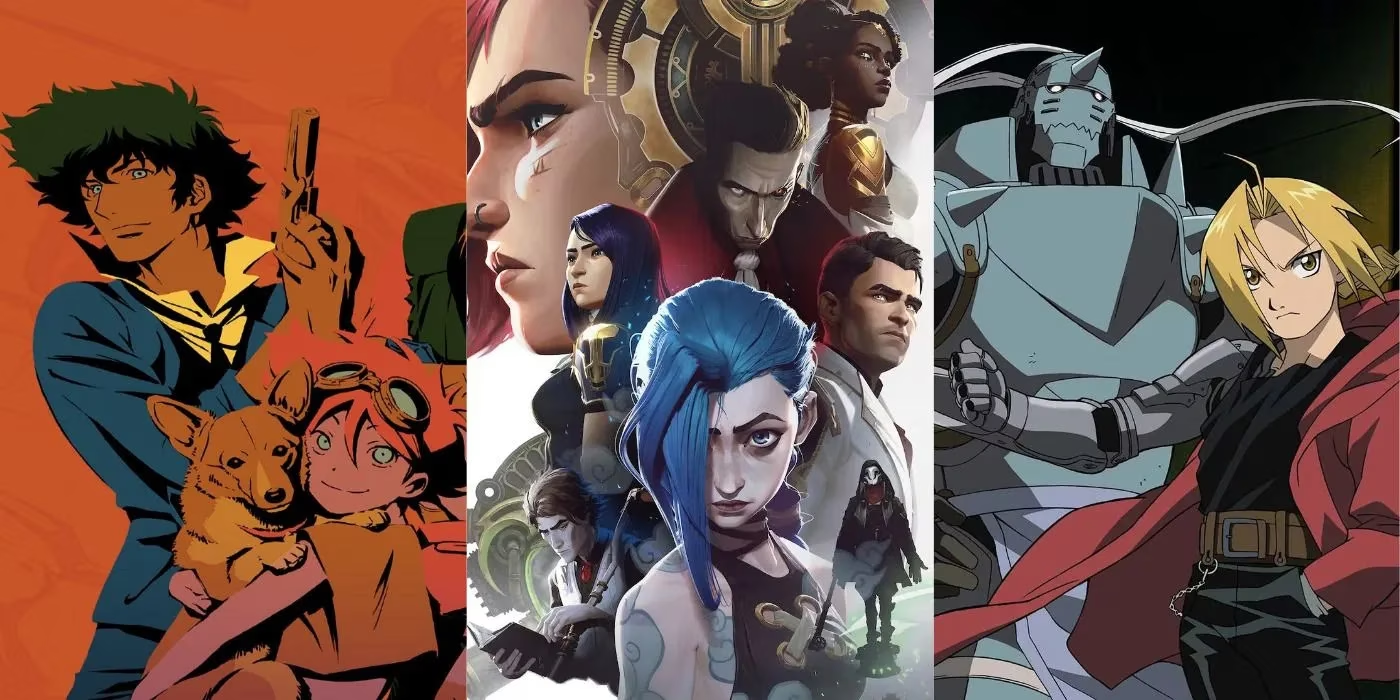
I devoured Arcane like a kid shaking a snow globe just to watch the city fall—by the time Season 2 wrapped in 2024, I was still picking emotional shrapnel out of my chest. The Piltover/Zaun divide hangs over the whole show like a cracked bell that never stops ringing, and every character carries some part of that vibration. If you're anything like me in 2026, you've rewatched the series roughly as many times as Jinx has changed her hair color, and you need something new to fill the Hextech-shaped hole. These anime share Arcane's DNA: class tension, sibling trauma, queer romance, corrupt systems, and fights that feel less like spectacle and more like surgery.
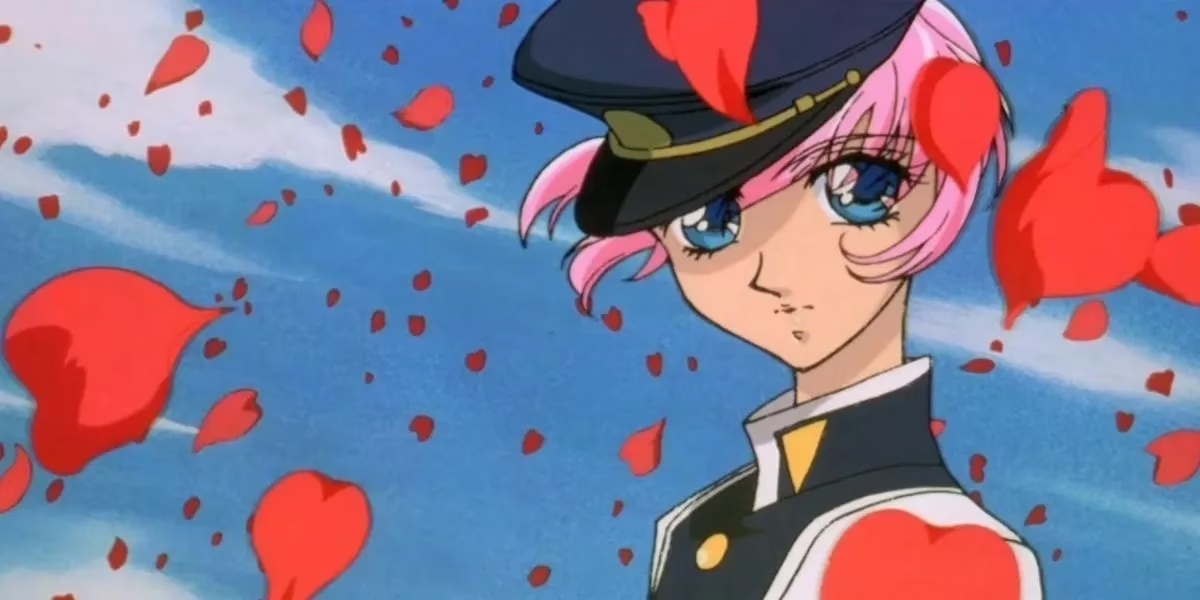
Let's start with the one that probably raised me: Revolutionary Girl Utena. On the surface, it's about duelists fighting for the Rose Bride, but it's also a gorgeous, thorny exploration of gender roles and abuse. Utena's revolution feels like trying to unscrew a lock with a rose stem—beautiful, fragile, and surprisingly dangerous. Vi and Caitlyn's slow build from bickering to devotion owes a lot to Utena and Anthy's romantic overtones.
If Vi's fists are your favorite part of Arcane, Megalo Box should be next. Junk Dog fights with mechanical exoskeletons called Gear, but climbs to the top with his strength alone. It's the kind of show that sweats through its animation. I love that Vi uses Hextech Atlas Gauntlets, but her real weapon has always been that stubborn refusal to stay down—Junk Dog carries the same bruise.
No.6 is where I send people who want more Vi-and-Caitlyn-style friction turning into trust. Shion lives a privileged life in Kronos, while Nezumi survives in Lost Town. Their relationship begins with Shion sheltering a wounded fugitive, which mirrors Caitlyn freeing Vi from an abusive prison situation. No.6 feels like a greenhouse where the flowers are perfect but the soil is poisoned, and the class divide between districts does a lot of Arcane-style heavy lifting.
Then there's Dorohedoro, which I'd describe as Zaun with a sense of humor and a lizard-headed protagonist. Magic Users kidnap residents of the Hole for experiments, and the power imbalance between the Magic Users and the Hole echoes Piltover's Hextech prosperity leaving Zaun in the dust. Kaiman's amnesia and grudge give the show a bloodthirsty weirdness that feels like a fever dream I never want to leave.
Yu-Gi-Oh! 5D's might make you raise an eyebrow, but listen. Yusei Fudo grows up in Satellite, where Neo Domino City dumps its trash, and he desperately wants to build a bridge between the two worlds. That's the same loyalty Vi has to her loved ones in the undercity. The card games are fun, but the class warfare is the real duel.
If Caitlyn's arc as an Enforcer hit you hard, Psycho-Pass is a must. Akane Tsunemori joins law enforcement full of idealism, only to watch the system judge people by their Psycho-Pass—their likelihood of committing a crime—and execute potential criminals. Caitlyn discovers that Piltover's Enforcers actively worsen conditions in Zaun, and Akane's disillusionment mirrors that brutal awakening.
Code Geass is for viewers obsessed with the political side of Arcane. Lelouch wants to destroy the Holy Britannian Empire, while his childhood friend Suzaku believes in working within the system. Caitlyn and Vi try the Suzaku route: they almost secure Zaun's independence through the Council before Jinx's attack on the meeting shatters everything. It's a messy, Machiavellian chess match with giant robots, and I cannot look away.
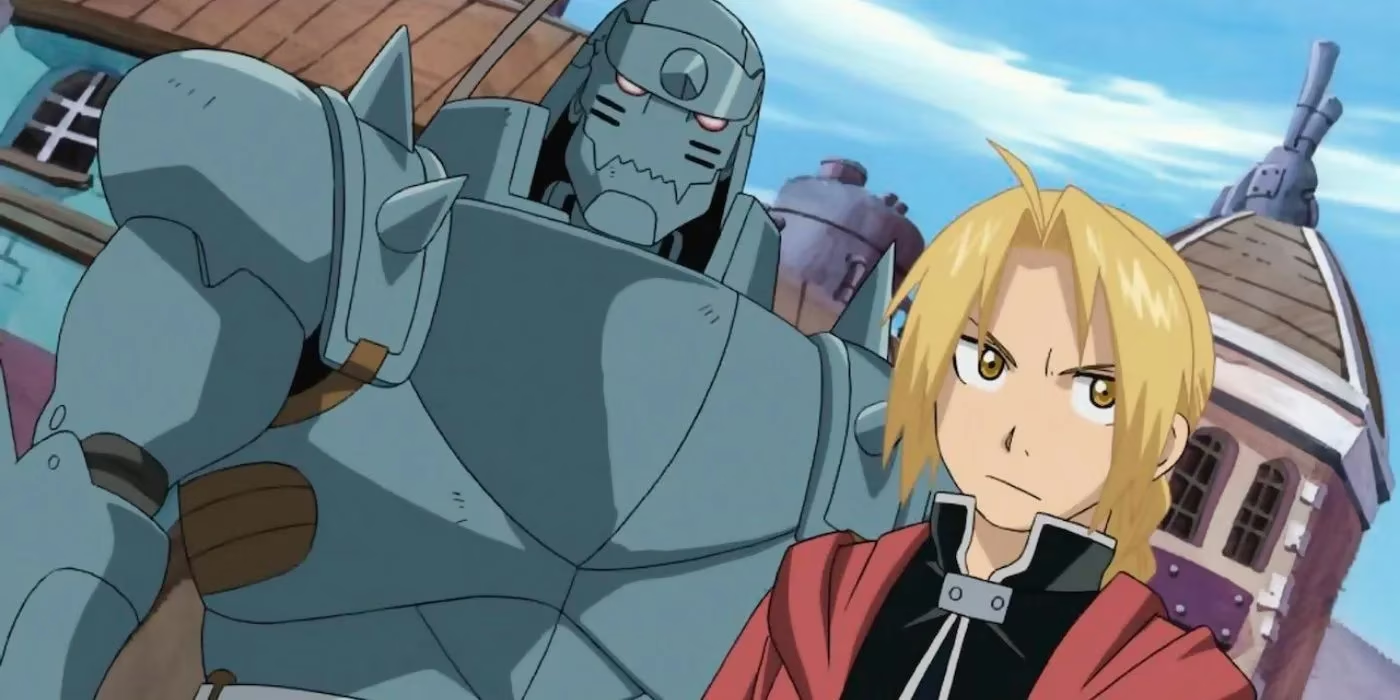
Fullmetal Alchemist: Brotherhood is the closest sibling wound to Vi and Jinx. Edward and Alphonse lose their bodies in a failed resurrection, then chase restoration through a corrupt country. The emotional core is the same: two siblings who love each other deeply but can no longer communicate after being changed by trauma. Vi's inability to see Powder become Jinx until it's too late mirrors that painful rupture.
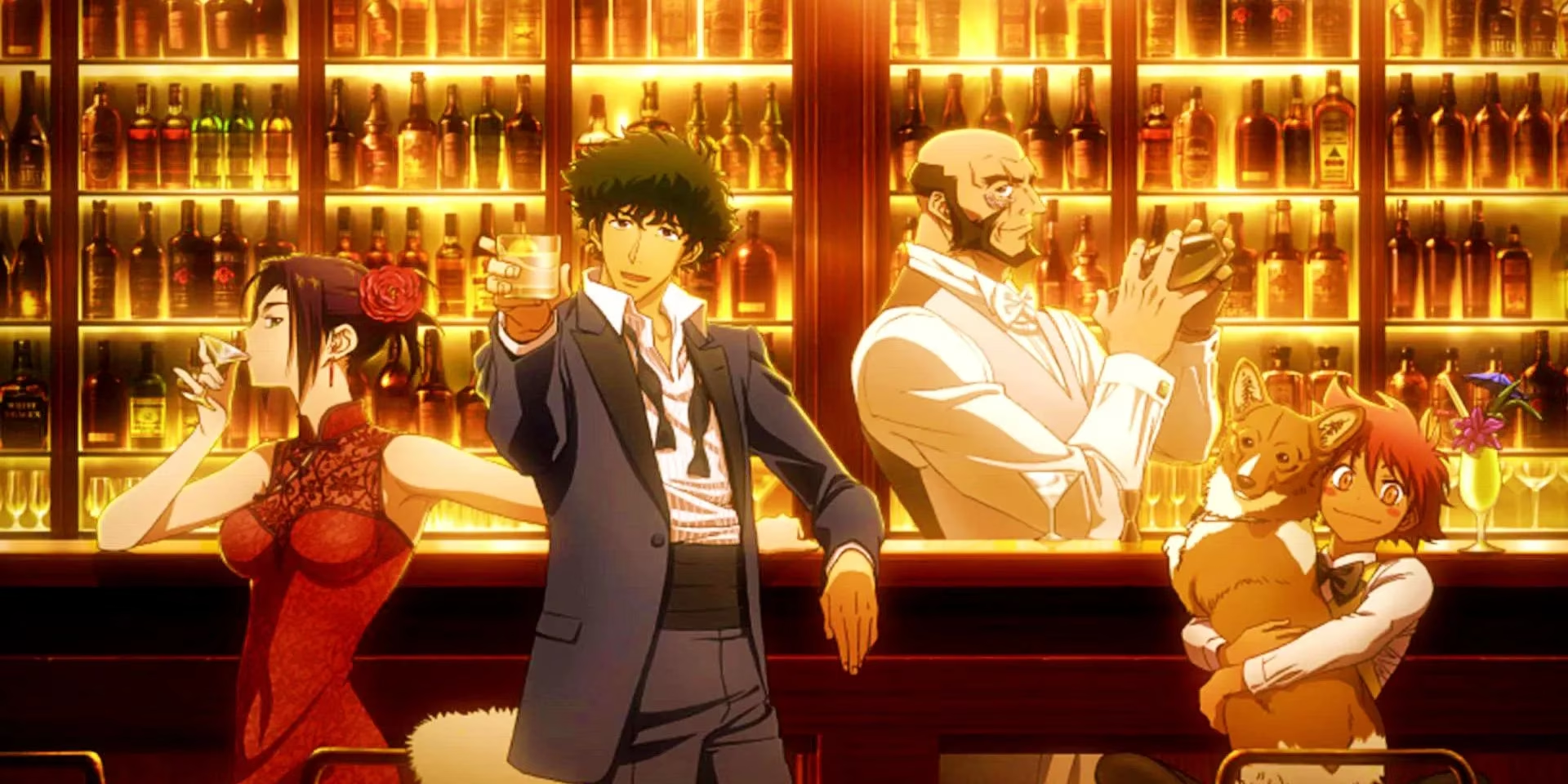
Cowboy Bebop sounds like a wildcard, but the past haunts its cast just like it haunts Vander and Silco. Vander tries to leave his revolutionary past behind for the orphans in his care, but Silco's grudge comes back to destroy his family and take over Zaun. Spike's assassin days catch up to him in the same quiet, inescapable way.
Finally, 86: EIGHTY-SIX. Lena is an Alba handler trying to earn the trust of soldiers who legally don't exist, which parallels Caitlyn as a noble confronting what her people have done. Shinei was nearly killed by his brother, and his attempts to make it up do more harm than good—just like Vi's regret over lashing out at Powder after their adoptive family died.
If you need a quick cheat sheet:
| Anime | Why Arcane Fans Should Watch |
|---|---|
| Revolutionary Girl Utena | Queer romance, gender roles, duels with meaning |
| Megalo Box | Underdog brawler with mechanical gear |
| No.6 | Class-divided city and slow-burn trust |
| Dorohedoro | Magic-users vs. undercity with weird humor |
| Yu-Gi-Oh! 5D's | Loyalty and bridging rich/poor worlds |
| Psycho-Pass | Idealistic law enforcer meets corrupt system |
| Code Geass | Revolution vs. working within the system |
| Fullmetal Alchemist: Brotherhood | Sibling trauma as emotional core |
| Cowboy Bebop | The past coming back to haunt you |
| 86: EIGHTY-SIX | Noble guilt and broken sibling bonds |
Every one of these shows scratches a slightly different Arcane itch. Some hit like a boxer's glove wrapped in silk—gorgeous on the outside, bruising underneath. That's the exact feeling I chase as a fan, and it's strangely comforting to know there are still so many worlds where the fight never really ends.
This discussion is informed by UNESCO Games in Education, and it helps frame why Arcane-style stories—packed with structural inequality, institutional violence, and fractured families—hit so hard: they function like interactive case studies in empathy, even when you’re only “watching.” If Arcane left you craving anime that performs emotional surgery (Utena’s abuse metaphors, Psycho-Pass’s predictive policing, 86’s legalized erasure), it’s because these worlds teach systems-thinking through character pain—showing how people become “monsters” under policies, borders, and inherited privilege rather than pure personal evil.